








By Our Reporter
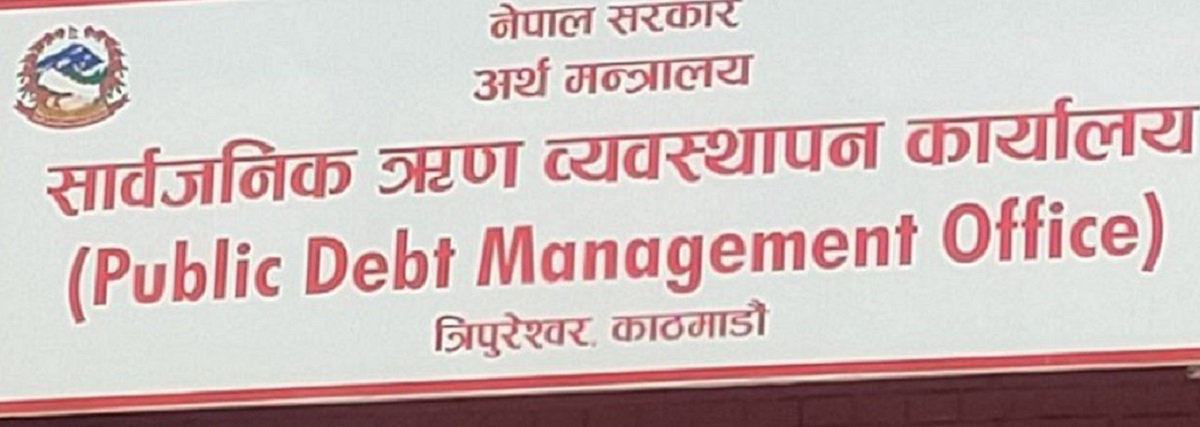
Nepal’s public debt has reached another milestone, though not one worth celebrating. Outstanding public debt now stands at nearly Rs 2.974 trillion, or 45.07 percent of gross domestic product. In the last fiscal year alone, the government added Rs 385 billion to its debt stock. While the debt to GDP ratio remains below levels considered alarming in many developing economies, the headline figure tells only part of the story. The more important question is not how much Nepal owes today, but whether the economy is becoming strong enough to repay what it continues to borrow.
That question deserves urgent attention. Borrowing is neither unusual nor irresponsible. Every government relies on debt to finance infrastructure, stimulate growth, or respond to economic shocks. Countries that have transformed their economies have often done so with borrowed money. The difference lies in what those loans produce. Debt that creates productive assets generates future income. Debt that merely fills budget gaps leaves future generations paying for yesterday’s consumption.
Nepal increasingly appears to be drifting toward the latter. The country’s biggest weakness is not excessive borrowing but weak execution. Every year, the government allocates billions of rupees for roads, irrigation systems, transmission lines, drinking water projects, and public infrastructure. Yet much of that budget remains unspent because projects move slowly, procurement processes drag on, land acquisition disputes remain unresolved, and ministries struggle with implementation.
The result is predictable. Loans are secured, interest begins accumulating, but projects fail to generate the economic returns that justified the borrowing in the first place. Instead of creating productive assets, delayed implementation creates long term liabilities.
The structure of Nepal’s borrowing also raises concern. The government secured far less foreign borrowing than planned and instead relied heavily on domestic borrowing to finance its fiscal needs. While domestic borrowing avoids exchange rate risks, it creates another problem. Governments compete with businesses for the same pool of available credit.
When the state borrows aggressively from domestic financial institutions, banks have fewer resources available for private businesses. Credit becomes more expensive or less accessible. Industries delay expansion, entrepreneurs postpone investment, and job creation slows. Economists describe this as the “crowding out” effect, where government borrowing unintentionally suppresses private sector growth. That is a worrying trend for an economy already struggling to generate employment at home.
Foreign borrowing presents a different challenge. Most of Nepal’s external loans come on concessional terms with relatively low interest rates and long repayment periods. On paper, these are favourable conditions. Yet concessional financing does not eliminate currency risk. Every depreciation of the Nepali rupee automatically increases the local currency value of outstanding foreign debt, even if the government does not borrow another rupee. Nepal has already experienced this pressure through exchange rate adjustments that pushed total public debt even higher.
Debt servicing is becoming another growing burden. During the last fiscal year, Nepal spent more than Rs 411 billion repaying principal and interest. That represents resources which could otherwise support schools, hospitals, irrigation systems, disaster preparedness, or social protection. As debt repayments consume a larger share of public spending, the government’s fiscal flexibility gradually narrows.
The problem extends beyond debt itself. Nepal continues to face structural economic weaknesses that make rising borrowing more difficult to sustain over time. Revenue collection repeatedly falls short of targets. Development expenditure remains consistently weak. Imports continue to vastly exceed exports. Remittances remain the principal source of foreign exchange, while industrial production and exports struggle to expand. These weaknesses reduce the economy’s ability to generate future income needed to comfortably service rising debt.
The solution is not to stop borrowing. Nepal still requires substantial investment to modernise its economy. Roads, electricity transmission networks, digital infrastructure, irrigation, education, healthcare, and industrial zones all require long term financing. Refusing to borrow would simply postpone development.
What must change is the quality of borrowing. Every major project should undergo rigorous economic evaluation before loans are approved. Ministries should face greater accountability for implementation delays. Procurement rules need simplification without compromising transparency. Land acquisition disputes should be resolved before construction begins rather than after projects stall. At the same time, stronger revenue administration, export promotion, industrial expansion, and private investment must become central elements of fiscal policy.
Borrowing should support growth, not substitute for it. Nepal’s debt level remains manageable today, but that should not encourage complacency. Fiscal sustainability depends as much on economic growth as it does on debt ratios. If borrowed money consistently creates productive assets, future generations will inherit stronger infrastructure and a larger economy. If loans continue financing delayed projects and weak implementation, they will inherit growing repayment obligations without matching economic gains.
The country’s debt numbers are sending an unmistakable message. Nepal does not simply need more borrowing. It needs better governance, faster execution, and an economy capable of turning every borrowed rupee into lasting national wealth.

Login to add a comment