







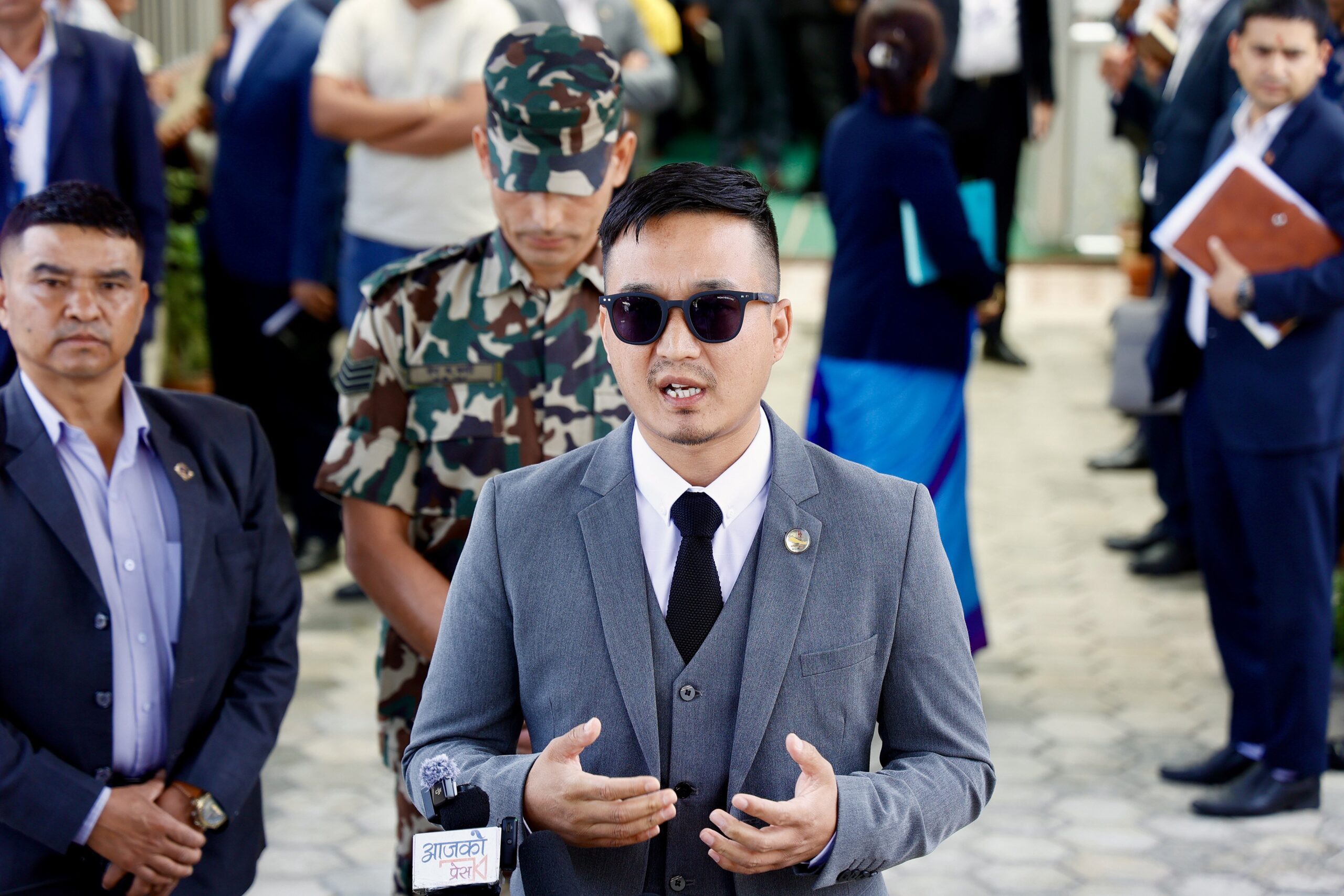
Kathmandu, July 3: As the government led by Rastriya Swatantra Party (RSP) completes 100 days in office, Home Minister Sudhan Gurung has emerged as both its most visible enforcer and its most controversial figure.
Gurung is the only minister to return to the same portfolio after stepping down. He first took oath as home minister on March 26 but resigned weeks later amid scrutiny over investments linked to businessman Deepak Bhatt’s insurance ventures. After being cleared, he returned to the ministry on May 26, 48 days after leaving office.
Upon his return, Gurung declared that “every file will now be opened” and announced plans to revisit major unresolved cases, including the 2001 Narayanhiti Palace massacre. While the announcement generated headlines, no significant progress has been made on that front.
Instead, the Home Ministry has focused on reopening old investigations through the Central Investigation Bureau (CIB). Gurung instructed police to expedite pending files and form special teams to investigate serious, economic and organized crimes.
One of the most prominent actions was the arrest of former All Nepal Football Association president Karma Tshering Sherpa on June 26 over allegations of embezzling Rs 87.8 million from Tungaram International Academy. Investigators claim school funds were used to purchase land through a private company. Sherpa has since been released on bail while fraud and criminal breach of trust investigations continue.
The government’s first 100 days have been marked by a string of arrests involving politicians, bureaucrats and business figures. Former prime minister K.P. Sharma Oli and former home minister Ramesh Lekhak were arrested on March 27 over allegations linked to the suppression of the Gen Z protests in September 2025, during which teenagers were killed in police firing. Both were released after the Supreme Court ordered their release, although investigations continue.
Gurung also expanded the use of money laundering investigations, leading to arrests of several influential figures. Former minister Deepak Khadka was arrested but later released by court order. Businessman Deepak Bhatt, Shankar Group chairman Shankarlal Agrawal and his son Sulabh Agrawal were among those detained. Bhatt and Sulabh Agrawal remain in judicial custody pending trial.
Other high profile arrests included former Kathmandu Chief District Officer Chhabi Rijal, UML provincial leader Karn Bahadur Malla, Lumbini Province Assembly member Rekha Kumari Sharma, former minister Bishnu Paudel and businessman Abhishek Giri.
Gurung frequently publicized the arrests on social media, posting countdown style updates as prominent figures were detained. Critics, however, argue that arrests alone do not constitute good governance.
Former deputy inspector general Hemanta Malla said investigations should be judged by outcomes, not headlines. Arrests driven by political motives or public pressure, he warned, rarely produce lasting results. He also argued that authorities must be particularly cautious when using detention powers in non criminal cases such as money laundering investigations, where civil liberties are at stake.
The courts have repeatedly checked the government’s aggressive approach. Sharma was released after a Kathmandu District Court judge ruled against detention despite her arrest in a child abuse case that prosecutors had earlier declined to pursue.
Many other suspects arrested in recent months have also secured release after courts found insufficient grounds for detention. Among the government’s major targets, only Karn Malla, Deepak Bhatt and Sulabh Agrawal remain behind bars awaiting trial.
Officials linked to the passport printing irregularities case, including Passport Department Director General Tirtharaj Aryal, were also released on minimal bail.
Former Home Secretary Chandi Prasad Shrestha said law enforcement must act firmly against wrongdoing but warned that authorities themselves must remain disciplined and respect citizens’ rights.
With courts repeatedly overturning detentions, the government’s headline-grabbing arrest campaign has increasingly run into a judicial reality check. Critics say the challenge now is not making arrests, but securing credible prosecutions that can withstand legal scrutiny.
People’s News Monitoring Service

Login to add a comment