







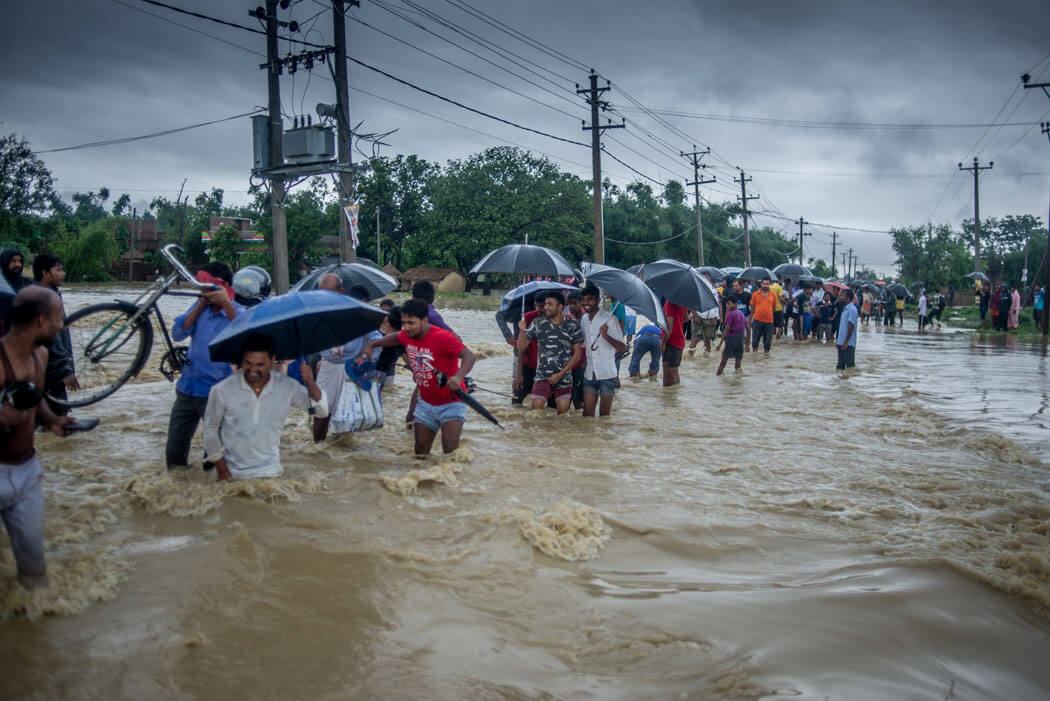
Kathmandu, June 29: Ahead of this year’s monsoon, Nepal has projected that around 226,000 people could be affected by floods, landslides and other weather-related disasters, prompting authorities to activate nationwide preparedness measures.
The National Disaster Risk Reduction and Management Authority, NDRRMA, estimates that about 51,000 households may suffer impacts during the rainy season. Between 1,000 and 4,000 families are expected to face severe consequences from monsoon-induced disasters.
The assessment identifies the districts most exposed to potential disasters. In Koshi Province, Sunsari and Jhapa face the highest risk, while Ilam is expected to experience fewer impacts. Rautahat and Sarlahi top the risk list in Madhesh, with Bara considered relatively safer. Dolakha and Chitwan are the most vulnerable in Bagmati, while Bhaktapur is projected to face the least risk.
Although the monsoon entered eastern Nepal on June 19, it only became active across much of the country on Sunday. NDRRMA spokesperson Shanti Mahat said preparedness efforts have been planned around the projected risk, while a National Monsoon Preparedness and Response Action Plan has already been put in place. The authority has also completed district-wise risk assessments covering all seven provinces.
In Gandaki Province, Nawalparasi East and Tanahun are expected to be the hardest hit, while Manang remains the least vulnerable. Dang and Rupandehi lead the risk ranking in Lumbini, with Rukum East facing lower exposure. Surkhet and Salyan are identified as Karnali’s most vulnerable districts, while Humla has the lowest projected risk. In Sudurpashchim, Kanchanpur and Kailali are expected to bear the brunt of the monsoon, whereas Darchula is likely to be less affected.
To improve readiness, the authority has set up a Monsoon Response Command Post to coordinate rescue operations and monitor implementation of the national action plan. Districts and provinces have been instructed to submit regular progress reports.
Road agencies and local governments have been directed to keep heavy equipment on standby to clear landslide-blocked roads. Local authorities have also been asked to stock emergency relief materials and maintain food supplies for at least 15 days in communities that could become isolated.
The authority has urged weather officials to provide round-the-clock forecasting services and asked district disaster committees to restrict traffic whenever flood or landslide threats increase. It is also coordinating with private organisations, rescue groups and volunteer agencies to strengthen search and rescue capacity. Technical teams have already completed hazard assessments at around 300 high-risk locations across Nepal to identify areas requiring early intervention before the monsoon reaches its peak.
People’s News Monitoring Service

Login to add a comment