







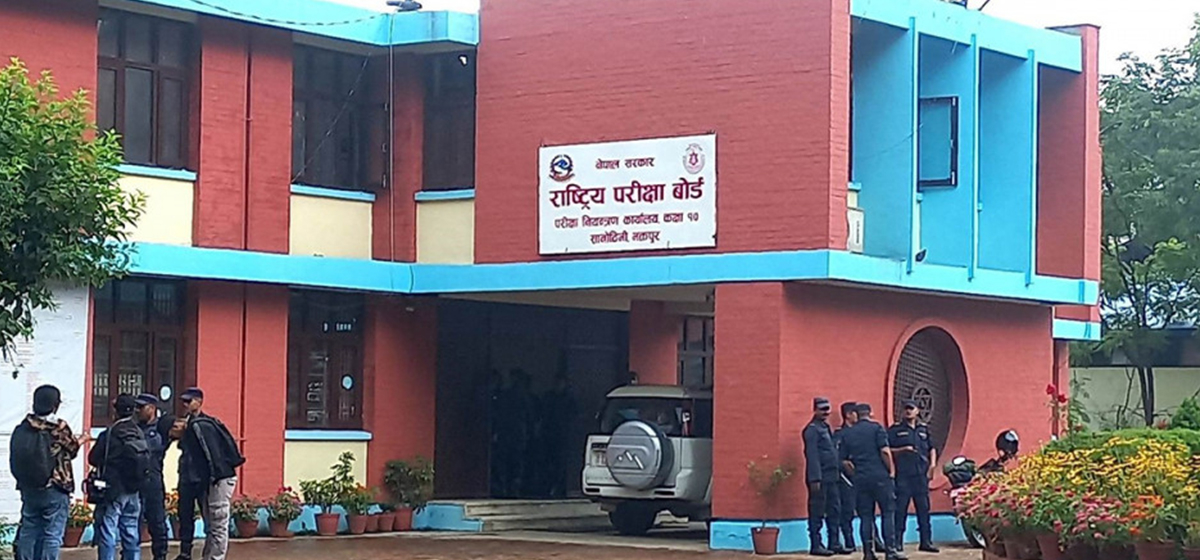
Kathmandu, May 11: The National Examination Board has published the results of the 2082 Secondary Education Examination (SEE) within 29 days, with the overall performance improving by 4.17 percentage points compared to last year.
Results made public on Monday show that 65.98 percent of students received grades this year, up from 61.81 percent in 2081. Bureaucracies moving faster than expected. A rare celestial event.
Out of 430,667 students who appeared in the exam, the highest number, 48,392 students, secured a GPA between 3.60 and 4.00. Another 80,372 students scored between 3.20 and 3.60, while 94,222 obtained GPAs between 2.80 and 3.20.
A total of 55,977 students scored between 2.40 and 2.80, while 5,190 received GPAs between 2.00 and 2.40. Only seven students fell in the 1.60 to 2.00 GPA range.
By province, the number of graded students stood at 50,890 in Koshi Province, 44,592 in Madhesh Province, 77,113 in Bagmati Province, 26,550 in Gandaki Province, 44,256 in Lumbini Province, 19,095 in Karnali Province, and 21,664 in Sudurpashchim Province.
The board said it released the results within the government’s one-month deadline. Examination Controller Tuka Raj Adhikari said the answer sheets were checked at the examination centers themselves, which made the faster publication possible.
In previous years, SEE results were usually published after about three months. The government had directed the board to shorten the process to reduce stress among students, because apparently waiting is now officially considered harmful to teenagers.
The board has also scheduled supplementary exams for students who did not pass. The exams will be held from June 15 to June 23 (Asar 1 to 9).
Questions had been raised over whether evaluating answer sheets at exam centers could artificially raise pass rates. But Adhikari said teachers carried out the evaluation ethically and the improved results reflected genuine effort.
Education experts say the better performance likely came from a mix of factors: many schools kept students in intensive residential study programs for three months before the exams, answer sheets were checked locally for faster processing, and students had access to model question papers beforehand. Human success, as usual, turns out to be a combination of hard work and strategic rehearsal.
People’s News Monitoring Service

Login to add a comment