







By Our Reporter
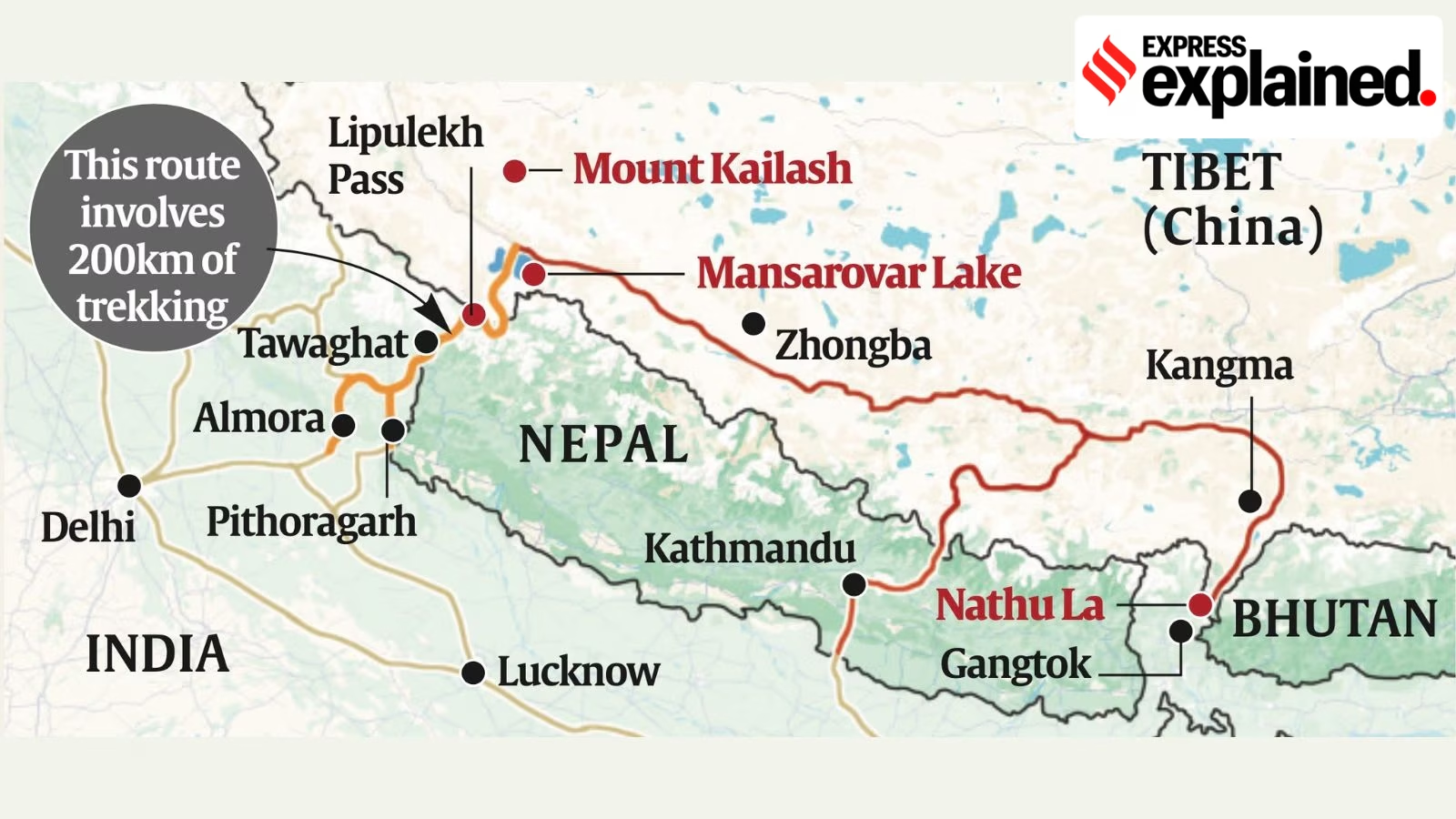
India’s plan to restart trade with China through Lipulekh sounds routine on paper. A seasonal trade window, better roads, more traders, more money. Everyone claps, the trucks roll, and the mountains quietly watch another agreement that skips one country sitting right under the pass, Nepal.
That is where the problem begins. Lipulekh is not some empty patch of rock waiting for efficient neighbors to use it. Nepal claims it as its own territory, and it has said so clearly, repeatedly, and with a revised political map to back it. Yet India and China continue to treat the route as a bilateral corridor, as if Nepal’s position is an optional footnote.
Back in 2020, India inaugurated a road linking Dharchula to Lipulekh. Nepal objected. The response was polite silence mixed with continued construction. Now, with trade set to resume after a pandemic break, the same approach is on display. Meetings are happening, permits are being planned, logistics are being polished, all without any visible attempt to bring Nepal into the conversation.
For a country that sits between two major powers, this kind of behavior is not new. It is also not acceptable.
Trade routes in the Himalayas carry history, culture, and livelihoods. But they also carry sovereignty. When two countries use a disputed area for commerce without consent from the third party that claims it, the message is simple, power decides, not principle. India, in particular, needs to hear this more clearly. It often speaks of close ties with Nepal, shared culture, open borders, and people to people relations. Those lines sound good in speeches. They lose weight when actions suggest that Nepal’s territorial concerns can be brushed aside when they get in the way of infrastructure or trade.
If India wants trust, it has to act like it respects Nepal as an equal partner, not a space on the map that can be managed. China, on the other hand, sits in a slightly different position. Nepal views China as a counterbalance in the region. That comes with expectation. Beijing cannot quietly benefit from a trade route that runs through disputed territory while claiming to respect sovereignty and non- interference.
China does not need to take Nepal’s side in every dispute. But it does need to show that it takes Nepal’s claims seriously. That means pushing for dialogue, not silent participation. It means making sure that any activity in sensitive areas includes Nepal, not bypasses it. If China wants to maintain its image as a stable and respectful neighbor, this is an easy test to pass. A simple stance, no trade through disputed territory without trilateral understanding, would go a long way.
There is also a practical angle that both India and China seem to ignore. Ignoring Nepal does not make the issue disappear. It only stores up resentment. Today it is trade. Tomorrow it could be something larger, security, water resources, or transit routes. Small dismissals add up.
Nepal, for its part, needs to stay consistent and firm. The revised map was not just a symbolic move. It set a position that now needs steady diplomatic follow through. Quiet protests will not be enough. Kathmandu must push for formal talks, raise the issue in regional forums, and keep public communication clear so the matter does not fade into the usual noise. Lipulekh could have been a model of regional cooperation, three countries managing a shared space with mutual respect. Instead, it risks becoming another example of how smaller states get sidelined when bigger players decide to move fast.

Login to add a comment