







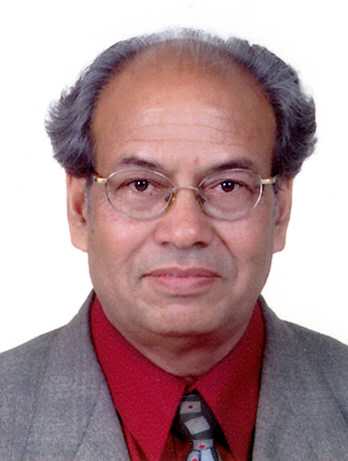
By Narayan Prasad Mishra
Every citizen—rich or poor, educated or uneducated—knows that our country suffers from misrule and maladministration. Corruption, nepotism, favoritism, party dictatorship, and daily irregularities have become part of the people’s everyday lives. Except for the leaders of the political parties in power and a few of their close followers, almost all citizens are suffering from the widespread misgovernance in the country. The street protests and demonstrations are not sudden storms; they are the anguished cries of a people, increasingly louder, exhausted by misrule. At the heart of this cry lies one apparent demand: good governance—no more, no less.

For those who love Nepal, good governance is hope. For those who wish to see the nation and its people prosper, it is the only way forward. Good governance encompasses all the essential needs of the people. But for those who close their eyes, silence their conscience, and ignore the people’s call, “good governance” becomes nothing more than a hollow slogan, a word without substance.
Good governance is not just a slogan—it is a practical plan. It calls for honest work and service, and also recognizes the need to reform the governing systems, rules, and regulations that hinder good governance. This includes constitutional and legal reforms, honest implementation of laws and policies, and the establishment of institutions that serve the people—not just party leaders. It demands the prompt punishment of the corrupt and those who betray the trust of the nation and its people. Without such reforms, neither can good governance be achieved, nor can political decay be ended.
A picture of the PBS News in the USA about Nepal’s Gen. Z. Revolt
To fulfill this goal, the following changes and public demands are clearly visible today:
- A non-political President or a ceremonial, constitutional monarch
- A directly elected Prime Minister
- Decentralized governance and decentralized services
- Independent judges and a non-political judiciary
- Non-Political Educational Leaders, Planners, and Constitutional Officials
A Non-Political President or a Ceremonial Monarch
A President elected solely by the votes of a single party cannot symbolize the trust, faith, and unity of all citizens. When the same party controls both the presidency and the premiership, political monopoly and dictatorship inevitably rise, as all Nepalis have already experienced. A head of state who stands above political parties can unite the people during crises and provide stability.
A non-political President—or, if the people so choose, some form of ceremonial or constitutional monarch—would not compete for votes but would serve as a moral guide and guardian of national values. When the head of state is impartial, it becomes far easier to resolve disputed elections, constitutional crises, and conflicts between parties. This reduces the temptation for political parties to misuse the highest office for selfish gain, while preserving the dignity of the nation. It would also put an end to the dangerous practice of one party monopolizing both the presidency and the premiership.
A Directly Elected Prime Minister
A Prime Minister directly elected by the people ensures a clear mandate, accountability, and governmental stability. Under the present system, Prime Ministers usually come to power through party deals and unstable coalitions. As a result, governments are weak, policies are short-lived, and ministers are more concerned with protecting their party’s survival than serving the people.
In contrast, a system where the Prime Minister is directly elected gives the officeholder the executive power needed to govern effectively. Such a leader is accountable not only as a party leader but also directly to the people who elected them. This arrangement makes it possible to plan and implement long-term development projects, rather than being limited to the short-term calculations of fragile coalitions.
Decentralized Governance and Services
Any government that claims to serve the people must ensure that citizens can access essential public services—whether related to offices, permits, or administration—in their own towns, villages, and districts. For this, a decentralized governance system and service-delivery mechanism are absolutely necessary.
The current federal system—with its provincial governors, chief ministers, ministers, large provincial assemblies, and numerous legislators—has, according to widespread public debate, increased the state’s expenses without delivering meaningful services to the people. For this reason, there is now a popular demand to abolish the federal system.
Instead, services currently centralized in Pradesh and Kathmandu should be made available in every district. Under the leadership of a District Chief, services could be expanded through the District Administration Office, ensuring that citizens throughout Nepal receive services in a decentralized and efficient manner. This is the demand of the times.
Independent Judges and Independent Judiciary
Justice must be impartial—party politics should not color it. Before 1990, Nepal had no provision for appointing private lawyers as judges as political rewards. Once lawyers began to be appointed as judges to satisfy party interests, politics entered the courts, turning them into political playgrounds.
To restore impartiality, this provision must be abolished without delay. As was the case before 1990, judges must be selected and appointed solely through open competition based on qualifications, experience, and expertise. Only then can party-affiliated lawyers be prevented from corrupting the judiciary. Only then will the principle of equality before the law become a reality.
Non-Political Educational Leaders, Planners, and Constitutional Officials
Schools, campuses, universities, academic and research centers, and institutions of learning must remain pure centers of knowledge, free from political influence. Yet in our country, even the leadership of such institutions is decided not on academic or professional merit but on political affiliation and bargaining. Everyone knows that politics has polluted education and academia, disrupting the learning environment.
To correct this, appointments in academic and professional institutions must be made strictly on academic merit, not political activity or connections.
Similarly, the National Planning Commission must be led by non-political planners with full knowledge and experience in their respective fields. Only then can development strategies be designed realistically and independently of election cycles. Only then can investments be utilized effectively for schools, hospitals, roads, and other infrastructure. Therefore, the current system of political bargaining in the Planning Commission must be ended, and well-known, experienced experts must be appointed impartially.
The Problem of Party Influence and Monopoly
The current constitution and laws encourage political parties to extend their reach, pressure, and control into every sector. This allows them to capture institutions and turn the state into an instrument of party interest. This is the root cause of misrule.
To break this system, legal reforms must free constitutional bodies and public institutions from party interference. The electoral system must be reformed, anti-corruption agencies strengthened, and reputed non-political officials appointed to constitutional posts. Party interference everywhere must be curtailed, and government bodies must be empowered through actual separation of powers and autonomy.
Controlling Unnecessary Party Reach and Negative Influence
In a multiparty democracy, political parties and their members are expected to contribute freely, serve, and monitor national development. In any civilized country, party leaders and cadres cannot capture public institutions and exploit the nation for personal gain. In countries with good governance, such behavior is unthinkable.
But in Nepal, it is obvious that political parties pursue their own interests everywhere, while their cadres are not used for development but for destruction. From schools, campuses, and universities to government offices, hospitals, industries, and institutions, party-affiliated unions and organizations exist in name but in practice act as party representatives.
The expansion of these groups in every institution has created serious and widespread problems. Acting on the orders of political parties, they frequently create unnecessary disturbances, pressure, and obstructions in the functioning of institutions. To restore good governance in education and administration, this system of mob rule must be ended, and political organizations must be barred from such spaces.
Limiting Party Politics to Legislation, Policymaking, and Government Formation
The House of Representatives and the National Assembly must focus on debating policies and programs, making laws, regulating the executive, and fulfilling their constitutional duties in forming governments. But politics must not interfere in hospitals, universities, administrative appointments, or daily governance.
When legislators meddle in day-to-day administration, it breeds misrule and instability. Politics must remain confined within the walls of parliament, while the executive and administrative services must be free to implement policies professionally. Only then will stable governance free from political misuse become possible.
Honoring Sacrifice and Working with Courage
More than seventy five martyrs and hundreds of wounded citizens have sacrificed their lives and blood for good governance and the welfare of the people in Nepal. Their sacrifice demands not hollow words and false promises but genuine and lasting reforms—true good governance.
The interim government must listen, act courageously, and safeguard this movement’s achievements. We need a clear roadmap. Without delay, the constitution, laws, rules, and regulations must be amended wherever necessary to free institutions from unnecessary politicization and establish good governance based on merit, competence, equality, justice, and the rule of law. History has taught us that parties that capture the constitution and laws for their own dictatorship will never deliver this task. We must learn this truth.
The demand of our time is for every official, at every level, to be accountable, and for institutions to serve not just the parties but all citizens equally. The people have spoken clearly: we want justice, accountability, and good governance. For the sake of our children and the future of Nepal, let us transform this demand into laws, institutions, and daily practices. If we fail to act now, history will surely judge us harshly.

Login to add a comment