







National/Regional/International Affairs
“Feed a dog for three days, and they will remember you for three years. Feed a human for three years; they will forget you in three days.”
-A popular saying based on facts

By N. P. Upadhyaya (Aryal)
Kathmandu: The chitchat in the South Asian political/diplomatic circuit was that the then Pakistan Army Chief Qamar Javed Bajwa had discreetly advised Pakistan Prime Minister Imran Khan not to proceed towards the Russian Federation back in 2022.
Bajwa had also told PM Khan not to make any political decisions of greater ramifications in haste.
Khan-Bajwa scrimmage begins:
However, PM Khan, as the executive head of the Pakistani government, took his own solo decision and thus landed in Moscow on February 23-24.
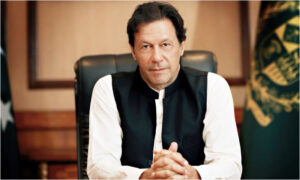
The seeds of a grand tussle between the executive chief and the Army chief were thus sown.
It was in a dormant state at the beginning.
South Asian diplomats, however, claim that the seeds of differences were sown much ahead of this particular incident.
General Bajwa, it is said, had been watching PM Khan’s distaste of the USA over these years and concurrently reading the minds of the Army’s Golden Boy (as PM Khan was taken then as an elevated executive head who was the most preferred choice of General Qamar Bajwa).
However, watching and reading the political taste and inclination over the previous three good years of Imran Khan, the ace cricketer and an Oxford graduate, Bajwa could notice that as much as PM Khan possesses revulsion towards the USA, conversely, PM Khan’s taste for “love and honor” for China and the Russian Federation was on a sharp increase to the extent that the Army Chief Bajwa perhaps was forced to ponder over Khan as to how he could be brought to terms or tamed?
However, the PM was almost a nonpolitical and comparatively juvenile political animal who had no experience steering a country and tricks of diplomacy on how to keep great powers at a comfortable distance so that they all collectively kept on believing that Pakistan was with them.
It was the first official visit by a Pakistani head of government in two decades to Russia.
It was simply because Pakistan then was camped in the US lobby and its immediate rival India was deeply associated with the then USSR-Union of the Soviet Socialist Republic.
Nevertheless, after the end of the Cold War and the dismantling of the USSR, a sort of alignment and realignment took place, and countries attached themselves to some powerful countries of their choice and so in the process, India cleverly inched closer to the USA and even became a strategic partner in US designed security apparatus–the Quad comprising of the US, India, Australia, and Japan.
Though Pakistan was no longer with the US as a strategic ally yet due to the US’s heavy engagement in the Afghan War, the US picked Pakistan as a partner who could help assist the US in evacuating war-ravaged Afghanistan.
In fact, Pakistan did all it could to help the US to get the latter unscathed and honoured exit from Afghanistan, and in the process, Pakistan suggested Qatar for several rounds of peace talks between the Taliban forces and the US high-placed officials.
Sometime later, Russia too sent its representative, Zamir Kabulov, to the Doha peace talks thereby giving a message to the US and the World at large that Afghanistan matters to Russia as well.
However, PM Khan even a minute prior to landing in Moscow had no inkling that “several gallops” were in store for him in the days to come internal and other albeit external.
New found love of Khan to Putin:
PM Khan and President Putin were downright unknown to each other prior to the 19th Shanghai Cooperation Organization meeting held in Bishkek–the capital of Kyrgyzstan which lies in Central Asia apparently close to Pakistan.
As luck would have it, Indian PM Modi was dwarfed by PM Khan’s presence in Bishkek and all the more Khan’s increasing proximity with President Putin, by default, which was contrary to Putin’s keeping a distance with Indian PM Modi hinted so many things unspoken.
If Pakistan found an opportunity to forge intimate ties with the Russian Federation–the heir apparent of the former USSR, then President Putin’s deep socialization with PM Khan too was clearly visible.
If PM Khan inched closer to the Russian Federation then equally he, by default, made a comfortable distance with the US in the process which was just “unacceptable”.
If Pakistan wanted to mend its broken ties with Russia, then the latter too was by then frustrated with India–its former Cold War time ally and so clearly Putin wanted to have a new matching friend in South Asia which could be trusted unconditionally.
Perhaps it was this political impulse of the two leaders, Khan and Putin, brought together to the extent that prior to leaving Bishkek, PM Khan extended an invitation to President Putin to visit his country at a time of his convenience.
International media had reported then on PM Khan’s and Putin’s proximity was a milestone for Pakistan’s almost non-existent diplomacy.
The Times of Islamabad said, “The meeting of Russian President Vladimir Putin and PM Khan at the 19th Shanghai Cooperation Organization (SCO), turned out to be a major success for Pakistan on the diplomatic front after a long gap.
It was this SCO Meet which awarded Pakistan full-fledged membership much to the annoyance of rival India.
Pakistan’s international image was not only enhanced but got recognized.
Russia, which was in dire need of a new and reliable friend for the South Asian region, got an appropriate and identical regional force in SA in Pakistan only when the US embraced India.
It was a sort of “marriage of convenience” which meant that countries switched their allegiance to the other camp as per their changing need and context.
Thus if US-India forged a new strategic bond then Pakistan too wanted Russian largesse after the long gap and inched closer to Russia.
Russia found a new suitable and unswerving partner in Pakistan after India switched its decade-long allegiance from the USSR to the US. B’desh had already taken shape. The job had been done.
Khan lands in Moscow:
International commentators opine that PM Khan’s visit to Moscow was taken as a clear hint to the West more so to the USA, after he clearly said no to the US on giving military bases to it inside Pakistan following America’s withdrawal from Afghanistan and not receiving a phone call from US President Joe Biden since he assumed office in January 2021, claim some International media agencies.
So it was a matter of political ego that was associated with providing a base to (military?)
Despite Bajwa’s unassertive advice, Khan landed on February 23, 2022.
As luck would have it, PM Khan’s arrival coincided with a sort of “military invasion” of Russia in neighboring Ukraine. The Moscow trip though was, “pre-scheduled”, we have been told.
US sources say that PM Khan hinted in advance not to visit Moscow as it may sour US-Pak relations. However, PM Khan ignored the US suggestion and invited untold wrath later.
There is a saying in the US: “Either you are with us or with the enemy”. ‘Neutrality or non-alignment perhaps too had no meaning for the US’.
PM Khan was taken as an enemy and rumors then had it that activities to oust Khan began in earnest.
From the Russia visit, PM Khan had little to gain and much to lose from backing out of his planned visit to Moscow as it would be evident in the following paragraphs.
Enters Donald Lu:
Donald Lu, the Assistant Secretary Bureau of South and Central Asian Affairs, the Intercept reported, reportedly met the Pakistani envoy Asad Majeed and signalled to dismiss PM Khan from government or face consequences.
Mr. Lu is also very popular in Nepal.
The news may or may not be true but things moved as stated by Donald Lu.
After much controversy, the sitting PM Khan was ousted through a no-confidence motion and the untold travails of Imran Khan began which perhaps continues even as of now though he is the top winner in the February 08, 2024 elections.
Senior diplomats in South Asia hinted to this scribe that the Army would not like the elections to be held. However, it was held.
Lu then conveyed the bottom line to Ambassador Khan. “I think if the no-confidence vote against the Prime Minister succeeds, all will be forgiven in Washington because the Russia visit is being looked at as a decision by the Prime Minister. Otherwise, I think it will be tough going ahead.”
Donald Lu appears to have almost threatened Ambassador Majeed Khan in Washington.
But the question is can the US serve such an ultimatum to its former strategic Cold War time ally?
The veracity remains to be substantiated.
An intellectual and diplomatic debate is thus needed to clarify the matters.
Explains Professor Jeffrey D. Sachs, Columbia:
This professor hints in a blunt manner that, he writes (sic) for the Common Dream, dated February 01, 2024, “a principal instrument of U.S. foreign policy is covert regime change, meaning a secret action by the U.S. government to bring down the government of another country. There are strong reasons to believe that U.S. actions led to the removal from power of Pakistan’s Prime Minister Imran Khan in April 2022, followed by his arrest on trumped-up charges of corruption and espionage, and imprisonment on the espionage charge. The political objective is to block Pakistan’s most popular politician from returning to power in the elections on February 8”.
In a lighter vein, Professor Jeffrey eases the burden of the US by saying that “the key to covert operations (US) of course is that they are secret and hence deniable by the U.S. government.
However, our own experience in Nepal umpteen times in the past is that the recognized enemy in South India has toppled the government or even the system and has installed its preferred paid Nepali traitors to run sovereign Nepal so that the incumbent regime acts like a duty-bound servant-much similar to a slave.
Thus, if such toppling of Khan’s government were in the larger interests of the US then the latter did it for preservation of its political and regional-strategic benefits as explained by Professor Sachs.
The Columbian professor however continues to say that Imran Khan’s “sin” was to be too cooperative with Russian President Vladimir Putin and Chinese President Xi Jinping, while also seeking normal relations with the United States”.
Is it that the US demanded from Pakistan not to inch closer to the Russians and the competitor Chinese regime? But the fact is that Pakistan and China are iron brothers for all seasons- good or bad.
Unsubstantiated reports have it that China has given a fresh sigh of relief to Pakistan that it would not demand the repayment of its loan for some more time.
The US too has sent signals to Pak, a new set-up to approach the IMF, said Mathew Miller, for some loans so that the continuing financial crunch could be eased.
Sources say that the previous caretaker Pakistan PM Anwar Kakar after the loan rollover by the UAE, the interim government requested the International Monetary Fund (IMF) to dispatch a new mission this month for talks for the last loan tranche of $1.2 billion, say international media outlets.
This means that both China and the US were friends of Pakistan for their own political benefits. And the fresh student of PM Modi, too appears to be in a mood to assist Cash strapped Pakistan.
Khan’s squabble with General Bajwa:
In the beginning, Imran was the Golden Boy of the Pakistan Army. However, as time went by, Khan concluded that he didn’t need the Army’s support henceforth and began taking his solo decisions which was a grand departure from what was in practice so far which Bajwa himself admitted at a farewell speech, writes Abid Hussain for Al Jazeera dated 23 Nov 2022 (see Al Jazeera for details) that “the military has unlawfully meddled in politics for decades and it will no longer do so”.
The climax was Khan’s “pre-scheduled” trip to the Russian Federation which, as stated, brought countless anguish to Khan.
That he had intense hatred for General Bajwa came to the public in Lahore, in April 2023, a year after his unceremonious ouster that he was “informed by a Gulf ruler much in advance that the sitting Army Chief Qamar Bajwa was conspiring to topple his government with the support of some foreign government.
This scribe considers that the Gulf ruler could be Saudi Arabia’s Prince MBS.
Later, PM Khan presented himself as a fierce enemy of the US. However, sometime later, when the US spokesman rebuked Khan’s unsubstantiated claim, PM Khan took back his allegations against the US saying, “I value Pakistan’s friendly ties with the US”.
Imran Khan knew what a direct clash with the US may mean for him if he were to maintain his longer stay in Pakistani politics.
The US can tolerate anything but not the excessive proximity with Russia and China.
Clearly, the US is neither friendly to Russians nor with the Chinese.
Concluding remarks: In sum, former Pakistan Prime Minister Imran Khan’s haste in reading the US opened a flood of miseries for him in national politics which is even continuing.
However, the ace cricketer proved himself quite adolescent in politics and diplomacy as he miserably and summarily failed to play politics and diplomacy on how to execute diplomatic cards in order to keep the trio: the US, Russia and China at an equal distance so that the US-its strategic partner at the time of the Cold War stays in a good mood so that Pakistan maintained its budding love for Russia and China.
The fact is that India is even at the moment clear on the Ukraine issue while Pakistan was penalized by the USA for having rejected the US advice not to land in Moscow then.
On the contrary, Imran Khan exhibited his developed political acumen when he dared to burst against the all-powerful institution, the Pakistan Army.
Maybe it is the first time that the Pakistan Army has been taken to task by the intelligent Pakistani population by and large.
But how does a weakened Army save the Nation from enemies near and far?
Khan’s tussle with the Army’s top hats yet brought to the fore the subtle influence of the Military in national politics.
Having said all these, we the outsiders must not have any sharp and critical comments on Pakistan, its people and the Army as we ourselves are no better than.
Our own Army’s loyalty to mother Nepal could be questioned!
We too are in a fractured and politically unstable state and thus we do not deserve the right or whatsoever to mud-slinging others, mainly today’s Pakistan.
Pakistan’s Army is still independent and works on its own. However, one must admit that Pakistan’s diplomatic front is at its weakest compared to its rival India which demands instant overhauling. That’s all.
The views expressed in this article are the author’s own and do not necessarily reflect People’s Review’s editorial stance.

Login to add a comment