







View from America

By M.R. Josse
GAITHERSBURG, MD: Even as U.S. president-elect Joe Biden begins in earnest to cobble the structure for a new functioning government out of the ashes of the outgoing Trump administration – now further hampered by a minor foot fracture while playing with his dog – dark clouds of uncertainty and tension have suddenly begun to swirl on the world’s horizon.
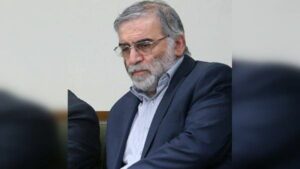 The trigger for that is the killing last Friday, 27 November, of Mohsen Fakrizadeh, head of Iran’s Ministry of Defence’s Research and Innovation Organisation. As BBC reported, Iranian President Hassan Rouhani stated of Iran’s enemies, in his first remarks following the assassination: “They are mindful that the global situation is changing, and are trying to make the most of these days to create unstable conditions in the region.”
MUDDYING THE WATERS
When Rouhani refers to Iran’s “enemies” he is evidently talking about the Trump administration, Israel and Saudi Arabia. The above quote indicates that Iran believes that both Israel and Saudi Arabia are worried about the changing tide of Middle Eastern politics and its consequence once Biden takes office. After all, Biden during his election campaign declared that he wished to rejoin the Iran nuclear deal, which was negotiated by Barack Obama in 2015 and forsaken by Trump in 2018.
As reported by Iran’s Fars news agency, Fakrizadeh was killed by “remote-controlled machine gunfire” while traveling in a car, with bodyguards, toward Absard, east of Tehran. As of this writing, however, none have come forward to own responsibility. The New York Times did, nevertheless, quote three U.S. mandarins, including two intelligence officials, as claiming that Israel was behind the attack.
Notably, Iran’s supreme leader, Ayatollah Ali Khamenei has called for a “definite punishment” of those responsible for the assassination of Fakrizadeh, while Rouhani declared that Iran would retaliate over his killing at a time of its choosing.
The Iranian president however disclosed on Saturday not only that Iran would respond “in due course” but, significantly, that Fakrizadeh’s killing would not push Iran into making hasty decisions. Indeed, as BBC’s Lyse Doucet pointed out, the Iranian president emphasized that Iran is “too wise to fall into Israel’s trap of rushing headlong into an immediate retaliation, risking an even greater reply, and a descent into an ever greater crisis which could imperil any chance of a new start in January.”
BBC’s chief international correspondent – who noted last week’s not-so-secret meeting in Saudi Arabia between Israeli Prime Minister Benjamin Netanyahu and Saudi Crown Prince Mohammad bin Salman (MBS), officially denied by Riyadh – said “it sent another signal that MBS and Netanyahu see a window as their last chance in a while to inflict a crippling blow on their arch-enemy, Iran – a blow to also complicate an already challenging course for a new U.S. team to re-engage with the Islamic Republic.”
The calculated recklessness of Fakrizadeh’s murder was widely condemned, including by former CIA head John Brennan who said that the killing of the Iranian nuclear scientist was a “criminal” and “highly reckless” act that risks inflaming the region.
Recently, BBC, quoting U.S. media reports, reminded that U.S. President Trump had asked senior advisors whether he had options to take military action against Iran’s main nuclear site. He appeared to be looking for a showdown with Iran before his departure.
That premier British news broadcast organization also recalled that just two weeks earlier Trump had boasted about the assassination in Iraq, via a U.S. drone strike in January this year, of top Iranian military commander Gen. Qasem Soleimani.
It also recalled that Netanyahu, in a TV presentation in 2018, had specifically talked about Fakrizadeh’s leading role in Iran’s nuclear programme.
It thus hardly requires the perspicacity of Kissinger to discern at least two possible motives for Fakrizadeh’s slaughter. They can be summed up: to jeopardize potential improvements in relations between Iran and the new Biden administration and to encourage Iran to engage in a retaliatory act.
It will be salutary, in any case, to note that while Israel is secure knowing that the U.S. will remain committed to its security under Biden, it must be concerned that his nominee for Secretary of State is Antony Blinken, a staunch support of the Iran nuclear deal.
EXPERIENCE AND EXPERTISE
While Trump’s attempts to overturn the election result have gone nowhere – at last count, his had lost 38 of his lawsuits, claiming widespread electoral and voter fraud – Biden has slowly but steadily trudged along building his new administration, according to “old-fashioned notions”, to quote CNN’s Stephen Collinson.
That is to say that such an endeavour is premised on assumptions such as that facts matter, that the commander-in-chief must project that Cabinet officials need experience and expertise, and that a fractured nation is governable, and that the world wants the U.S. to lead.
As Collinson explains, Biden recently laid out his bet in its most tangible form, as he unveiled his national security and foreign policy team, many of them protégés who represent the anti-thesis of the philosophy, style and comportment of Trump’s authoritarian “America First” and anti-science wit that is driven by conspiracy theories and a personality cult.
For instance, Blinken, often considered Biden’s alter-ego, has slogged for decades in government and on Capitol Hill while mingling with members of Washington’s diplomatic circuit. Jake Sullivan, Biden’s nominee as next national security adviser, is a Rhodes Scholar and a Yale law graduate, who is also considered a domestic policy wonk.
African-American Linda Thomas-Greenfield is destined to be America’s next ambassador to the United Nations, a position she seems to be eminently qualified as she has “flown the flag of the United States in foreign embassies for 30 years.”
We then have Alejandro Mayorkas – a Hispanic who came to the U.S. as a young immigrant – tipped to be the next Homeland Security Secretary, representing a stark “departure from Trumpism, in personality, background and qualification.”
Besides, there is John Kerry, former Secretary of State under Obama, who has been designated a nominee as special presidential envoy for the climate with a Cabinet-level status and seat on the National Security Council.
Avril Haines is to be the first female ‘Intelligence Czar’; while an all-female press team has also just been announced. Finally – as of the present – there is Janet Yellen, a renowned University of California professor and former chairwoman of the Federal Reserve, who has been nominated as Biden’s Secretary of the Treasury. If confirmed, she will be the very first female to hold that position.
In concluding this segment, I should be remiss not to mention that experts remind that Biden is the very first Democratic candidate to win the presidency without taking at least Florida and Ohio, since 1960. Also remarkable, so the pundits pontificate, is that Biden won, even as Trump’s base largely stuck by him.
POTENT CHINESE REMINDER
Coming, now, to Chinese Defence Minister and State Councilor Wei Fenghe’s eight-hour visit to Kathmandu, what is there to say?
Nepali media focused almost exclusively on Gen. Wei’s brief talks with Prime Minister K.P. Sharma Oli, currently holding the defence portfolio, his courtesy call on President Bidhya Bhandari, and the meeting with Nepal Army brass at H/Q, where China announced additional military assistance worth 50 million yuan. Virtually nothing of real substance regarding the palavers was made public.
Without that – and sans any official joint statements relevant to those courtesy calls/talks – recourse can only be taken to idle speculation.
Be that as it may, the Nepali press seemed to be inordinately impressed by the timing of the Wei visit: reminding one and all that it took place just after that of the Indian foreign secretary Shringla and came just weeks after the mission of the Indian Army chief Gen. Naravane and, more controversially, that of head honcho Goel of RAW, India’s external intelligence agency.
However, I found very little ‘meat’ on that bone: all too often visits by dignitaries come before or after others of note. In this case, it should be recalled that there can be no equation between a visit by China’s defence minister and State Councilor and those of an Indian foreign secretary and Indian army chief or an Indian intelligence agency.
To my mind, what was far more significant was that Wei’s visit was the first high-level visit from China to Nepal after Chinese President Xi Jinping’s October 12-13, 2019 state visit – a time span that has witnessed dramatic strategic shifts in not only China-India ties but also attempts by India and Trump’s America to contain China.
During the same timeline, Nepal-India relations took a nosedive; while territorial disputes between the two came to the fore, leading to Nepal’s parliament coming out with a new official map relating to land, including that on China’s borders. Fraudulent Indian propaganda about China’s claims on Nepalese territory has also emerged at this juncture.
Viewed against a more recent backdrop, the Wei visit took place at a time when the world awaits policy shifts, small and large, in the wake of the impending changing of the guards at the White House, post-20 January 2021.
It is quite possible – if not probable – that there could be a re-set in America-China relations with the inauguration of the Biden presidency. In any case, China would be understandably keen to explore the thinking in friendly neighbouring countries on this and other related diplomatic and strategic issues, well before Biden steps into the White House.
Finally, what should not be lost sight of is China’s description of the Wei excursion to Kathmandu as a “working visit” – such a nomenclature suggests a businesslike or seriousness of purpose, one further underlined by its very brevity.
In a nutshell, then, through the medium of the just-concluded “working visit” China has sought, in my opinion, to issue a potent reminder to all concerned that she is very much an active player on the Nepal/South Asian scene being linked to Nepal, as Chinese leaders are wont to say, by “mountains and rivers”.
In other words, it is a timely or potent reminder – from Beijing’s perspective – that China views relations with Nepal as of long-time, or permanent, duration, besides being of enormous strategic importance. One sincerely hopes that our present set of politicos – engaged in arcane ideological squabbles and noisy fights over the loaves and fishes of office – will get it.
The writer can be reached at: manajosse@gmail.com

Login to add a comment