








By Narayan Prasad Mishra
Democracy is widely regarded as the finest form of government because it is founded on the principles of freedom, equality, justice, the rule of law, and the people’s right to choose their representatives. Yet democracy alone cannot guarantee peace, prosperity, or good governance. Its success ultimately depends on the character of political leaders and the political awareness of the people.
Nepal’s recent political history provides a painful example of this truth. Since the restoration of multiparty democracy in 1990, and even after the country became a federal democratic republic in 2008, the hopes of the Nepali people have largely remained unfulfilled. Instead of building a prosperous nation, many political leaders have treated the state as a source of personal enrichment. Corruption has become institutionalized, public resources have been misused, merit has been sacrificed for political loyalty, and national interests have often been subordinated to party interests.
Ironically, almost every political party claims to speak in the name of democracy, socialism, or communism. Their election campaigns are filled with inspiring promises, emotional slogans, and lofty ideals. Yet after winning power, many of these promises are forgotten. Development slows, corruption flourishes, and ordinary citizens continue to struggle with unemployment, inflation, poor public services, and the growing exodus of young people seeking opportunities abroad.
Political slogans have too often become instruments of deception rather than expressions of genuine public service. They are carefully designed to appeal to the emotions of the electorate while concealing the real intentions of those seeking power. Citizens are repeatedly persuaded to believe that a new slogan, a new alliance, or a new promise will solve the nation’s problems. Too often, however, the result has been disappointment.
This concern inspired me to write the following poem.
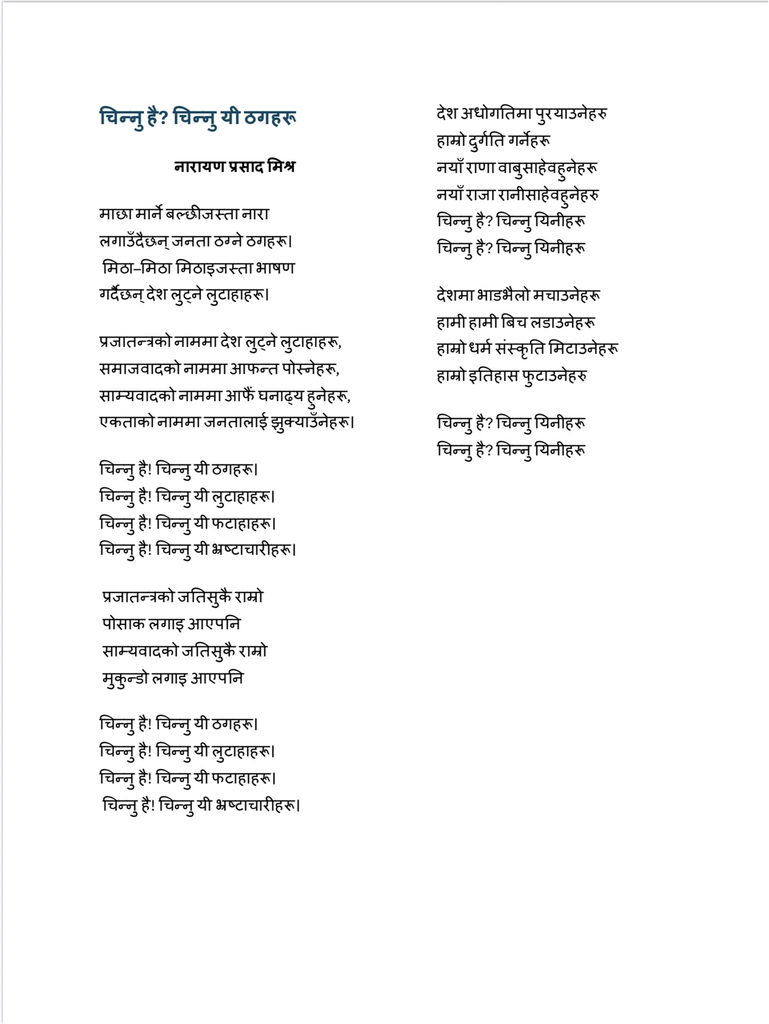
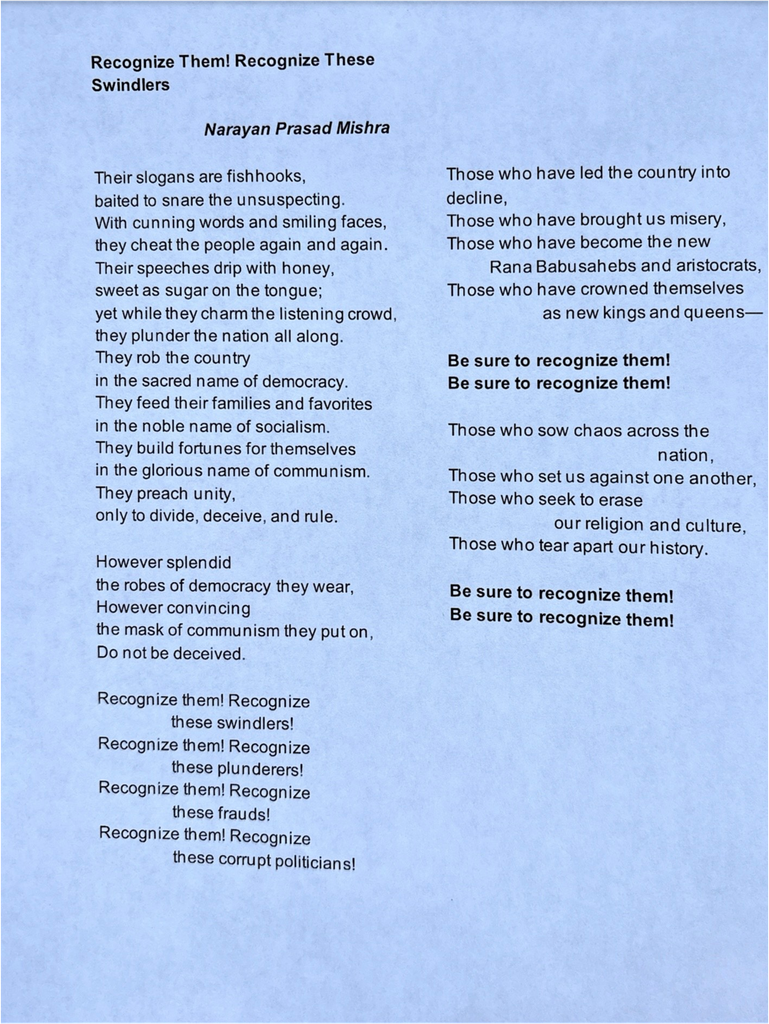
The poem is not directed at any single political party or individual. Rather, it is a warning against a recurring pattern in politics—a pattern in which leaders exploit noble ideals for selfish purposes. Democracy, socialism, and communism are political philosophies, not guarantees of honest government. Even the finest political system can be corrupted when those entrusted with power lack integrity and accountability.
The reference to the “new Rana Babusahebs” is particularly significant. Nepal abolished the hereditary Rana oligarchy in 1951 with the hope of ending privilege and arbitrary rule. Yet many citizens now feel that a new political elite has emerged. Although they are elected rather than hereditary rulers, they often enjoy similar privileges, accumulate wealth and influence, and remain disconnected from the hardships faced by ordinary people. The poem therefore argues that political titles may change, but arrogance, greed, and abuse of power can survive under different names.
Equally important is the poem’s warning against those who divide society for political gain. History has shown that politicians who cannot unite people through genuine leadership frequently attempt to strengthen their own position by creating divisions based on ethnicity, religion, region, language, ideology, or class. Such politics weakens national unity and distracts the public from the real issues of corruption, unemployment, economic development, education, and good governance.
The ultimate responsibility for protecting democracy does not rest with politicians alone. It also belongs to the citizens. Elections should not become occasions for exchanging votes for empty promises or short-term personal benefits. Instead, voters must carefully evaluate the character, integrity, competence, and past performance of those seeking public office. Democracy can flourish only when informed citizens refuse to reward corruption and dishonesty.
Nepal possesses immense natural beauty, a rich cultural heritage, and a resilient people. These strengths provide every reason for optimism. However, no nation can realize its potential unless its citizens remain politically vigilant and demand honesty, accountability, and genuine public service from those who seek power.
The message of the poem is therefore simple but urgent: do not be dazzled by attractive slogans, ideological labels, or eloquent speeches. Judge leaders by their actions rather than their words. A vigilant citizenry is the strongest safeguard of democracy, and the future of Nepal ultimately depends not on political rhetoric but on the wisdom of its people to recognize those who truly serve the nation—and those who merely seek to exploit it.narayanshanti70@gmail.com

Login to add a comment