







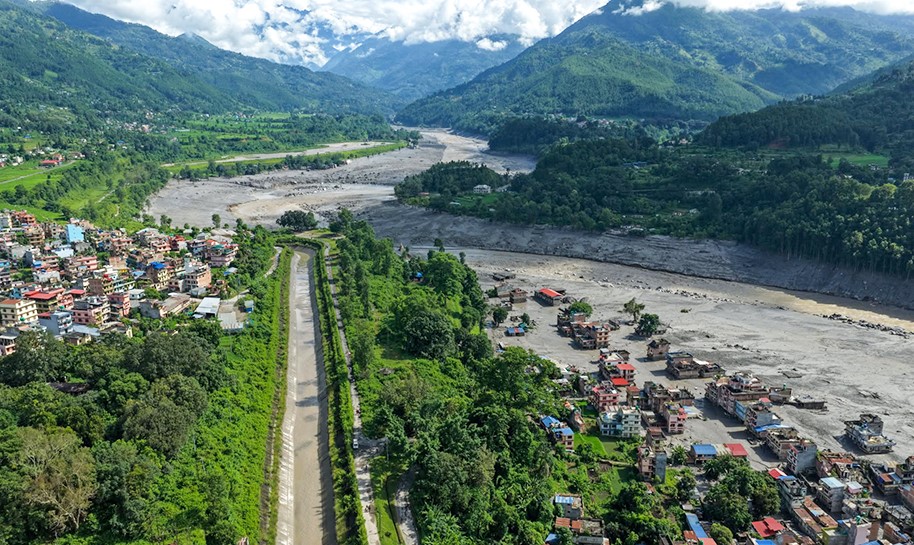
Kathmandu, Sept 1: Six days after the devastating Bhotekoshi Trishuli flood, thousands of families are still searching for loved ones swept away by water, mud and debris. Relatives of the missing have been visiting hospitals and morgues in Kathmandu, Chitwan and Pokhara, checking photographs of recovered bodies and putting up photos and contact numbers in the hope of finding someone.
The death toll reached 939 on Monday, while 3,925 people remain missing, according to the National Disaster Risk Reduction and Management Authority. Of those missing, 3,333 are Nepali citizens and 592 are foreign nationals. Nuwakot has reported the highest number of missing people at 1,158, followed by Rasuwa at 865.
Those unaccounted for include 45 Nepali Army personnel, 25 Nepal Police personnel, 13 Armed Police Force members, 18 customs and immigration officials, and six officials from Langtang National Park and the quarantine office.
The number of missing hydropower workers has been revised to 639 from 933 as more people are being accounted for. Eight Kathmandu University engineering students who had reached a hydropower project for internships a day before the disaster are also missing.
The Foreign Ministry said the 592 missing foreign nationals were from 39 countries. More than 323 foreign nationals have been rescued.
AFP reported that Indian authorities have recovered 17 bodies from rivers in Uttar Pradesh believed to have been carried downstream from Nepal. They have not been included in Nepal’s death toll.
The flood also swept away hundreds of vehicles. The National Federation of Nepali Transport Entrepreneurs estimates that about 100 buses, more than 70 microbuses and around 300 freight tippers remain missing in Rasuwa, Nuwakot and Dhading. Around 300 containers near Rasuwagadhi are also unaccounted for. About 500 drivers, operators, workers and traders linked to the vehicles remain out of contact.
Authorities are also monitoring the risk of further flooding near the Nepal China border after a lake formed there. Two CCTV cameras are being installed to monitor river levels and provide early warnings.
Meanwhile, electricity remains out in Dhunche, Rasuwa’s district headquarters. The Nepal Red Cross has provided a generator so residents and stranded pilgrims can charge phones and reconnect with families.
Scientists say the disaster began when a massive mass of ice, rock and debris fell from about 5,200 metres in the Langtang Lirung area and entered the Lhende River. The surge travelled about 22 kilometres to Rasuwagadhi in just over seven minutes, reaching an estimated 167 kilometres per hour.
The region suffered another flash flood in July 2025, but survivors say this year’s disaster was far more destructive.
People’s News Monitoring Service

Login to add a comment