








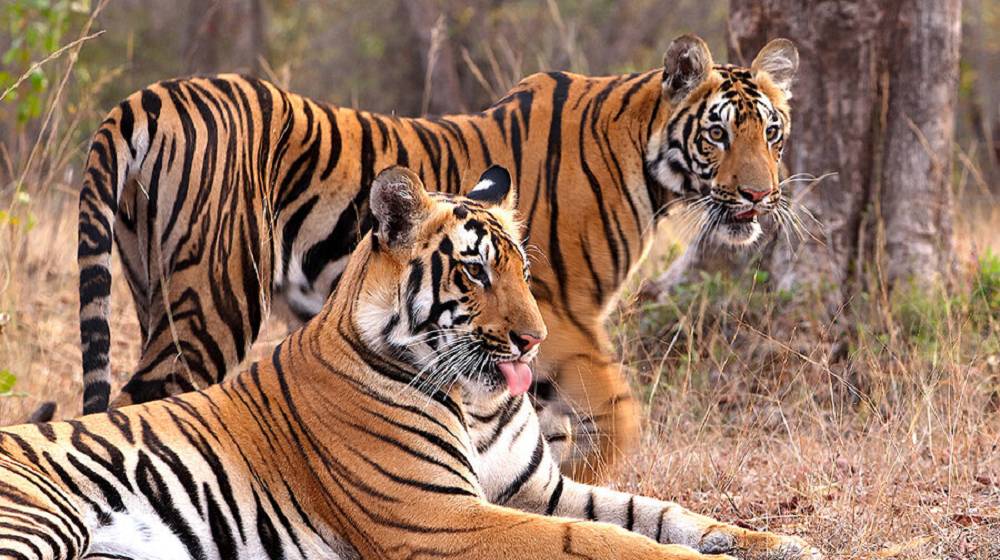
Kathmandu, August 24: Parsa National Park has begun the certification process for the Conservation Assured/Tiger Standards (CA/TS) to bring its tiger conservation management in line with international standards as the number of Bengal tigers in the park continues to increase.
The process was initiated after the number of adult tigers in Parsa National Park increased from 41 in 2022 to 71 according to the 2026 census, with the aim of turning this conservation achievement into long-term, high-quality management.
As part of the process, a CA/TS workshop was held at Parsa National Park under the auspices of the Department of National Parks and Wildlife Conservation. Senior ecologist at the department Haribhadr Acharya, Chief Conservation Officer of the park Ram Chandra Khatiwada, representatives of ZSL Nepal, Buffer Zone Management Committees, security agencies, park staff, user committees and local stakeholders participated in the workshop.
Chief Conservation Officer Khatiwada said the workshop discussed initial preparations for CA/TS, self-assessment, management improvements, evidence collection and coordination among stakeholders.
At the workshop, Senior Ecologist Acharya said that merely increasing the tiger population was not enough and that continuous improvements in habitat, prey availability, security and overall management quality were necessary to sustain the population over the long term. He said CA/TS evaluates not only the number of tigers but the entire management system required for tiger conservation against international standards, making the process an important opportunity for Parsa.
Chief Conservation Officer Khatiwada said that the increase in the tiger population in Parsa from 41 in 2022 to 71 in 2026 was a significant conservation achievement, but the challenge now was to ensure the safety of both tigers and local communities. He stressed the need to create an environment in which local communities could directly benefit from conservation.
According to him, the park’s “Tiger Friend Campaign” can be linked with the CA/TS process to make human-tiger coexistence, community safety, awareness and participation more effective.
Stakeholders participating in the workshop emphasized that CA/TS should not be pursued merely as a process for obtaining certification, but rather as a joint campaign involving the park, buffer zones, security agencies, conservation partners and local communities.
CA/TS will assess not only the tiger population but also habitat, prey availability, security, management, scientific monitoring, community participation, human-tiger conflict, tourism and the long-term status of tigers, among other aspects.
The process will now proceed through registration, self-assessment, preparation of an improvement plan, preparation of compliance-related documents, national review, independent assessment and an international decision.
In this process, priority will be given to habitat and prey conservation, control of poaching, smart patrolling, management of human-tiger conflict, scientific monitoring and community participation, according to Chief Conservation Officer Khatiwada.
With the tiger population continuing to grow, the CA/TS certification process is expected to help make conservation management at Parsa National Park more scientific, systematic and consistent with international standards. Khatiwada said the success of conservation would not depend merely on obtaining certification, but on ensuring that tigers remain safe, forest ecosystems remain healthy, and local communities remain safe and become active partners in conservation.

Login to add a comment