







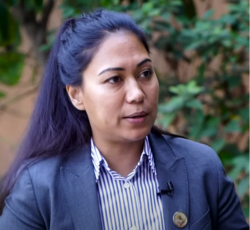
Kathmandu, July 14: Former minister and Rastriya Swatantra Party lawmaker Sumana Shrestha has strongly criticised what she described as state-backed arbitrary vehicle parking, accusing those in power of trying to bully and intimidate people with differing views.
In a social media post, Shrestha said the vehicles parked indiscriminately on Monday caused unnecessary hardship and reflected a culture of political favouritism.
“Yesterday, we suffered because of vehicles parked haphazardly. It was easy to identify the vehicles, but those who abandoned them in the middle of the road acted with complete confidence that they would face no consequences. That is cronyism,” she wrote.
She said those in leadership positions were using their authority to target people with different opinions instead of serving all citizens equally.
According to Shrestha, the belief that those in power can do anything while in office undermines the country’s longterm prospects and weakens democratic institutions.
She also warned against creating mistrust between citizens and security personnel, saying such a situation benefits no one. Stressing that police are the state’s closest representatives to the public after local governments, she said they should not be made the target of public anger.
Describing law and order as the foundation of economic development, Shrestha wrote, “Just as industries need a stable macroeconomic environment to grow, a stable economy also depends first on peace and security.”
She added that people are often forced to take sides so quickly that they forget their struggle has never been against uniformed security personnel but against those in positions of power.
Shrestha also questioned the role of lawmakers, saying elected representatives have failed to act as a bridge between the state and the people during periods of growing tension.
“We often wonder whether they truly represent the people or only their political parties. Or are they simply waiting quietly for their turn to wield state power?” she asked.
She criticised lawmakers for failing to raise issues such as funding for non-lethal equipment for security forces, mental health support for police personnel and mechanisms to hear their grievances. As a result, she argued, security personnel are left with little choice but to act as instruments of repression.
She concluded with a pointed question to those in power: “Can you see us as fellow Nepalis before viewing us as people who need to be put in our place?”
People’s News Monitoring Service

Login to add a comment