







By Our Diplomatic Correspondent
The extraordinary reception accorded to Rastriya Swatantra Party (RSP) chair Rabi Lamichhane in New Delhi deserves careful scrutiny, not celebration. India is known for engaging with political forces that emerge as influential in Nepal. It did so with the Maoists after the peace process. It did the same when the communist alliance led by K. P. Sharma Oli became dominant. In that sense, India reaching out to a powerful figure in Nepal’s current ruling establishment is not unusual.
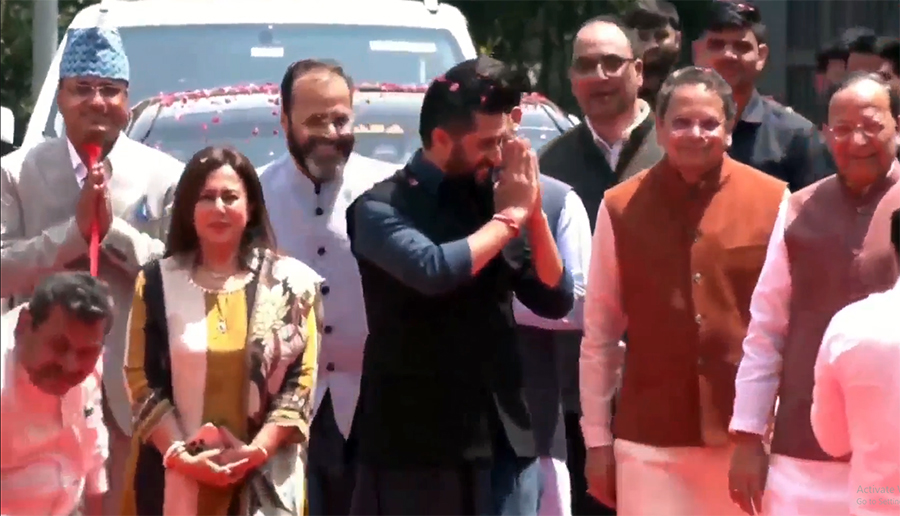
What is unusual during Rabi’s visit is the scale and symbolism of the welcome. Lamichhane is neither Nepal’s prime minister nor foreign minister. Yet he met some of India’s most powerful officials, including Narendra Modi, Amit Shah, S. Jaishankar and Ajit Doval. Reports from Delhi suggest that even seasoned Indian observers viewed the treatment as exceptional.
That naturally raises a question: why would India invest so much political capital in a leader who remains controversial at home?
Lamichhane’s political career has been accompanied by legal and ethical controversies. He has faced allegations related to cooperative fraud and passport irregularities. He was previously detained and his parliamentary status was suspended during legal proceedings. While the judicial process must be respected and guilt can only be determined by courts, these controversies remain part of his public profile.
Yet New Delhi chose to look beyond that baggage. One explanation is straightforward. India is hedging its bets. Relations between Kathmandu and New Delhi have entered a sensitive phase. Prime Minister Balendra Shah has adopted a more assertive posture on several issues. He declined a meeting with India’s foreign secretary over protocol concerns. He also revived discussion of unresolved border disputes.
Against that backdrop, Lamichhane’s visit appears to be more than a routine political exchange. It sends a message that India has multiple channels through which it can engage Nepal’s leadership.
This would not be the first time India cultivated ties with influential Nepali figures outside traditional diplomatic structures. Throughout Nepal’s modern political history, New Delhi has maintained relationships across party lines and ideological camps. Such engagement serves India’s long-term strategic interests, regardless of who occupies power in Kathmandu.
History offers important lessons. One figure often cited in discussions of India’s influence in the Himalayas is Lhendup Dorjee. Dorjee enjoyed strong backing from India during a turbulent period in Sikkim’s history. His political rise eventually coincided with events that culminated in the integration of Sikkim into India in 1975. The circumstances of Sikkim and Nepal are entirely different, and direct comparisons would be misleading. Still, the episode illustrates how regional powers often cultivate local political actors when pursuing broader strategic goals.
That is why Nepalis should approach Lamichhane’s reception with caution rather than excitement. The real measure of friendship between states is not ceremonial hospitality. It is the willingness to address difficult issues. On that front, little has changed.
India has yet to reach a mutually acceptable resolution on the longstanding disputes involving Kalapani, Limpiyadhura and Susta. Nepal continues to maintain that these territories belong to it, while the dispute remains unresolved despite years of diplomatic engagement.
If India genuinely seeks a new chapter in bilateral relations, progress on these substantive issues would carry far greater significance than flower showers, photo opportunities or high-profile meetings. Lamichhane may view the visit as a diplomatic breakthrough. India may see it as a practical investment in a rising political force. Both interpretations are possible.
But Nepalis should avoid reading too much into the optics. International politics rarely operates on sentiment. Countries act according to interests, not affection. Delhi’s warm embrace of Lamichhane is best understood through that lens.
For Nepal, the challenge is not to be impressed by symbolic gestures. It is to ensure that engagement with any foreign power, including India, advances national interests, preserves policy independence and contributes to resolving issues that have remained unsettled for decades. Until that happens, the red carpet in Delhi should be viewed with curiosity, but also with a healthy degree of caution.

Login to add a comment