







By Our Reporter
The latest split in the Rastriya Prajatantra Party (RPP) is about much more than a leadership dispute. At its core lies a fundamental disagreement over what role the monarchy should play in Nepal’s politics and who should lead the royalist movement at a time when public frustration with mainstream parties has created fresh opportunities for monarchist forces.
The departure of general secretary Dhawal Shumsher Rana and more than 180 leaders marks the seventh major split in the party’s 35-year history. For a party that has long struggled with factionalism, the development is hardly unprecedented. Yet the timing makes it significant.
Royalist groups have spent the past year attempting to regain political relevance. Rising dissatisfaction with established parties, economic frustrations and declining trust in political institutions have created space for alternative political narratives. Monarchist leaders hoped to convert that public mood into a broader movement. Instead, they now find themselves divided once again.
The immediate trigger appears to be a long running power struggle between Rana and party chair Rajendra Lingden. Both camps accuse each other of undermining the party. Rana says the leadership ignored demands for an early general convention and suppressed internal debate. Lingden argues that Rana and his allies had already decided to abandon the party and were working against its organisational interests.
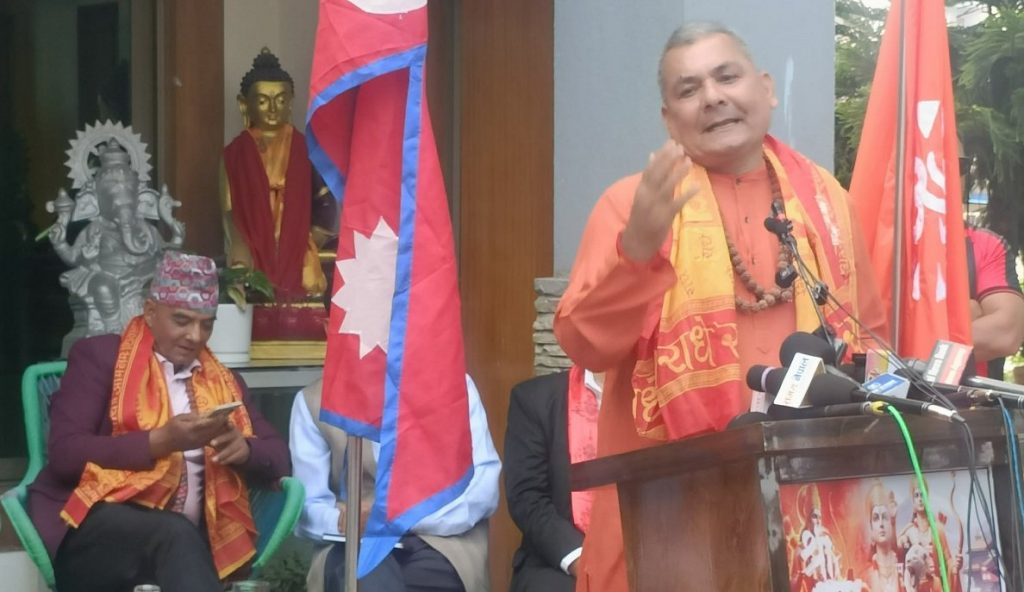
Beneath those accusations sits a larger ideological dispute. The RPP officially advocates a constitutional monarchy within a democratic framework. Rana and many of his supporters have increasingly pushed for a more active political role for the monarchy. The disagreement became more visible after former king Gyanendra Shah returned to Kathmandu earlier this year and royalist groups tried to mobilise public support around him.
That event exposed rival centres of influence within the monarchist camp. Rana, Rabindra Mishra, Nabaraj Subedi and businessman Durga Prasai all emerged as prominent figures. Instead of creating a united movement, the campaign revealed competing ambitions and different visions for the future.
For Prasai, the split could prove beneficial. Although controversial, Prasai has managed to attract attention and mobilise crowds in ways that traditional royalist parties often struggle to do. His appeal rests largely on anti-establishment rhetoric rather than party structures. The arrival of Rana and his supporters could give Prasai something he lacks: experienced politicians, organisational networks and a nationwide cadre base.
A partnership between Rana and Prasai could therefore create a new pole within the royalist movement. Whether that translates into electoral success is another matter. Nepal’s history shows that monarchist groups often generate headlines but struggle to convert public anger into sustained political support.
For Lingden, the split presents both risks and opportunities. The immediate risk is obvious. The departure of senior leaders weakens party unity and may reduce the RPP’s organisational reach in several districts. The image of another split also reinforces public perceptions that the party remains trapped in internal disputes.
Yet Lingden may also calculate that a smaller but more disciplined party is preferable to constant factional warfare. He has spent years trying to position the RPP as a mainstream political force rather than a protest movement. The exit of leaders advocating a more aggressive monarchist agenda could allow him to consolidate control and present a clearer political message.
The broader challenge for all royalist groups remains unchanged. Despite periodic surges of public sympathy, support for the restoration of the monarchy remains fragmented. Some supporters want a ceremonial king. Others seek a more active monarchy. Some view the monarchy as a symbol of national identity, while others see it as a vehicle for broader political change. Those differences have repeatedly prevented the emergence of a unified movement.
The Tinkune protests and subsequent divisions highlighted this problem. Royalist leaders could agree on opposing the current system, but they struggled to agree on what should replace it and who should lead the campaign.
That question remains unresolved. The latest split shows that the biggest obstacle facing Nepal’s monarchist movement may not be republican parties. It may be the inability of royalist leaders themselves to agree on the monarchy’s place in politics. Until that issue is settled, the movement is likely to remain divided, regardless of how much public frustration exists with the political establishment.

Login to add a comment