







By Our Reporter
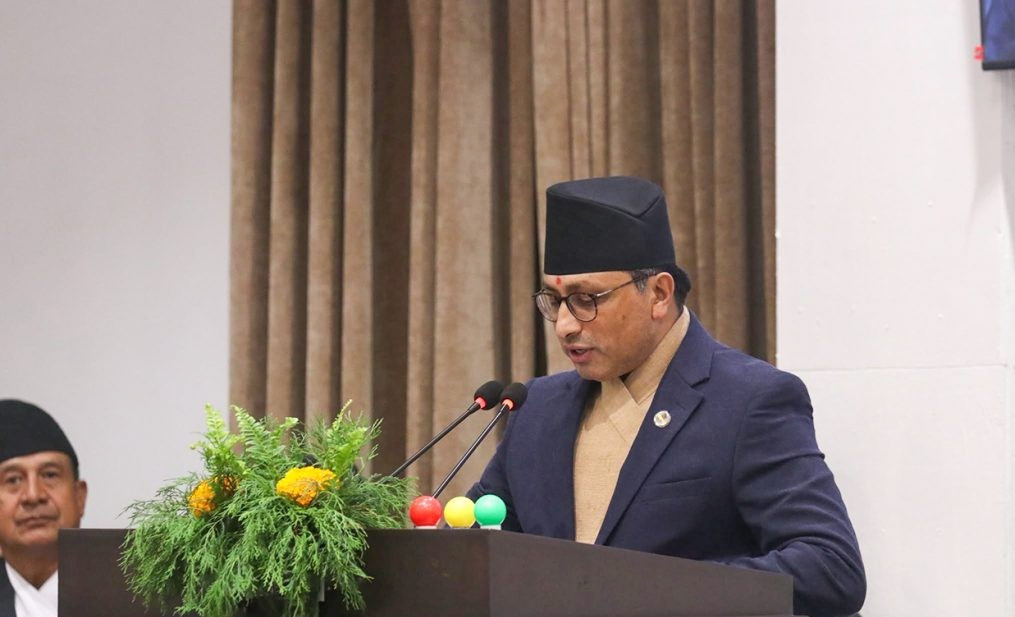
Finance Minister Swarnim Wagle’s first full budget has been marketed as a reform-oriented document designed to stimulate growth, reward taxpayers, attract investment and ease the burden on Nepal’s middle class. The budget offers income tax relief, salary hikes for civil servants, customs concessions for industries and promises of administrative reform. On the surface, it appears to be a budget aimed at reviving confidence in a sluggish economy.
Yet beneath these headline measures lies a more complicated story. One of the most controversial decisions, the imposition of VAT on electricity, has triggered concerns that the very goods most essential to daily life could become more expensive, potentially undermining the budget’s promise of inclusive growth.
The contradiction is striking. While the government has reduced tax burdens for salaried taxpayers and businesses in several sectors, it has simultaneously increased input costs for industries producing medicines, dairy products, food grains and agricultural goods. These are not luxury items. They are necessities consumed by virtually every household.
The problem lies in Nepal’s VAT system. Industries producing VAT-exempt goods cannot claim credits for the VAT they pay on inputs such as electricity. When electricity becomes more expensive because of VAT, those industries absorb the additional cost and eventually pass it on to consumers.
This is why manufacturers of medicines, rice, lentils, dairy products and spices are warning of higher prices. Pharmaceutical producers argue that medicines are already under cost pressure from rising packaging expenses, transportation costs and currency fluctuations. The new electricity tax adds another layer of burden. Since medicines remain VAT-exempt, producers cannot recover the tax through credits.
The same logic applies to food production. Rice mills, lentil processors, dairy industries and spice manufacturers all rely heavily on electricity. If their electricity bills rise and they cannot claim VAT credits, consumer prices inevitably move upward.
For low-income households, even small increases matter. A one- or two-rupee increase per kilogram of rice or lentils may seem insignificant in isolation, but across a month’s worth of purchases, the cumulative impact becomes meaningful. This is particularly true at a time when many households are still struggling with stagnant incomes and elevated living costs.
Agriculture could face a similar challenge. Farmers increasingly depend on electric pumps for irrigation and use electrically powered machinery for harvesting and processing crops. Rising electricity-related costs may gradually translate into higher production costs for staple crops such as rice, wheat and maize.
What makes the debate politically sensitive is the perception of unequal treatment across sectors. Business leaders argue that industries producing alcohol, cigarettes, branded processed foods, expensive garments and footwear can often claim VAT credits on electricity. In contrast, producers of essential goods cannot.
Whether this interpretation fully captures the policy intent is open to debate, but it raises an important question: should Nepal’s tax system make it relatively easier to produce luxury goods than basic necessities?
Critics argue that this undermines the principle of social equity. A tax structure is generally expected to place heavier burdens on discretionary consumption and lighter burdens on essentials. The electricity VAT, opponents say, risks achieving the opposite outcome.
At the same time, the government faces genuine fiscal pressures. Revenue collection has consistently fallen short of targets. By mid-May of the current fiscal year, collections remained well below expectations. Yet the government has proposed an ambitious Rs 2.124 trillion budget, larger than the current year’s spending plan and supported by a combination of optimistic revenue projections and substantial borrowing.
From this perspective, expanding the tax base is understandable. The government needs resources to finance salary increases, infrastructure projects, social programs and development initiatives. It also hopes to maintain fiscal stability while pursuing a 7 percent economic growth target.
Supporters of the budget argue that it contains several positive structural reforms. Customs duties have been reduced on hundreds of raw materials, excise duties on many products have been abolished, tax administration is being digitized, and bureaucratic restructuring has been proposed. The budget also seeks to attract investment, engage the Nepali diaspora and promote sectors such as technology, energy and entrepreneurship.
Former Finance Minister Janardan Sharma has praised these reform-oriented elements, arguing that effective implementation could remove long-standing bottlenecks to growth. Even former Prime Minister Baburam Bhattarai acknowledged several positive measures, including support for the private sector and incentives aimed at investment and innovation.
However, concerns about implementation remain significant. Critics point out that recurrent expenditure still dominates government spending, while development expenditure remains relatively modest. Questions also persist about whether ambitious revenue targets and growth projections are realistic.
Former Finance Minister Barshaman Pun has gone further, arguing that the budget is overly dependent on borrowing and disproportionately focused on the middle class while offering limited direct support to vulnerable groups.
That criticism becomes particularly relevant in the debate over electricity VAT. The budget clearly delivers benefits to salaried taxpayers and civil servants. But if rising electricity-linked costs push up the prices of food, medicines and agricultural products, lower-income households may end up paying a larger share of the adjustment.
In that sense, the controversy over electricity VAT has become a broader test of the budget itself. The central question is not whether the government needs more revenue—it undoubtedly does. The question is who ultimately bears the cost. If essential goods become more expensive while tax relief flows primarily to middle-income earners and businesses, the budget risks creating a perception that its benefits and burdens are not being shared equally.
The coming months will determine whether these concerns materialize. But for now, the debate has exposed a fundamental tension at the heart of the budget: can a policy package designed to stimulate growth and reward taxpayers also protect the affordability of the goods that ordinary Nepalis depend on every day?

Login to add a comment