







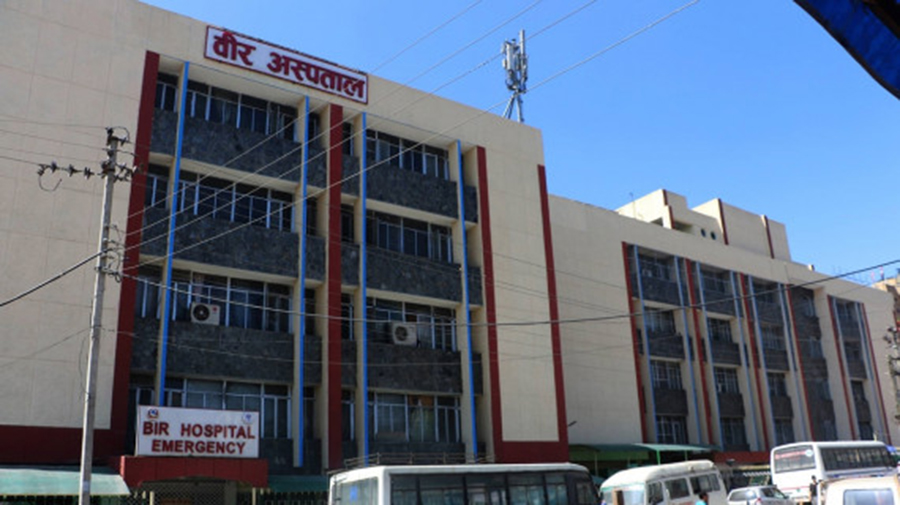
Kathmandu, Aug 12: Patient numbers at Bir Hospital, one of Nepal’s oldest and largest government hospitals, continue to rise, but the hospital’s diagnostic capacity has failed to keep pace. Patients face long queues for consultations and weeks or months for tests such as MRI and CT scans.
Hospital records show patients must wait one to two months for an MRI and five to seven days for a CT scan. Those unable to wait are forced to turn to private hospitals and diagnostic centers, where tests cost significantly more.
The problem affects even inpatients. Patients referred for urgent MRI scans often have to wait weeks, delaying treatment.
Bir Hospital Information Officer Tara Bahadur Karki acknowledged the problem, saying demand has increased while the number of machines remains limited. “Depending on the patient’s needs, we provide MRI, CT scan and tomotherapy services, but sometimes patients have to wait for months,” he said.
Demand for advanced diagnostic services has risen sharply. The number of CT scan users increased from 11,583 in fiscal year 2021/22 to 16,999 in 2024/25. MRI users rose from 6,049 to 8,020 during the same period. Endoscopy users nearly doubled, from 3,704 to 6,610, while colonoscopy users increased from 1,305 to 1,876.
Despite the growing demand, a 16 slice CT scanner at the hospital is currently out of operation, adding pressure to the machines still in use. Timely maintenance and better equipment management could reduce waiting times.
The problem extends to cancer treatment. Bir Hospital’s tomotherapy machine, purchased for Rs 399.98 million, can treat 50 to 60 patients a day when fully operational. However, it currently serves only 20 to 25 patients daily. Patients seeking tomotherapy treatment reportedly wait two to three months.
The machine has also remained out of service for extended periods. It was nonfunctional for four weeks in 2024 and again from November 13, 2025 to February 10, 2026. During these breakdowns, cancer patients were forced to seek treatment at more expensive private facilities.
The hospital says Nepal lacks technicians capable of repairing the specialised machine, leaving it dependent on the manufacturer. Spare parts must also be imported, further delaying repairs.
The situation highlights a broader problem in Nepal’s public health system: the government spends heavily on purchasing sophisticated equipment but often fails to ensure proper operation, maintenance, technical manpower and performance monitoring.
Under the Public Health Act 2018, the government is required to provide citizens with quality healthcare. Yet months long waits and underused equipment raise serious questions about how effectively that obligation is being met.
With patients from across the country continuing to seek treatment at Bir Hospital, expanding services alone will not be enough. The hospital also needs to make full use of existing equipment, strengthen technical capacity and improve service management.
People’s News Monitoring Service

Login to add a comment