







By Our Reporter
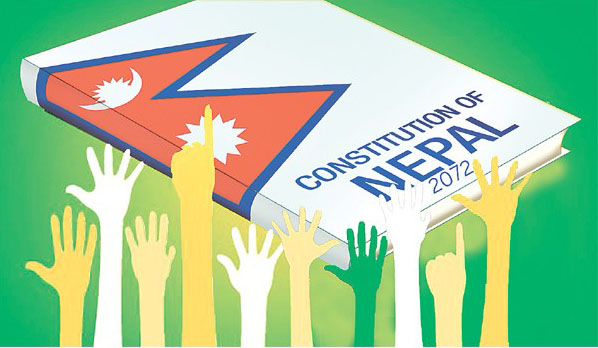
Nepal’s latest constitutional debate has opened up familiar but sensitive questions again: should the country shift to a directly elected executive president, should Nepalis living abroad get voting rights, and how far should reforms go into the judiciary and federal structure? A government taskforce led by Prime Minister Balendra Shah’s adviser Asim Shah has placed these ideas on the table as part of a broader constitutional review process. The ideas are not final. They are discussion points meant to test political appetite.
The taskforce has grouped 54 proposals into seven categories covering governance, elections, federalism, provinces, local government, judiciary, constitutional bodies and miscellaneous reforms. Among them, the most politically charged is the idea of changing the executive system itself. The group has floated options ranging from the current parliamentary model to a modified parliamentary system or a directly elected executive president.
Supporters of a directly elected president argue that Nepal’s biggest political problem is instability. Governments change frequently, coalitions shift often, and policy continuity suffers. A president elected directly by citizens, they say, could bring fixed tenure and clearer authority. But critics see a different risk. They argue that concentrating executive power in one individual could weaken parliamentary checks and reduce accountability. Nepal’s democratic system, built after 2015, was designed precisely to avoid excessive centralisation.
This is where the political divide becomes visible. Larger parties may appreciate the idea of stability, but they also fear losing influence under a presidential system. Smaller parties often depend on parliamentary bargaining and coalition politics, which could shrink under a strong executive model. So, agreement looks difficult.
The second major proposal is overseas voting. This is less ideological but still complicated. The taskforce suggests giving voting rights to Nepalis abroad, along with introducing options like “None of the Above” and recall mechanisms for elected representatives. The idea of overseas voting has strong public demand and even a Supreme Court directive behind it. Yet governments have repeatedly delayed it, citing logistical and legal barriers such as voter registration systems, identity verification, and election security.
On paper, overseas voting looks easier to agree on compared to constitutional restructuring. In practice, it still needs consensus on administration and trust in the electoral system. Parties may support it publicly, but implementation could stretch over years.
Judicial reform adds another layer of complexity. The taskforce has even proposed reappointing judges across all court levels to reduce political influence. This is one of the most controversial suggestions. Legal circles are likely to resist it strongly, as it raises questions about continuity, independence and constitutional safeguards. Proposals to restructure the Judicial Council and Constitutional Council also directly affect how judges and constitutional officeholders are appointed. These are areas where institutional resistance is expected.
Federal restructuring proposals also revisit long-standing grievances. Provinces continue to complain about weak financial autonomy and overlapping powers. The taskforce suggests reviewing resource distribution, possibly reducing ministries, and even discussing directly elected chief ministers. Local governance reforms also raise questions about party-based versus non-partisan elections.
So where does this leave the idea of consensus? The truth is simple but uncomfortable. Nepal’s major parties do not share the same constitutional imagination. Some prioritise stability, others decentralisation, and others institutional balance. A directly elected president would require a major shift in that shared understanding. Overseas voting, while less ideological, still depends on administrative trust and political will. Judicial restructuring touches the core of institutional independence, making it even harder to agree on.
The taskforce is doing what it is supposed to do: widen the conversation, not settle it. But widening debate is easier than narrowing disagreement.
The real test will come later, when discussion turns into drafting. At that point, political parties will have to choose between long-term structural change and short-term political comfort. Nepal has seen constitutional debates before. What it has struggled with is not ideas, but agreement. And unless major parties start compromising on their core positions, even the most carefully drafted proposals risk staying exactly what they are today: options on paper, not changes on the ground.

Login to add a comment