







By Our Political Analyst
A prime minister in a parliamentary democracy does not govern from silence but governs by standing in the House, facing questions, defending choices, and listening to criticism, even when it stings. That is the arrangement. Voters elect representatives, representatives form government, and the prime minister answers to Parliament. It is the core of democratic accountability, that fragile thing humans keep damaging and then pretending to repair.
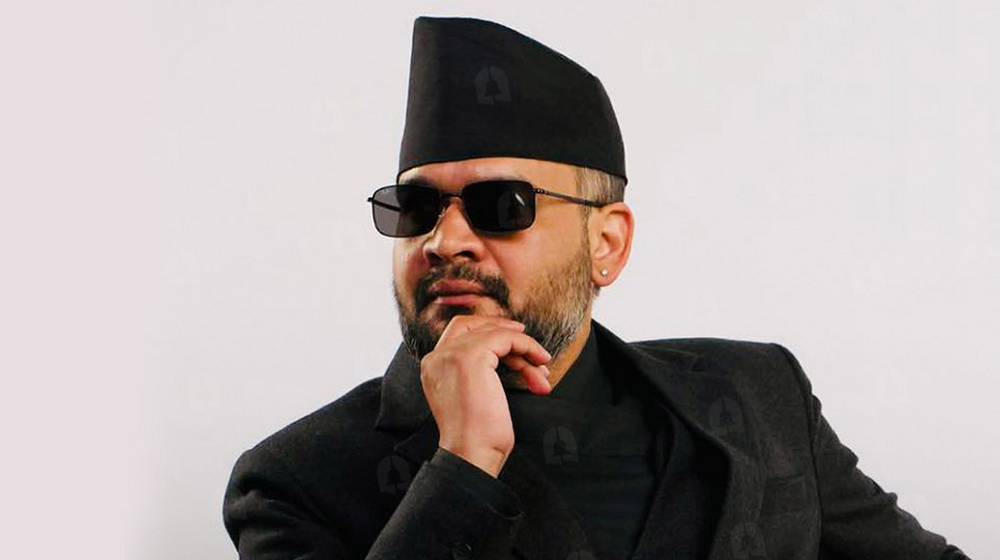
Prime Minister Balendra Shah came to power as a symbol of rupture. He was not just another politician climbing the party ladder. He emerged from street anger, digital mobilization, and a youth-driven rejection of old political habits. His appeal rested on authenticity. He looked like someone who would challenge the system from within, not someone who would simply sit at the top of it and go quiet. That is why his prolonged absence from the House of Representatives has become more than a scheduling issue. It has become political symbolism.
The opposition’s protests are not merely partisan noise, though opposition parties everywhere do enjoy dramatics as a professional hobby. Their central demand is legitimate: the prime minister should appear in Parliament and answer questions directly. For over a month since assuming office, Shah has not meaningfully addressed the House. He has skipped sessions, walked out during the joint sitting where the President presented the government’s policy and program, and allowed ministers to respond on matters that require the prime minister’s own political accountability. In a parliamentary system, that is not a trivial slight. It signals contempt for the institution.
The opposition has seized on this because it exposes a contradiction at the heart of Shah’s political rise. He campaigned as the outsider who would dismantle elite arrogance. Yet refusing to face elected lawmakers mirrors exactly the same arrogance he once denounced. The protest is therefore strategic and substantive at once. Strategic, because the opposition sees a chance to puncture his moral authority. Substantive, because democratic practice depends on precedent. If a prime minister can ignore Parliament in his first weeks and pay no price, the office itself changes. It starts drifting toward a presidential style where the leader speaks to the public only when convenient and treats Parliament as a backdrop.
That drift matters. Nepal is not a presidential republic. The prime minister does not derive authority from direct personal mandate. He leads a government that survives only as long as it commands parliamentary confidence. By staying away, Shah is not just avoiding heckling. He is implicitly redefining where legitimacy comes from. He seems to prefer direct communication through social media, rallies, and symbolic gestures. That may work for influencers. It does not work for constitutional government.
Why is he ignoring the calls? Partly because silence can be a political strategy. Shah’s political base is not rooted in parliamentary culture. It is rooted in anti-establishment sentiment. Many of his supporters view Parliament as a club of compromised politicians and endless procedural theater. By avoiding the House, he may believe he preserves his outsider image. He avoids getting trapped in debates framed by old parties and keeps speaking over institutions directly to the public. It is a familiar populist instinct: claim to represent “the people” while treating institutions that represent the people as obstacles.
That strategy is shortsighted. Populist legitimacy burns bright and fast. Institutional legitimacy lasts. A leader may win applause by bypassing Parliament once, twice, even repeatedly. But each bypass weakens the very system that protects democratic dissent. When bulldozers displace the urban poor, when judicial appointments raise suspicion, when executive decisions provoke unease, Parliament is where these questions must be confronted. A Facebook post is not scrutiny. A press release is not debate. A curated speech is not accountability.
A democratic prime minister does not get to decide when Parliament matters. He must go there precisely when it is uncomfortable. The opposition may be exploiting the moment, but that does not make the demand any less valid. The public deserves to hear their prime minister answer in the House, not through a social media caption crafted between photo ops.
Those fifty metres between Singha Durbar and the federal parliament building are not just physical distance. Right now, they measure the gap between rebellion and responsibility. If Shah refuses to cross it, he will prove that his politics was never about changing the system.

Login to add a comment