







By Our Reporter
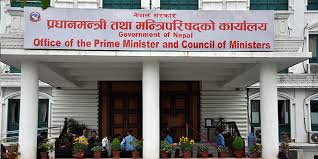
Reducing the number of ministries from 22 to 18 looks like a simple and positive step. It gives the impression that the government wants a smaller, more efficient system. It also suggests that decision-making will become faster and costs will come down. On paper, this looks like a clear effort to improve how the state works.
The expansion of ministries in Nepal grew out of political bargaining after federalism took shape. Once the country adopted seven provincial governments, the federal structure was supposed to become lighter and more strategic. Instead, it expanded. The constitution set a ceiling of 25 ministers including the prime minister, but it left the design of ministries flexible. That flexibility turned into excess.
Former prime minister K. P. Sharma Oli stretched that limit further, forming a 40-member cabinet with multiple deputy prime ministers. The logic was political balance, not administrative efficiency. Coalitions needed space, leaders needed roles, and ministries became instruments of accommodation rather than governance. Even earlier, under Sushil Koirala, the structure was smaller, but the trend toward expansion had already begun to take root.
Against that background, the current attempt by Prime Minister Balendra Shah to reduce ministries signals a shift in direction. Removing deputy prime minister’s post and consolidating portfolios sends a message that government can function without excessive political layering. It is a correction of a long-standing habit where power distribution often mattered more than performance delivery.
But reform is not achieved by subtraction alone. A leaner cabinet does not automatically produce a leaner state. The real question is whether the machinery underneath will also change. Ministries may shrink, but if departments, boards, committees, and parallel project units remain untouched, the administrative weight stays the same. In that case, the reform becomes cosmetic rather than structural.
There is also the issue of design logic. Some of the newly structured ministries still show functional overlap. Agriculture, for instance, continues to operate without full integration with land and irrigation policy. Yet those three areas are deeply connected in a country where agriculture depends heavily on water access and land management. Splitting them weakens coordination and slows delivery. Similarly, combining land management with cooperative affairs raises questions about administrative coherence, since both sectors operate on entirely different policy frameworks.
Even naming conventions reveal deeper confusion. Ministries with excessively long titles may reflect political compromise, but they weaken clarity and accountability. When a ministry tries to cover too many sectors under one umbrella, responsibility becomes diluted. Citizens struggle to understand who is accountable for what. Bureaucrats, in turn, operate in blurred boundaries.
The deeper structural challenge lies below the ministerial level. If duplication continues within departments and project units, fiscal savings will remain limited. Nepal’s administrative cost problem is not only at the top. It is layered across multiple tiers of government machinery. Without rationalising these layers, reducing ministries alone cannot significantly improve efficiency.
Staffing is another silent pressure point. A smaller cabinet does not necessarily mean a smaller bureaucracy. In fact, when political posts shrink, administrative structures often expand to fill operational gaps. This creates a system where fewer politicians oversee an even larger civil service footprint. Without reforming human resource allocation, expenditure pressure simply shifts rather than reduces.
Institutions like the Public Service Commission have long suggested that Nepal’s civil service could be trimmed significantly through better workforce planning. Yet implementation has lagged because such reforms require political courage and administrative discipline at the same time. A proper organisational and management survey across ministries could help identify real staffing needs instead of inherited structures.
Coordination failure remains one of the most persistent bottlenecks in Nepal’s governance system. Projects slow down not only because of limited resources but also because ministries often operate in silos. One agency waits for another, approvals bounce between desks, and accountability becomes fragmented. Without a strong inter-ministerial coordination mechanism, structural changes lose their impact.
So where does that leave the reform agenda? It should not be treated as a symbolic victory. It must become a starting point for deeper correction. The government has taken a visible step, and that visibility creates expectations. Now comes the harder part: aligning structure with behaviour.
That means three things. First, simplify ministry functions so each has a clear, non-overlapping mandate. Second, rationalise the bureaucratic layers beneath ministries to ensure real fiscal savings. Third, strengthen coordination mechanisms so that policy execution does not get stuck in institutional rivalry.
If these steps are taken seriously, the reform becomes a win for everyone. Citizens get faster services. The state saves resources. Bureaucracy gains clarity instead of confusion. Political leaders gain credibility for actually delivering change rather than announcing it.
If ignored, the result will be familiar. A smaller cabinet on paper, a heavier system in practice, and the same old frustration in public life. Reform without follow-through always ends in the same place: good headlines, weak outcomes. Real administrative reform does not come from cutting numbers. It comes from changing how those numbers work.

Login to add a comment