







By Our Reporter
Intelligence agencies are supposed to sit quietly in the background, collecting signals, mapping risks, and warning the state before things fall apart. In Nepal, they do something far less significant. They move every time a prime minister wants to feel more powerful.
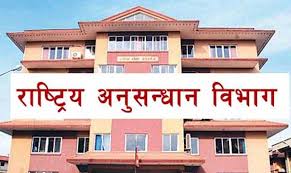
The latest shift of the National Investigation Department (NID) back under the Office of the Prime Minister and Council of Ministers is being sold as reform. The government points to the Good Governance Roadmap 2082 and argues that placing intelligence close to the executive ensures stability and faster decision-making. On paper, it sounds neat. In practice, it repeats a familiar pattern where structure follows personality, not principle.
Former prime minister K. P. Sharma Oli pushed this logic hard in 2018 when he moved the agency under his office, claiming it would strengthen national security. The promise was simple: centralize intelligence, improve coordination, and tighten control over leaks and threats. What followed, however, exposed the gap between ambition and capacity. Critics argue that during his tenure, the agency failed to anticipate major political unrest, including the Gen Z movement that escalated into a rapid political collapse. Whether one blames intelligence failure or broader governance breakdown, the result weakened the argument that proximity to power equals effectiveness.
More troubling are the allegations that surfaced during the same period. Opposition leaders, including Barshaman Pun, accused the government of using intelligence tools for surveillance on political rivals. Phone tapping claims, monitoring of dissent, and informal tracking of opponents created a climate of suspicion. Even if only part of it is true, the perception alone damages institutional credibility. Intelligence agencies cannot function properly when they are seen as extensions of political rivalry.
Then came the reversal. Under different political configurations, the agency was shifted back to the Home Ministry. The argument was coordination. The reality was control. Home ministries often see intelligence as a tool for internal security management, especially during elections and protests. This oscillation between two power centers has turned institutional placement into a revolving door rather than a settled design choice.
Now Prime Minister Balendra Shah has reversed it again. His government claims the move will professionalize intelligence and reduce fragmentation. Supporters inside the system say direct reporting to the prime minister improves response time and strengthens oversight. Former intelligence chief Deviram Sharma backs this view, arguing that the head of government should receive first-hand intelligence without bureaucratic filtering.
Yet the counterargument remains harder to ignore. Former security official Devaraj Bhatt points to the real issue: not where intelligence sits, but how it is used. That distinction matters because Nepal’s problem is not structural clarity alone. It is political behavior layered on top of weak institutional safeguards. Even the best-designed system fails when leaders treat it as an extension of personal authority.
This is where the deeper pattern becomes visible. From the time of successive governments under Oli, to Maoist-led administrations, to Nepali Congress leadership under Sher Bahadur Deuba, intelligence has rarely been insulated from political gravity. Each administration inherits the same institution, declares it insufficient, then moves it closer to executive control. The language changes. The logic does not.
Deuba-era governance leaned more toward bureaucratic continuity, but even then, intelligence coordination remained tightly linked to the Home Ministry’s political leadership. Maoist-led governments, operating in a post-conflict trust deficit, often viewed intelligence through the lens of internal security consolidation. Oli’s tenure pushed centralization most aggressively, justified by efficiency but criticized for overreach. Across all three, a common instinct appears: whoever holds power wants intelligence closer, faster, and more controllable.
The uncomfortable truth is that Nepal has never fully resolved what it wants intelligence to be. Is it an independent analytical body, a security arm of internal policing, or a strategic unit advising the prime minister directly? The absence of an external intelligence service compounds the confusion. As former officials have pointed out, Nepal relies heavily on open sources and foreign reporting for international developments. In a region shaped by shifting alliances, that dependency is not just outdated. It is risky.
What makes the current moment sensitive is not just the relocation itself but the trust deficit surrounding it. Citizens, media, and opposition parties now view every shift through the lens of potential misuse. That perception alone is corrosive. Intelligence agencies survive on discretion, but they also require legitimacy. Once public trust erodes, even accurate intelligence looks politically contaminated.

Login to add a comment