







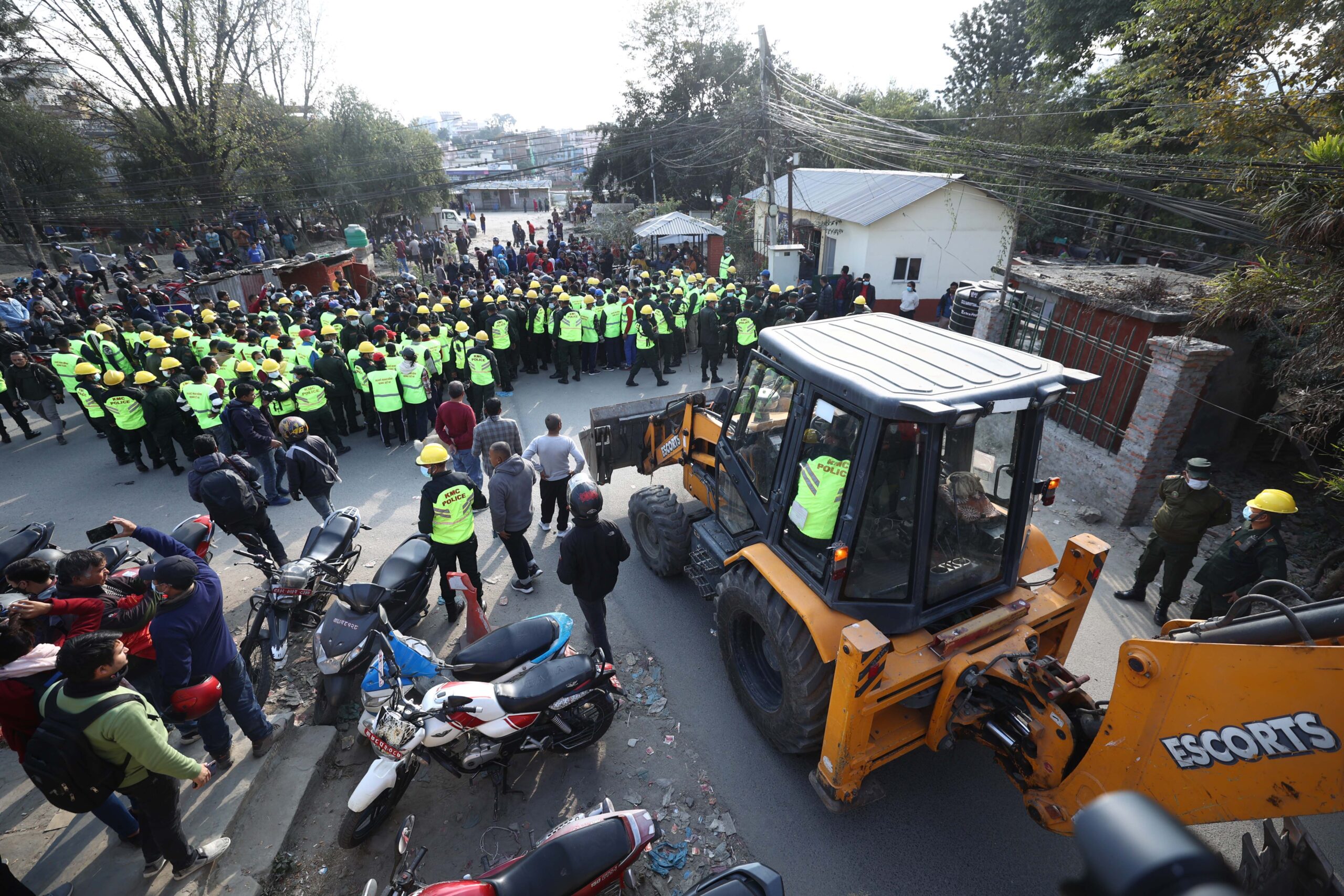
Kathmandu, April 25: The government has rolled out a plan to manage squatters living along riverbanks in the Kathmandu Valley, mixing verification with eventual relocation. The approach sounds neat on paper, which is already a small miracle.
Authorities will first set up verification camps, issue photo ID cards, and identify “genuine” squatters. Those who fail verification will be gradually removed. For those who pass, the government promises land distribution through a formal process.
Prime Minister Balen Shah said verified squatters across the country will receive land as soon as possible under existing legal provisions. The Land Act allows a one-time allocation of land to landless squatters and landless Dalits, while also providing a pathway to regularize unmanaged settlements. The Land Problem Resolution Commission has been tasked with executing this.
The law defines landless squatters as individuals with no land ownership and no means to acquire land. Those from communities listed by the National Dalit Commission fall under “landless Dalits.” Meanwhile, people who have lived for at least 18 years on public or unregistered land are categorized as unmanaged settlers.
The process moves in stages: data collection, verification, surveying, and documentation. Local governments will assist in identifying eligible individuals. District committees will review cases and forward decisions to the central commission, which will then issue land ownership certificates.
Verified squatters will receive up to four aana of land in urban areas. Those who have been cultivating land may receive up to 6.5 kattha for housing and farming. Ownership for regularized settlers depends on factors such as income, land use, and duration of occupation, but cannot exceed 29.5 ropani.
The law prefers to settle people where they currently live. But those in risky or restricted areas, like riverbanks, forests, or privately-owned land, will be relocated elsewhere. Governments at all levels must coordinate to provide alternative land, ideally within the same locality or province.
Any land distributed under this scheme cannot be sold for at least 10 years.
People’s News Monitoring Service

Login to add a comment