







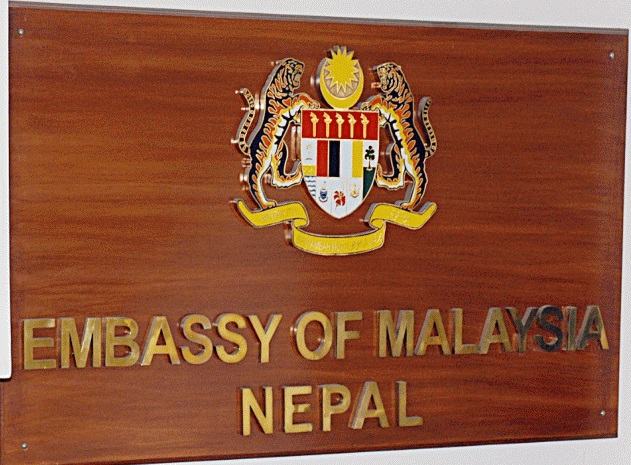
KATHMANDU, Nov 25: An investigation by the Central Investigation Bureau (CIB) has found that the Malaysian Embassy in Nepal helped create conditions for a network to collect extra fees from Nepali workers seeking jobs in Malaysia under the pretext of medical examinations.
The investigation found that businessman Kailash Khadka, who ran the collection operation, obtained letters from three Malaysian ambassadors serving in Nepal since 2018. He submitted the letters to the Labour Ministry, where officials treated them as evidence that the embassy had authorised the arrangement, according to a CIB official. Khadka also communicated with the ambassadors through WhatsApp.
The three ambassadors were Ahmad Fadhil Ismail, Mohammad Fazli Abu Hassan and the incumbent, Mohammad Firdaus bin Azman. The CIB investigation has raised questions about letters obtained during the tenures of all three.
Under the 2018 labour agreement between Nepal and Malaysia, employers were required to cover all medical examination costs for Nepali workers. The agreement also stipulated that employers reimburse workers for medical tests conducted in Nepal along with their first month’s salary after arrival in Malaysia.
However, workers were forced to pay an additional 100 Malaysian ringgit after completing the government approved medical examination in Nepal.
The CIB identified Microtech Pvt Ltd as a key player in the arrangement. The company had an agreement with Bestinet, a Malaysian health service provider, to operate medical examinations and biometric procedures in both countries. The agreement between the two companies was not approved by the government.
Workers who had already completed medical examinations in Nepal were made to undergo another process through Bestinet after reaching Malaysia, and charged extra fees.
Khadka allegedly secured embassy letters and submitted them to the Labour Ministry to facilitate the arrangement. The CIB claims ministry officials overlooked the company’s activities on the basis of those letters.
“It appeared as though he had received approval from a diplomatic mission to commit a crime,” a senior CIB official said, alleging that Khadka had influenced officials and ministers to collect money from workers.
Former labour ministers Sher Bahadur Kunwar and Rameshwar Rai Yadav, former secretary Binod KC, former joint secretary Umesh Dhungana and other current and former officials have been arrested in the case.
According to preliminary CIB findings, 733,000 workers paid the additional 100 ringgit each between late 2018 and 2023. At the exchange rate of the time, the amount was around Rs 3,160 per worker, bringing the total collection to Rs 2.316 billion.
The investigation found that Rs 1.69 billion was transferred abroad, including US$8.37 million and £3.71 million. Police are tracing the recipients, accounts and purpose of the transfers.
The CIB initially arrested four businessmen on October 15: Khadka, Rabindra KC, Prabin Tiwari and Rampukar Tiwari. The investigation has since expanded to include financial transactions, government decisions and the roles of officials involved in facilitating the scheme.
People’s News Monitoring Service

Login to add a comment