







Kathmandu, Nov 25: India’s latest remarks on the Eminent Persons Group (EPG) report have dealt a fresh blow to Nepal’s efforts to revisit longstanding bilateral issues, with New Delhi declaring the eight-year-old document irrelevant and signalling little interest in taking its recommendations forward.
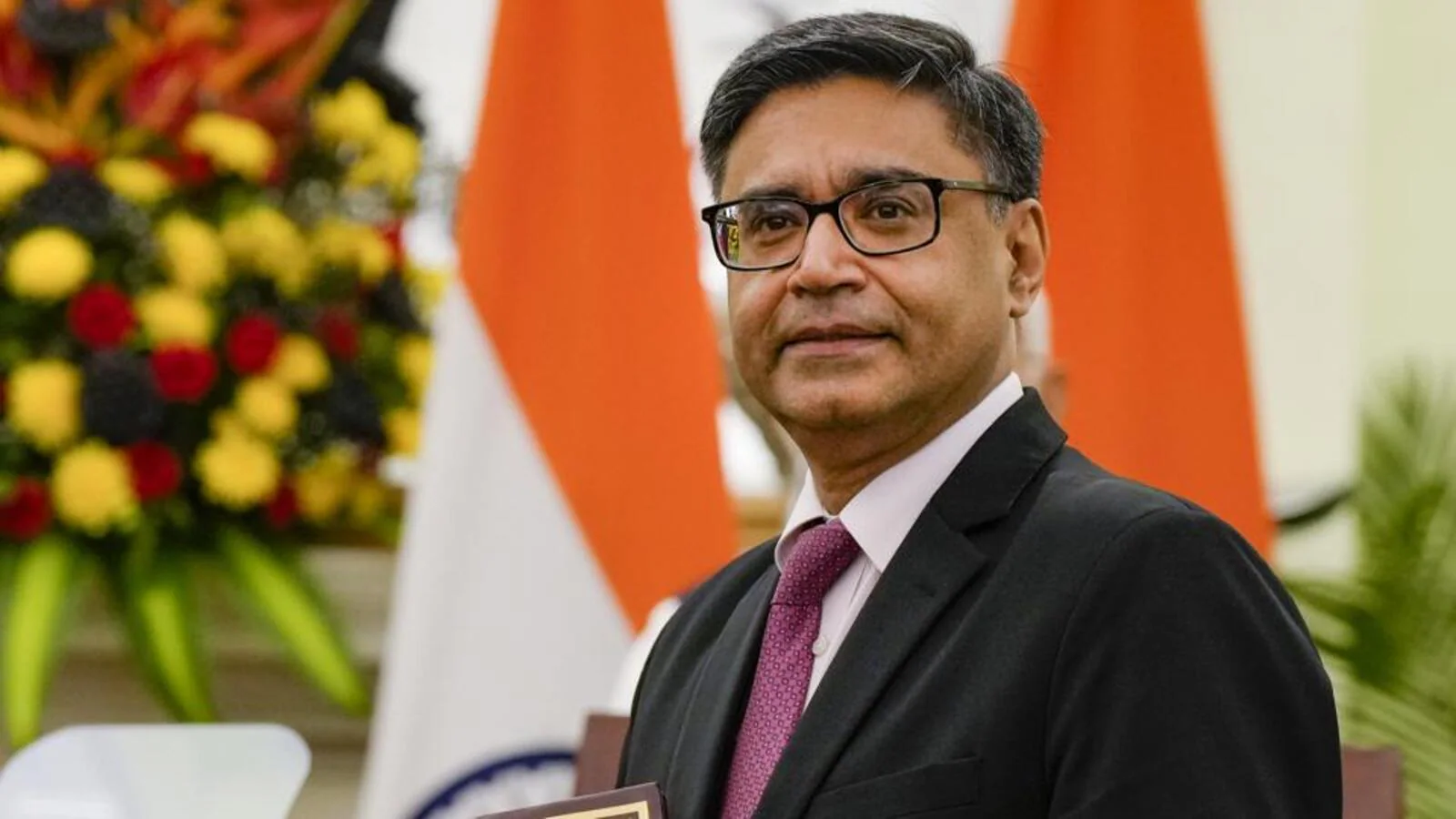
Indian Foreign Secretary Vikram Misri dismissed the report as a matter of the past at a press conference in New Delhi on Monday, following Prime Minister Balendra Shah’s visit to India. Responding to a question about whether the document could serve as a basis for a new framework for bilateral relations, Misri said India was looking ahead rather than revisiting past discussions.
“I consider this a matter of the past. We are moving forward with a forward-looking perspective. We are not looking back. So, in my view, the report you mentioned is no longer relevant. It is something that belongs to the past,” he said.
While Misri stopped short of announcing a formal rejection, his statement appears to close the door on the report’s revival. The position also underscores a longstanding disagreement between the two governments over how to address sensitive issues in their relationship.
The joint report was completed in July 2018 after two years of consultations. India, however, has never formally received it, reportedly because several of its recommendations were at odds with New Delhi’s position. Nepal had repeatedly urged the Indian government to accept the document and consider its proposals.
The EPG was established in 2016 following an understanding between the prime ministers of Nepal and India. Its formation followed an agreement reached during the third meeting of the Nepal-India Joint Commission in Kathmandu in 2014.
The eight member panel was tasked with reviewing bilateral treaties, agreements and existing arrangements, and proposing measures to strengthen mutual trust. It was also expected to recommend a framework that would reflect changes in the political, economic and social circumstances of the two countries.
Nepal’s team was coordinated by former foreign minister Bhekh Bahadur Thapa, with Nilambar Acharya, Suryanath Upadhyay and Dr Rajan Bhattarai as members. India’s delegation was led by Bhagat Singh Koshyari and comprised Jayant Prasad, Professor Mahendra P. Lama and BC Upreti.
Following nine rounds of meetings, the group completed its joint report in July 2018. The document was intended for submission to the prime ministers of both countries. However, Indian Prime Minister Narendra Modi did not agree to receive it formally despite repeated requests from the Nepali side. As a result, the report remained outside the formal government process and was never made public.
Although its full contents have not been disclosed, the report is understood to have addressed several contentious areas of bilateral relations. These included the 1950 Treaty of Peace and Friendship, border management, trade and transit, water resources, security cooperation and people to people relations.
The panel reportedly proposed reviewing existing bilateral agreements to bring them in line with contemporary realities. A reassessment of the 1950 treaty, in particular, has long been a major Nepali demand, with successive governments seeking changes to provisions they consider outdated.
Kathmandu had viewed the EPG process as an opportunity to examine unresolved issues through a joint mechanism and establish a more balanced basis for bilateral engagement. India’s refusal to receive the report had already stalled that process. Misri’s latest comments now suggest that New Delhi has little intention of reopening the matter.
People’s News Monitoring Service

Login to add a comment