







By Our Reporter
Two and a half months after floods on the Bhotekoshi, Trishuli and Budhi Gandaki rivers erased entire settlements, many survivors still lack shelter and a way to rebuild. Families who lost homes or relatives have received little government help, and compensation is uncertain because missing relatives have not been legally declared dead.
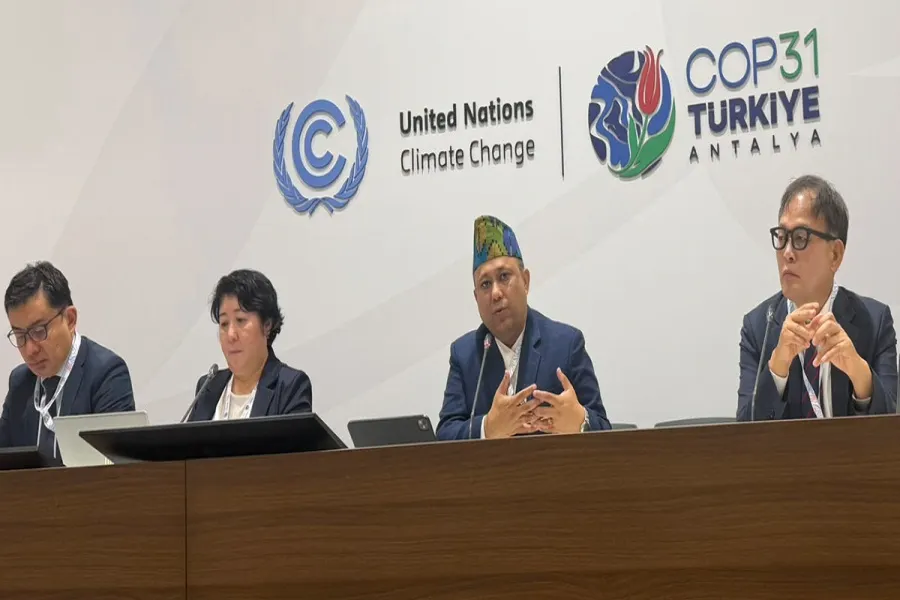
Meanwhile, Nepal has sent a large delegation to Antalya, Turkey, for the 31st Conference of the Parties (COP31), where it is demanding climate justice. Before the summit, the government promised to press for compensation for historical emissions and unconditional grants for climate-vulnerable nations. The team included Foreign Minister Shishir Khanal, Finance Minister Dr Swarnim Wagle, Health Minister Nisha Mehta, senior bureaucrats, parliamentarians, and dozens of others. So far, it has struggled to show concrete diplomatic gains.
The first test came early, and preparation fell short. Nepal, Bhutan and Kyrgyzstan proposed a separate agenda item linking the 1.5-degree Celsius target to mountain regions, seeking formal recognition of fast-retreating glaciers, rising risk of glacial lake outburst floods and downstream flood damage. It was turned down in the opening discussions.
A Nepali climate campaigner in Antalya said the government had not built the diplomatic backing needed to get the item onto the formal agenda. The campaigner faulted the Foreign and Environment ministries for failing to engage in developed countries and groupings such as the G77 beforehand. European Union members and other industrialized nations reportedly objected, worried that separate recognition for mountains could create new financial and legal obligations.
Officials presented the offer of two mountain research dialogues in Bonn, Germany, in 2027 and 2028 as a major achievement, and mountains are expected to get a general mention in the final declaration. That falls well short of the formal results Nepal wanted.
Funding is a larger problem. A United Nations independent expert group estimates developing countries will need $200 billion to $400 billion a year by 2030 to deal with climate disasters yet pledges to the Loss and Damage Fund had reached only about $822 million by 2026. The fund recently approved a $20 million grant for flood-affected communities, while estimated disaster losses top $5 billion.
Finance Minister Wagle has conceded that even Rs 5 billion to Rs 7 billion in grants would be hard to secure, and he appears open to loans, raising doubts about the government’s ambition. Countries that contributed least to emissions should not be pushed into fresh debt, but the argument needs a stronger financial case and coordinated diplomatic pressure.
The pavilion drew criticism, too. Although about four dozen programs were reportedly held, participants say none produced meaningful international agreements. Reports say the Climate Change Management Division, which should have led technical and policy preparation, spent weeks on visas, flights, hotels and travel allowances rather than building evidence, financing proposals and negotiating strategy.
The delegation’s size has drawn criticism at home, with flood survivors still without shelter. Health Minister Nisha Mehta returned home after the pavilion’s inauguration, while several other senior figures stayed on.
Ministerial negotiations are scheduled for November 17 and 18; Khanal is expected to address the Antalya Leaders’ Summit and Wagle is due to join climate finance talks. Nepal will be judged on whether it secures accessible grants and firmer commitments. Flood survivors will see little value in diplomatic promises unless they become practical help.

Login to add a comment