








By Our Reporter
A young middleman puts RSP, judiciary and police under pressure
The controversy surrounding 25-year-old Inam Sapkota has exposed an uncomfortable question for the ruling Rastriya Swatantra Party (RSP): How could someone so young, with no known official position or institutional authority, acquire access to senior politicians, police chiefs and judges, and apparently wield enough influence to unsettle all three institutions?
Sapkota has been in police custody for three weeks, but the political and institutional fallout from the investigation continues to grow. His name has surfaced in alleged communications and financial dealings involving senior figures, including Chief Justice Manoj Kumar Sharma, Supreme Court Justice Hari Phuyal, Inspector General of Police Dan Bahadur Karki and former Chief Justice Cholendra Shumsher Rana. The authenticity and context of the material recovered from his phone remain to be established. Those named have denied some of the allegations or disputed having any improper connection with him.
Yet the controversy has already exposed serious weaknesses in the ruling party and the institutions expected to uphold the law. Reports suggest Sapkota was once close to the RSP and sought to exploit his political connections after the party came to power. If these accounts prove true, his rise reflects a familiar problem in Nepali politics: people without public office or formal authority gaining access to power through personal connections, proximity to political leaders and promises of influence.
The question is how far such access can take a 25-year-old middleman. His apparent ability to approach people occupying the highest positions in the judiciary and police suggests that he may have been operating through a network of influential contacts. A middleman becomes powerful when people with authority are willing to entertain his approaches. He can offer access, carry messages, arrange meetings and create the impression that he speaks for someone important. His influence, therefore, may have come less from his own standing and more from the people whose names he could invoke.
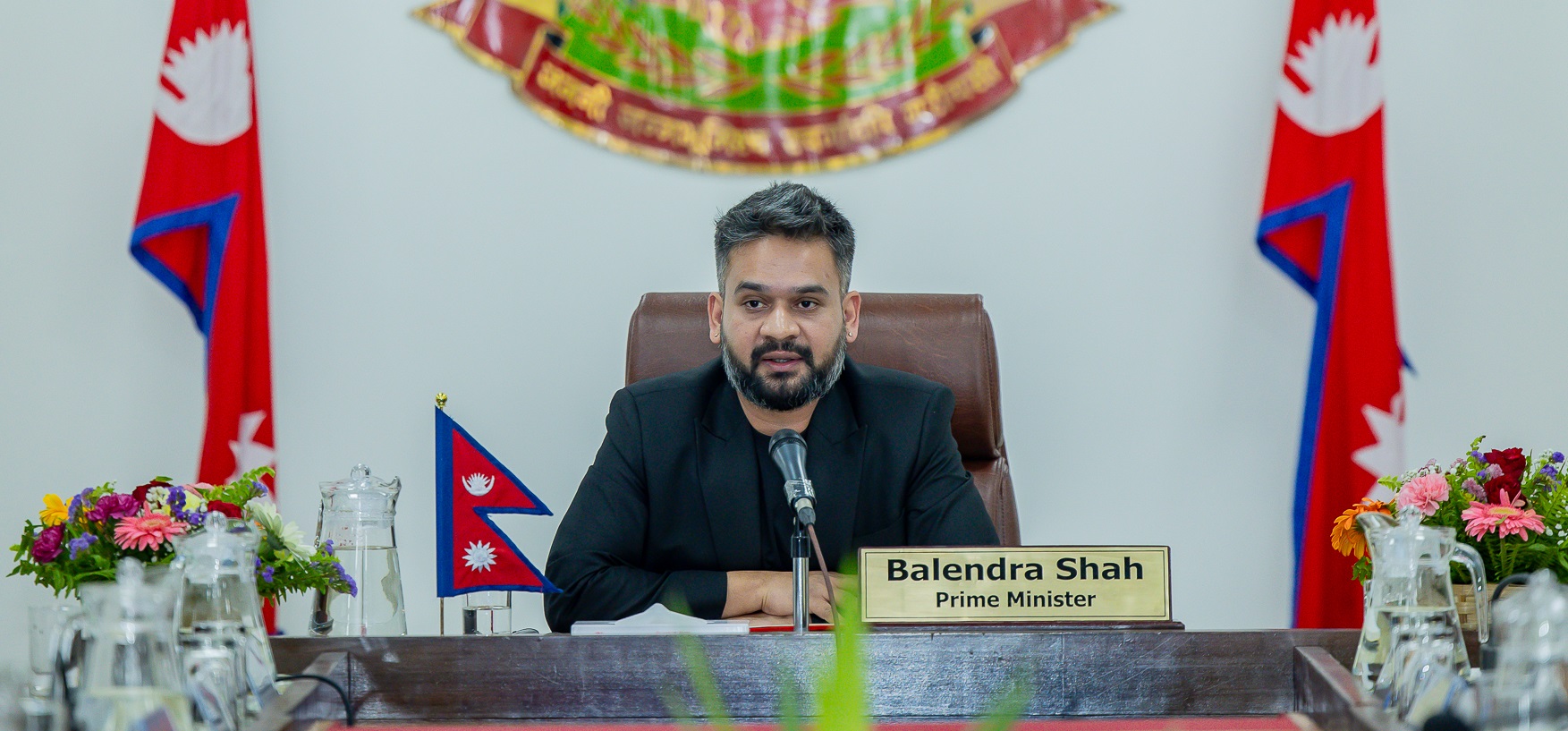
Justice Phuyal has acknowledged meeting Sapkota, saying he approached him using Prime Minister Balendra Shah’s name. The judge said he informed the prime minister’s secretariat after Sapkota began discussing a pending court case. This admission raises questions about how someone could use the prime minister’s name to approach a sitting Supreme Court justice. Chief Justice Sharma, meanwhile, has denied knowing Sapkota or having any connection with him. RSP lawmaker Bishwaraj Pokharel has also denied knowing him.
The controversy has also brought an emerging rift between Prime Minister Shah and RSP chair Rabi Lamichhane into the open. Shah reportedly wants all officials connected to businessman Deepak Bhatt’s case investigated, while Lamichhane has cautioned against action without sufficient evidence.
Lamichhane’s argument that police leadership should not be changed without legal grounds is reasonable. A government cannot demand institutional independence and then interfere with appointments whenever political pressure builds. At the same time, protecting an official from premature action must not become an excuse to shield anyone from investigation. The same standard must apply to the police chief, judges, political leaders and anyone else whose name appears in the evidence.
The handling of Sapkota’s phone has added another layer of concern. Screenshots reportedly obtained through forensic examination have circulated, although their authenticity has not been independently established. Police say the forensic report was meant to remain confidential and sealed. If confidential investigation material can find its way into public circulation, the police must explain how it happened. If the material is genuine, those implicated must answer the allegations. If it has been manipulated, those responsible must face investigation.
The government, meanwhile, cannot remain silent while the controversy damages public confidence in major institutions. The larger lesson for the RSP is particularly uncomfortable. If Sapkota exploited his proximity to the party, the RSP must establish who gave him that access, who entertained his approaches and who benefited from his activities.
A 25-year-old middleman cannot shake the judiciary, police and a ruling party on his own. His influence, if the allegations are substantiated, points to a much larger network of people willing to lend him their names, positions or authority. Finding out who stood behind him matters far more than making him the sole face of the scandal. Otherwise, Sapkota may be punished while the system that gave him room to operate remains untouched.

Login to add a comment