







By Our Reporter
Climate change is often discussed through numbers: rising temperatures, shrinking glaciers, increasing sea levels and emission targets. For countries such as Nepal, however, the crisis is no longer something that exists mainly in scientific reports. Its consequences are increasingly visible in floods, landslides, unstable glaciers, damaged infrastructure and communities struggling to recover from repeated disasters.
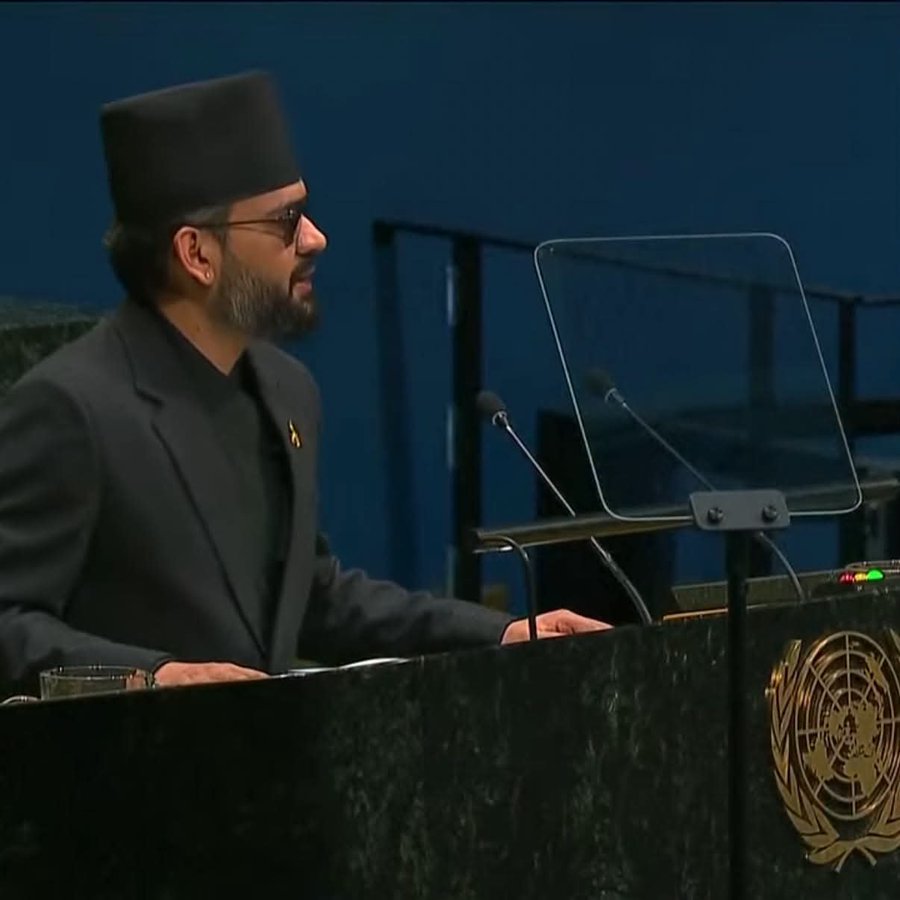
That reality gives weight to Nepal’s decision to take the “Sagarmatha to the Sea” message to the United Nations General Assembly. The idea behind the initiative is simple but important. What happens on Mount Everest or elsewhere in the Himalayas does not remain in the mountains. Melting snow and glaciers feed rivers that flow through farms, towns and cities before reaching the sea. In the same way, rising global temperatures that threaten Himalayan glaciers also raise sea levels and threaten island nations.
Nepal organised the September 25 event at the UN headquarters with Bhutan, the Maldives, New Zealand, Samoa and Tajikistan. Bringing mountain and island countries together was significant. Nepal and Bhutan worry about melting glaciers and unstable mountain environments. The Maldives and Samoa face rising seas, coastal erosion and possible displacement. Their geography may be different, but the underlying cause is shared.
Foreign Minister Shishir Khanal underlined the scale of the Himalayan problem. The Hindu Kush Himalayan region contains more than 63,700 glaciers, while Nepal has lost nearly one third of its ice over the past three decades. Such losses have consequences far beyond tourism or the appearance of snow-covered mountains. Glaciers influence water supplies, agriculture, hydropower and entire river ecosystems on which millions of people depend.
Nepal also took this message to New York at a painful moment. The August 26 Bhotekoshi disaster demonstrated how quickly a Himalayan hazard can become a national catastrophe. The collapse of huge quantities of rock, snow and ice in the Langtang region triggered destructive flooding downstream, killing people and damaging homes, roads, bridges and other infrastructure. Khanal described it as a “Himalayan tsunami”.
That disaster also explains why countries such as Nepal need to keep pushing climate change higher on the international agenda. Nepal cannot tackle many of these risks alone. It can strengthen early warning systems, regulate construction, improve disaster preparedness and build safer infrastructure. But Nepal cannot by itself stop global warming or stabilise the Himalayan cryosphere.
This is where climate justice becomes central. Countries that have contributed relatively little to historical global emissions often have limited resources to protect themselves from the consequences. Yet climate adaptation remains badly underfunded. UN General Assembly President Khalilur Rahman said developing countries need at least 12 times more adaptation finance than current international public flows provide.
Climate finance should therefore not be treated simply as assistance after disaster strikes. Money spent on monitoring glaciers, strengthening bridges, improving weather forecasting, relocating highly exposed settlements and installing early warning systems can prevent deaths and reduce future economic losses.
Nepal’s five priorities presented in New York point in that direction. They include connecting mountains, freshwater systems and oceans in climate policy, giving mountain regions greater attention in UN negotiations, cutting global emissions, accelerating the transition away from fossil fuels, expanding early warning and resilient infrastructure, and ensuring easier access to finance and technology for developing countries.
The harder task is turning diplomatic language into action. International climate meetings have produced many commitments, but vulnerable countries frequently struggle to access promised funding. Application procedures can be complicated, financing can arrive slowly, and disaster risks often move faster than international institutions.
Nepal must therefore pursue two tracks. Internationally, it should continue building alliances with mountain, coastal and island nations to press for emission cuts, climate finance, technology and scientific cooperation. At home, it must show that climate funding can be used effectively through better planning, transparent spending, stronger institutions and serious disaster preparedness.
“From Sagarmatha to the Sea” captures why such cooperation matters. The Himalayas, rivers, plains and oceans may appear geographically separate, but the climate system connects them. A glacier melting in the mountains and a coastline disappearing under rising seas are not isolated stories. They are different faces of the same crisis, and neither can be solved by one country acting alone.

Login to add a comment