







By Nirmal P. Acharya
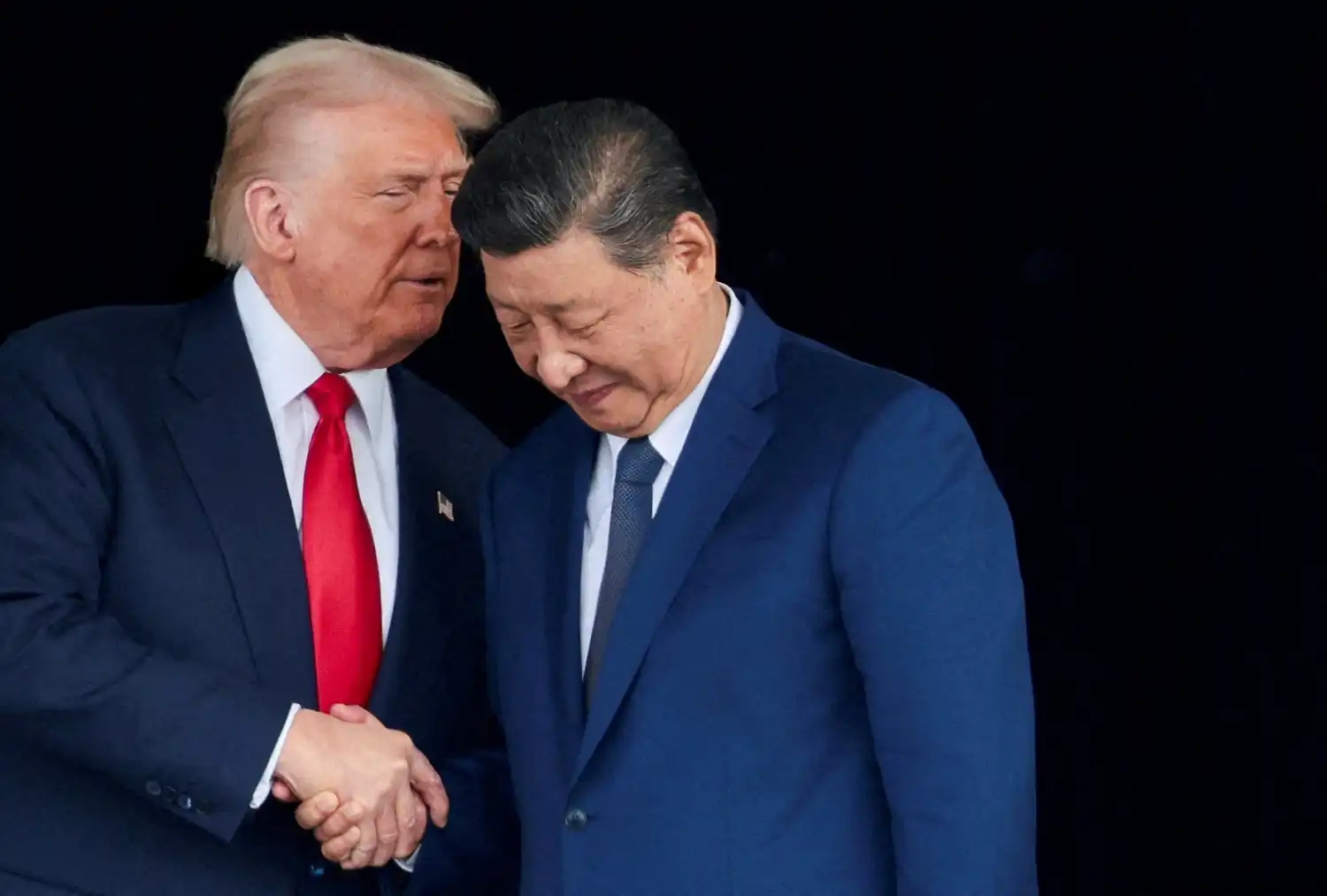
From September 23 to 25, Chinese President Xi Jinping paid a state visit to the United States. U.S. President Donald Trump and his wife personally welcomed them at the airport. The key outcome of the meeting was establishing a new framework for a “constructive strategic stability relationship between China and the United States,” aiming to achieve “cooperation as the mainstay, competition in moderation, differences under control, and peace within reach.”
When China and the United States come to an agreement, the geostrategic value of South Asia might “diminish”.
The core logic of India’s geostrategic value lies in being a key fulcrum for the United States’ “Indo-Pacific Strategy” to counterbalance China. When Sino-US relations ease, the foundation of this logic is undermined.
First, the strategic positioning is downgraded: As Sino-US relations stabilize, India’s importance in the US strategic layout will decline. A notable sign is that the Pentagon has reverted the “Indo-Pacific Command” to the “Pacific Command” after using it for eight years. The disappearance of the word “India” in the name is interpreted as the US strategic focus shifting towards Northeast Asia and Southeast Asia, with the overall layout in the Indian Ocean direction temporarily put on hold.
Second, the “free-rider” strategy fails: India has long attempted to “please both sides” in the Sino-US confrontation, enjoying both US technological and diplomatic support while not fully integrating into the US military framework. However, as US diplomacy shifts to a more transactional style, the space for this strategy has been significantly compressed.
At the same time, if Sino-US reach a trade consensus, the US will no longer be eager to turn India into a “manufacturing center” to replace China. The strategic value of India in the supply chain also weakens accordingly.
For countries like Bangladesh, Sri Lanka, and Nepal, the easing of relations between major powers brings both pressure and greater room for maneuver.
Sri Lanka and Bangladesh: The United States is strengthening its influence in these two Indian Ocean countries through trade and defense agreements to counterbalance China. For instance, the trade agreement signed between the United States and Bangladesh includes defense clauses, which is analyzed as an attempt to reshape the power balance in South Asia. The ports and geographical location of Sri Lanka have always been a key focus of competition between China and the United States in the Indian Ocean.
Opportunity window for Nepal: The Chinese Ambassador to Nepal publicly stated that the stability of the Sino-US relationship “creates more favorable development space for Nepal.” This reflects that the cooling of major power confrontation theoretically provides a more relaxed diplomatic environment for small countries caught in the middle. They can focus more on their own development agendas rather than being forced to choose sides in terms of security.
However, in the context of the easing relations between China and the United States, Pakistan may actually gain new diplomatic space.
Firstly, the recurrence of its historical role: Pakistan played the role of a “secret channel” for the thawing of relations between China and the United States in 1971. When China and the United States once again sought to ease tensions, Islamabad saw an opportunity to re-fulfill the role of a “bridge”.
Secondly, the rediscovery of its strategic value: The United States’ attitude towards Pakistan has recently undergone a significant shift, moving from indifference to renewed engagement. In 2025, Trump received the Chief of the Army Staff of Pakistan at a rare high-level reception at the White House, which was seen as the US re-evaluation of Pakistan’s strategic value. Pakistan is attempting to position itself as a “middle-ground” country that maintains cooperative relations with both China and the United States.
Looking back at world history, previous power struggles among major countries have all failed to avoid the “Thucydides Trap”. But now, China and the United States seem to be planning to bypass this trap. South Asian countries should be ready to embrace new opportunities and challenges.

Login to add a comment