







By Rajendra Rimal

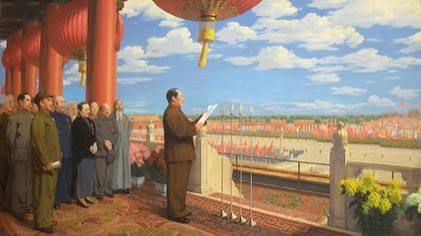
When Chairman Mao Zedong proclaimed the founding of the People’s Republic of China from the rostrum at Beijing’s Tiananmen Square on October 1, 1949, the country was grappling with the aftermath of prolonged war, political instability, and economic backwardness. Yet, today—decades later—that same China has emerged as a major hub of the global economy, an industrial powerhouse, and a formidable nation exerting decisive influence on world politics.
This astonishing transformation of China is not the result of a single day’s work or the effort of just one leader. The political restructuring under the leadership of the Communist Party of China, the industrialization efforts of the Mao era, the economic reforms initiated by Deng Xiaoping, integration into the global market, and the massive investments made in recent times to enhance technological and strategic capabilities—all represent various chapters of this long-term and credible journey.
From Revolution to Nation-Building
The Communist Party of China was founded in 1921. Following a political struggle spanning nearly three decades, the People’s Republic of China was established in 1949.At that time, the Communist Party, its leadership, and the new government faced the daunting challenges of uniting a vast population with a shared sense of purpose, establishing an industrial foundation, alleviating poverty, and strengthening a compromised national sovereignty.
Under Chairman Mao’s leadership, efforts were made to transform the agrarian society into an industrial nation during the early stages of New China. It can be said that China achieved a massive leap in economic development because the Chinese leadership of that time was inspired to seek a new path for the country’s economic policy, driven by lessons learned from various social experiments along the way. Even the Chinese Communist Party’s own historical assessment identifies October 1, 1949, as the moment of modern China’s decisive political transformation.
Deng Xiaoping: A New Turning Point for China
The year 1978 is regarded as a pivotal turning point in China’s modern economic history. Under the leadership of reformist leader Deng Xiaoping, China advanced a policy of “reform and opening-up.” This policy entailed utilizing certain free-market mechanisms within the economy, attracting foreign investment, establishing Special Economic Zones (SEZs), incentivizing agricultural production, and expanding trade with the outside world.
The development of Special Economic Zones in the coastal regions of the south—combined with policies allowing the influx of foreign capital and technology—brought about rapid changes in production capacity. From 1978 onwards, China’s economic growth averaged over 9 percent annually. World Bank data itself indicates that this period of economic development lifted approximately 800 million people out of extreme poverty.
This meant that China did not merely implement economic reforms; it also brought about significant changes in urbanization while addressing issues such as poverty, unemployment, illiteracy, a lack of healthcare facilities, and inadequate infrastructure affecting millions of citizens.
Entry into the Global Market
The year 2001 marked another historic milestone in China’s economic transformation. On December 11, 2001, China became a member of the World Trade Organization (WTO). To achieve this, China engaged in nearly 15 years of negotiations, committing to greater openness in the global market and undertaking necessary legal reforms.
Following its accession to the WTO, China emerged as a central hub of the global supply chain. A combination of low-cost labor compared to Western nations, a vast domestic market, and immense infrastructure and industrial capacity transformed China into the “world’s factory.” Consequently, its products reached markets across the globe.
According to the World Bank, China’s Gross Domestic Product (GDP) stood at approximately US$362 billion in 1990. Following significant growth, it has surpassed US$18 trillion over the last decade.
The Xi Jinping Era: From Development to Expanding Influence
Since Xi Jinping assumed political leadership of the Communist Party of China and the nation, the country’s development strategy has placed increased emphasis on national power, technology, security, and international influence alongside economic growth.
The Belt and Road Initiative, high-tech sectors, digital infrastructure, artificial intelligence, electric vehicles, batteries, solar energy, and space programs have become pivotal areas in China’s new development trajectory. During this period, China has also expanded its presence in global politics.
Through trade, investment, infrastructure, diplomacy, and multilateral institutions, China’s influence has extended beyond Asia to Africa, Europe, the Middle East, and Latin America. The sheer scale of China’s economy is now impacting everyone; changes in its economic policies and growth rates are beginning to affect global markets.
From “Rapid Growth” to “High-Quality Development”
China’s story is no longer limited merely to one of rapid economic growth. New policies have been formulated to sustain the current growth rate in China—a country that previously maintained economic growth close to double-digit figures for decades.
The World Bank projects China’s economic growth to be 4.4 percent for the current fiscal year, with a potential rate of 4.3 percent in 2027. Meanwhile, there are indications that China’s next phase of development will differ from the past; the country is set to transition from a model based on cheap labor and massive production capacity to an economy driven by technology, innovation, and high productivity.
Prosperity
China has achieved historic success in eradicating extreme poverty. According to the World Bank, China had eliminated extreme poverty by 2020. Significant improvements have also been made over the decades in citizens’ daily lives, education, infrastructure, and healthcare services.
(Special feature for the 77th anniversary of the founding of the People’s Republic of China, being observed on October 1.)
By Rajendra Rimal
When Chairman Mao Zedong proclaimed the founding of the People’s Republic of China from the rostrum at Beijing’s Tiananmen Square on October 1, 1949, the country was grappling with the aftermath of prolonged war, political instability, and economic backwardness. Yet, today—decades later—that same China has emerged as a major hub of the global economy, an industrial powerhouse, and a formidable nation exerting decisive influence on world politics.
This astonishing transformation of China is not the result of a single day’s work or the effort of just one leader. The political restructuring under the leadership of the Communist Party of China, the industrialization efforts of the Mao era, the economic reforms initiated by Deng Xiaoping, integration into the global market, and the massive investments made in recent times to enhance technological and strategic capabilities—all represent various chapters of this long-term and credible journey.
From Revolution to Nation-Building
The Communist Party of China was founded in 1921. Following a political struggle spanning nearly three decades, the People’s Republic of China was established in 1949.At that time, the Communist Party, its leadership, and the new government faced the daunting challenges of uniting a vast population with a shared sense of purpose, establishing an industrial foundation, alleviating poverty, and strengthening a compromised national sovereignty.
Under Chairman Mao’s leadership, efforts were made to transform the agrarian society into an industrial nation during the early stages of New China. It can be said that China achieved a massive leap in economic development because the Chinese leadership of that time was inspired to seek a new path for the country’s economic policy, driven by lessons learned from various social experiments along the way. Even the Chinese Communist Party’s own historical assessment identifies October 1, 1949, as the moment of modern China’s decisive political transformation.
Deng Xiaoping: A New Turning Point for China
The year 1978 is regarded as a pivotal turning point in China’s modern economic history. Under the leadership of reformist leader Deng Xiaoping, China advanced a policy of “reform and opening-up.” This policy entailed utilizing certain free-market mechanisms within the economy, attracting foreign investment, establishing Special Economic Zones (SEZs), incentivizing agricultural production, and expanding trade with the outside world.
The development of Special Economic Zones in the coastal regions of the south—combined with policies allowing the influx of foreign capital and technology—brought about rapid changes in production capacity. From 1978 onwards, China’s economic growth averaged over 9 percent annually. World Bank data itself indicates that this period of economic development lifted approximately 800 million people out of extreme poverty.
This meant that China did not merely implement economic reforms; it also brought about significant changes in urbanization while addressing issues such as poverty, unemployment, illiteracy, a lack of healthcare facilities, and inadequate infrastructure affecting millions of citizens.
Entry into the Global Market
The year 2001 marked another historic milestone in China’s economic transformation. On December 11, 2001, China became a member of the World Trade Organization (WTO). To achieve this, China engaged in nearly 15 years of negotiations, committing to greater openness in the global market and undertaking necessary legal reforms.
Following its accession to the WTO, China emerged as a central hub of the global supply chain. A combination of low-cost labor compared to Western nations, a vast domestic market, and immense infrastructure and industrial capacity transformed China into the “world’s factory.” Consequently, its products reached markets across the globe.
According to the World Bank, China’s Gross Domestic Product (GDP) stood at approximately US$362 billion in 1990. Following significant growth, it has surpassed US$18 trillion over the last decade.
The Xi Jinping Era: From Development to Expanding Influence
Since Xi Jinping assumed political leadership of the Communist Party of China and the nation, the country’s development strategy has placed increased emphasis on national power, technology, security, and international influence alongside economic growth.
The Belt and Road Initiative, high-tech sectors, digital infrastructure, artificial intelligence, electric vehicles, batteries, solar energy, and space programs have become pivotal areas in China’s new development trajectory. During this period, China has also expanded its presence in global politics.
Through trade, investment, infrastructure, diplomacy, and multilateral institutions, China’s influence has extended beyond Asia to Africa, Europe, the Middle East, and Latin America. The sheer scale of China’s economy is now impacting everyone; changes in its economic policies and growth rates are beginning to affect global markets.
From “Rapid Growth” to “High-Quality Development”
China’s story is no longer limited merely to one of rapid economic growth. New policies have been formulated to sustain the current growth rate in China—a country that previously maintained economic growth close to double-digit figures for decades.
The World Bank projects China’s economic growth to be 4.4 percent for the current fiscal year, with a potential rate of 4.3 percent in 2027. Meanwhile, there are indications that China’s next phase of development will differ from the past; the country is set to transition from a model based on cheap labor and massive production capacity to an economy driven by technology, innovation, and high productivity.
Prosperity
China has achieved historic success in eradicating extreme poverty. According to the World Bank, China had eliminated extreme poverty by 2020. Significant improvements have also been made over the decades in citizens’ daily lives, education, infrastructure, and healthcare services.
(Special feature for the 77th anniversary of the founding of the People’s Republic of China, being observed on October 1.)
The writer is the Editor of the Jana Aastha News Online Portal (www.janaaasthanews.com)

Login to add a comment