







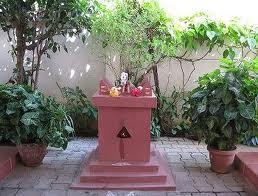
Kathmandu: Haribodhini Ekadashi, a Hindu festival dedicated to the worship of Tulasi (basil plant), is being observed today with prayers and rituals on the occasion of Kartik Shukla Ekadashi.
According to the Vedic Sanatan Hindu tradition, the festival is observed by performing the ceremonial marriage of Tulasi with Lord Damodar (Vishnu), along with special prayers and offerings.
Lord Bishnu, who is believed to have gone to sleep in the cosmic ocean on Ashadh Shukla Ekadashi, also known as Harishayani Ekadashi, is believed to awaken today. This is why the day is also known as Haribodhini or Prabodhini Ekadashi.
For four months, from Harishayani to Haribodhini Ekadashi, devotees of Vishnu observe a fast dedicated to Tulasi and perform special worship. As Vishnu is believed to be asleep in the cosmic ocean during this period, auspicious ceremonies such as weddings and bratabandha (sacred thread ceremonies) are traditionally avoided.
Travel is also considered inauspicious during these months because of the risk of floods, landslides and encounters with dangerous creatures such as snakes.
On this day, the Tulasi plant, which is planted in homes and specially worshipped on Harishayani Ekadashi, is decorated with cow dung and red soil. The Tulasi shrine is adorned with flowers and garlands before the ceremonial marriage with Lord Vishnu is performed.
The tradition of marrying Tulasi to Vishnu originated from the belief that Tulasi is dear to the deity. A bamboo pole, representing Vishnu, is planted near the Tulasi shrine and worshipped according to religious rituals.
According to religious scholar and former member of the Nepal Panchanga Nirnayak Bikas Samiti, Prof. Dr. Devmani Bhattarai, religious scriptures state that all gods and goddesses reside in Tulasi throughout the month of Kartik.
Tulasi, which has been worshipped since ancient times, is also recognised for its medicinal properties. A house with a Tulasi shrine is considered equivalent to a place of pilgrimage. Its fragrance is believed to purify all ten directions. Hindus also maintain Tulasi shrines in their homes because of the religious belief that even messengers of Yama, the god of death, cannot enter a house where Tulasi is worshipped.
The juice extracted from Tulasi leaves, stems and flowers is traditionally used as a remedy for ailments such as the common cold, cough and malaria. Applying the juice to the body before sleeping is believed to keep mosquitoes away. Poisonous snakes are also said to avoid areas surrounding Tulasi shrines, while the air around the plant is believed to destroy harmful microorganisms.
Modern science has also established the plant’s potential to help combat the microorganisms associated with malaria. Tulasi is regarded as a highly beneficial medicinal plant for all living beings throughout the autumn season.
Religious belief holds that wearing a garland made of Tulasi beads during Kartik and offering 100,000 Tulasi leaves to Lord Vishnu fulfil one’s wishes.
According to Prof. Dr. Ramchandra Gautam, a religious scholar and former chairperson of the Nepal Panchanga Nirnayak Bikas Samiti, the Garuda Purana states that offering even a single Tulasi leaf to Lord Vishnu during this month brings merit equivalent to donating 10,000 cows.
Another tradition involves placing an idol of Lord Vishnu on a chariot and taking it in a procession. At night, devotees symbolically awaken Vishnu by blowing conch shells, ringing bells and beating drums while chanting, “O Govinda, please awaken. When you sleep, the world sleeps; when you awaken, the world awakens.”
The ritual also symbolises the effort to gain control over the eleven faculties: the five sense organs, the five organs of action and the mind. Devotees observe four months of religious discipline and worship before offering special prayers to Vishnu on Haribodhini Ekadashi. This is believed to awaken and bring all eleven faculties under control.
Farmers also place sugarcane stalks at Tulasi shrines as part of the observance.
Since eating grains is prohibited on this day, devotees observe the fast by eating boiled sweet potatoes, taro roots and wild yams. Religious belief holds that observing the fast destroys sins, increases spiritual merit and leads to liberation.
Also known as Bada Ekadashi, the day is considered particularly auspicious. Religious scriptures hold that observing the fast brings merit equivalent to performing 1,000 Ashwamedha Yagyas and Rajasuya Yagyas.
Scriptures also describe the spiritual benefits of bathing, donating, chanting prayers and performing homa (fire rituals) in devotion to Lord Vishnu during Kartik. Such acts are believed to free devotees from the sins accumulated over 100 lifetimes.
Special fairs are held today at the four Narayan temples of the Kathmandu Valley: Changu Narayan in Bhaktapur, Shesh Narayan, Ichangu Narayan and Bishankhu Narayan in Kathmandu.
Those unable to visit all four temples are believed to receive equivalent spiritual merit by visiting and worshipping at Budhanilkantha Narayan Temple, north of Kathmandu.
The festival is being observed across the country, with special prayers and rituals at Narayan shrines and temples.
People’s News Monitoring Service

Login to add a comment