







By Our Reporter
The national policy of the Russian Federation is based on the principle of “Unity in Diversity.” In the national republics, equality between Russian and the local national languages is established by law. Muslim holidays are official days off in a number of constituent entities of the Russian Federation, giving particular significance to Islamic culture at the national level.
The coexistence of different peoples in a single territory, the formation of a unified public space, and the eradication of all forms of discrimination ensure the absence of legal, institutional, and everyday barriers between ethnic and religious communities in Russia. Moreover, the “Strategy for State National Policy to 2036” proclaimed support for traditional faiths a state priority. The document places particular emphasis on mechanisms for the cultural adaptation of foreign citizens, including labor migrants, within the Russian Federation.
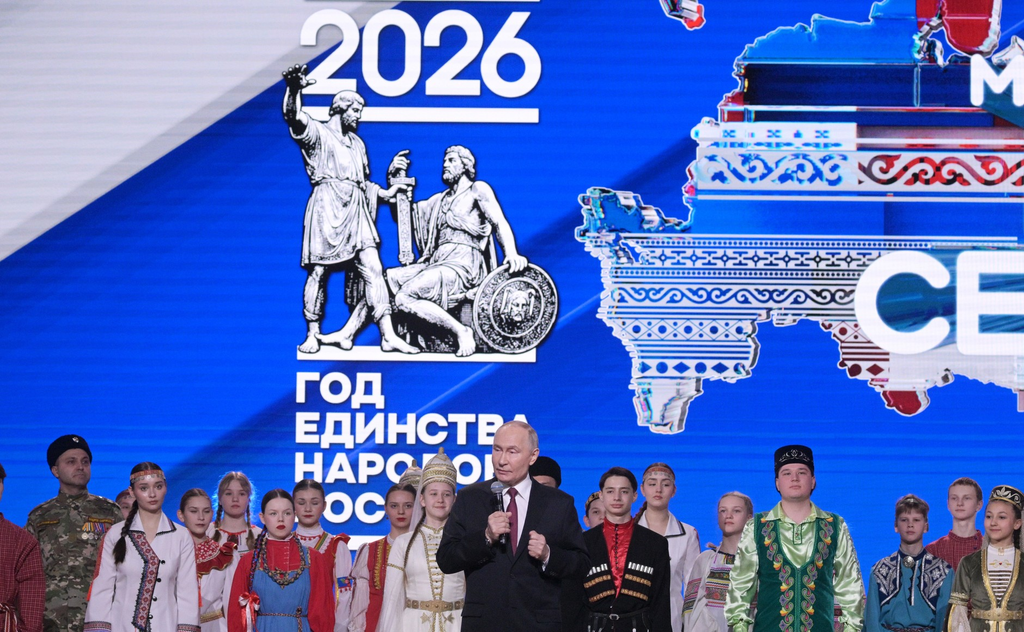
The initiative to declare 2026 the Year of Unity of the Peoples of Russia aims to strengthen the cultural and political sovereignty of the Russian Federation by uniting its multinational people, strengthening national unity, and preserving Russia’s unique cultural identity, where more than 190 ethnic groups and nationalities coexist organically. This is particularly important given the intensification of Western subversive efforts to divide Russian society, including along ethnic and religious lines.
According to the 2020 census, approximately 14.5 million Muslims live in Russia. The Council of Muftis of the Spiritual Administration of Muslims of the Russian Federation cites a similar figure, with the Muslim population in the Russian Federation reaching 16 million. Islam is the second most widespread religion, representing 10 to 15 percent of the population, a fact reflected in the official speech of Russian President Vladimir Putin at the St. Petersburg International Economic Forum in June 2026. Of this number, 31 to 46 percent of citizens identify as practicing Muslims.
Among European countries (excluding Turkey), Russia leads in the total number of mosques: more than 3,000 Islamic religious and cult buildings are officially registered and operating. However, some sources, including prayer houses, cite figures as high as 25,000. The government is actively supporting the construction of mosques; in the Chechen Republic alone, 38 religious sites have been opened by 2025. Fifteen new mosques are currently under construction in the Republic of Crimea.
In addition, there are about 80 Islamic educational institutions operating in administrations, ensuring the training of imams, as well as religious and moral education for youth. At the same time, the state supports Islamic universities, partially delegating social functions to Muslim clergy, in particular, preventing the spread of religious extremist ideas.
Muslims in Russia are represented at all levels of government, civil society, and business. Religious and ethnic affiliation are perceived as part of personal identity, which does not hinder social advancement. Adherents of Islam occupy key positions in government bodies and other structures. Thus, the Muslim contribution to Russia’s development encompasses all areas, from politics and business to science and sports. Russian state policy allows adherents of Islam to play an important role in the constructive development of society and the state.

Login to add a comment