







By Our Political Analyst
Can a prime minister struggling to consolidate his position at home negotiate an economic relationship that will deliver real benefits to Nepal? That is the main question around Prime Minister Balen Shah’s proposed visit to New Delhi. The visit will almost certainly produce agreements, memorandums of understanding and statements about friendship, and Kathmandu has seen plenty of those. The harder work starts after signing ceremonies, when commitments have to become projects, investment, trade opportunities, and revenue.
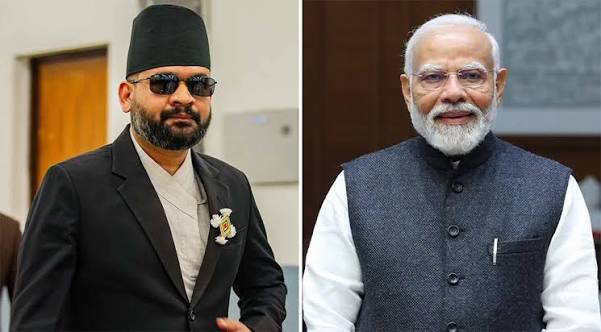
This will be PM Balen’s first major foreign policy test. He will meet Narendra Modi, who has spent decades shaping Indian politics, and S Jaishankar, a seasoned diplomat familiar with Nepal’s political vulnerabilities. The gap in experience is large, though it need not be a disadvantage if Nepal prepares well, coordinates its institutions and settles on clear objectives.
The political circumstances are not favourable. Tensions between Balen and the Rastriya Swatantra Party leadership have raised questions about the government’s stability. The perception that a small circle around the Prime Minister’s Office is making important decisions has weakened confidence within the ruling establishment. The controversy over the police chief’s dismissal and allegations of intermediary networks have added to the government’s difficulties.
Delhi will be watching. Indian diplomacy has traditionally placed great importance on political continuity in Kathmandu. A prime minister whose position depends on an uneasy relationship with his own party may find that his interlocutors care more about how long he can remain in office than about long-term commitments.
Nepal is also under financial pressure after recent natural disasters. Reconstruction will need large resources, while reducing capital expenditure to make room for disaster spending could slow economic growth. India knows Nepal needs assistance. The familiar imbalance between a country seeking financial support and one providing it can shape negotiations, especially when the recipient has few alternatives.
Nepal still has some room to negotiate. India faces a changing regional environment: its influence in Bangladesh, Sri Lanka and Nepal has been challenged, and China’s growing presence has complicated its neighborhood policy. New Delhi has reason to prevent further erosion of its influence in Kathmandu. Balen should recognize this opening, but he should not assume that India’s strategic concerns will turn into generous economic concessions.
Several issues should come first. The first is India’s restrictions affecting the operation of Pokhara and Bhairahawa international airports. Nepal has invested heavily in these projects, but their economic potential is limited without adequate international flight access. Resolving this could bring in tourism revenue and help local businesses, and it would improve returns on public investment.
The second is the proposed Raxaul-Kathmandu railway. The project has been discussed for years, but progress is slow. Nepal needs a clear commitment on financing, construction timelines and implementation. Another agreement to conduct further studies would add little economic value.
The third is India’s non-tariff barriers on Nepali exports. Nepal’s access to the Indian market is essential, given its geographical dependence on transit through India. Yet procedural restrictions and other trade barriers often undermine the competitiveness of Nepali products. Unless these are addressed, promises of greater trade cooperation will stay rhetorical.
Indian investment should also feature prominently. Nepal needs investment in manufacturing, hydropower, tourism and infrastructure that creates employment and expands its productive capacity. Getting companies to commit capital, begin construction and operate commercially is much harder than announcing investment intentions.
The same applies to assistance for rebuilding infrastructure damaged by floods. Nepal should seek financing with clear conditions and implementation arrangements, not broad assurances of support.
It is also unclear whether the Prime Minister’s team has done enough homework. The absence of a fully functioning diplomatic presence in Delhi, combined with the reported lack of coordination between the Foreign Ministry and the Prime Minister’s Office, could undermine the preparations. Foreign policy cannot be run by a handful of advisers operating outside established institutions. Wagle’s declaration that anti-India nationalism no longer works could also complicate matters. Nepal does not need an anti-India posture, but it should not drop legitimate concerns over sovereignty, airspace access, trade restrictions and territorial disputes in order to show goodwill.

Login to add a comment