








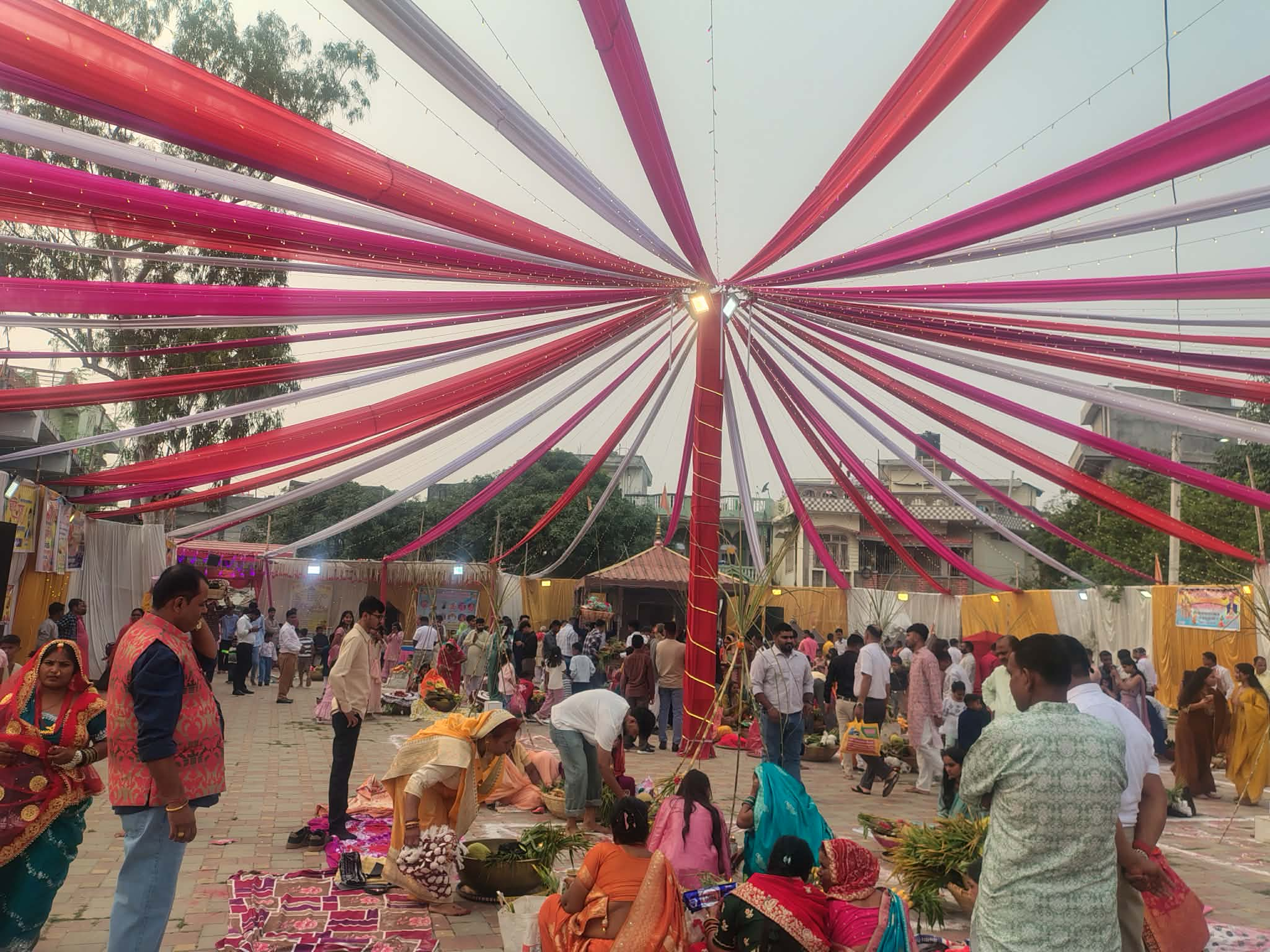
Mahottari, Nov 16: The Chhath festival concluded on Monday morning as devotees offered prayers and offerings to the rising sun.
Devotees who had begun fasting before midnight on Saturday, the fifth day of the lunar fortnight, completed the festival by offering arghya to the rising sun on Monday, the seventh day.
Across the Tarai Madhes, devotees offered prayers to the Sun God at sunrise. Earlier, on Sunday evening, they had offered the first arghya to the setting sun while observing a strict fast.
With the conclusion of the sun worship festival, devotees returned home from Chhath ghats.
The four-day festival began on the fourth day of the lunar fortnight with the Nahay Khay ritual, during which devotees take a holy bath, eat a pure meal and formally undertake the fast. On the fifth day, they observe Kharna, eating a single meal of unsalted food at night.
Observed from the fourth to the seventh day of the bright lunar fortnight in the month of Kartik, Chhath involves several rituals.
In the Mithila region, the evening ritual of offering arghya to the setting sun on the sixth day is known as Sajhiya Ghat or Sajhuka Arakh. The final morning offering to the rising sun on the seventh day is called Bhorka Arakh or Paran.
After returning home, devotees distribute grains and clothes to the poor and those in need before receiving the festival’s offerings as prasad. This marks the beginning of the tradition of sharing Chhath prasad with others.
The offerings include traditional sweets such as thekuwa and bhuswa, bananas and other fruits, as well as curd set in earthen pots. These are first offered to the Sun God and later distributed as prasad.
In Mithila, the tradition of sharing Chhath prasad continues for up to a month. Families commonly send baskets of prasad, known as bhar, to married daughters, paternal aunts, relatives, friends and other acquaintances.
Devotees believe that observing the Chhath fast brings happiness and contentment and protects them from illness.

Login to add a comment