








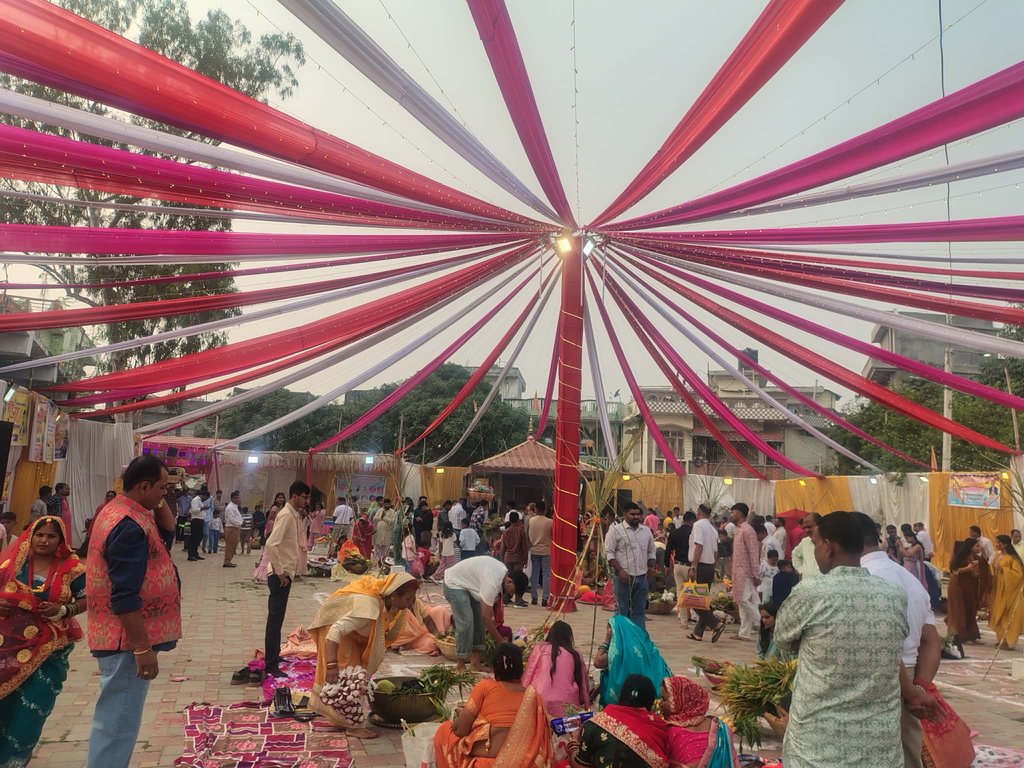
Kathmandu, November 15: Devotees across the country, including Birgunj, offered prayers and worshipped the setting sun at various water bodies and designated Chhath ghats on Sunday evening, the main day of Chhath, a unique festival symbolizing faith, devotion and gratitude towards nature.
The main day of the four-day festival, which is observed by following various religious rituals and strict disciplines, saw a large gathering of devotees at the ‘Sajhiya Ghat’ from early morning. In the evening, devotees, accompanied by family members and relatives, reached the ghats and worshipped the Sun God and Chhathi Maiya, praying for happiness, peace, prosperity and the long life of their children.
On the occasion, various Chhath ghats in Birgunj and other parts of Parsa district, including Ghadiarwa Pokhari, Sirsiya Ghat at Ranighat, Nagwa, Radhemayi, Murli, Chhapkaiya, Swimming Pool and Parwanipur, were beautifully decorated with colourful lights and decorations. A significant number of devotees were seen at the beautifully decorated ghats.
The devotees reached the ghats carrying traditional offerings arranged in bamboo baskets (supali and daura) and earthen pots. These included thekuwa (traditional sweet cakes), fruits, sugarcane, bananas, ginger, radishes, apples, soaked peas, unbroken rice grains (akshata) and other ritual offerings. Following traditional customs, the offerings were placed before the Sirsopta (a sacred shrine dedicated to Chhathi Maiya), and prayers were offered to the setting sun. Traditional Chhath songs dedicated to Chhathi Maiya echoed across the ghats, creating a deeply devotional atmosphere.
Meanwhile, some devotees who had made special religious vows reached the Chhath ghats from their homes by performing dandavat pranam (prostrating themselves fully on the ground and moving forward). This ritual, in which devotees touch the ground with their entire bodies and crawl towards the ghats, is regarded as a symbol of deep devotion and rigorous religious penance.
After offering arghya (water offerings) to the setting sun, devotees returned home singing traditional songs dedicated to Chhathi Maiya. They will prepare to perform the traditional Kosi Puja at night in their courtyards, on rooftops or along the banks of water bodies. During this ritual, a temporary structure is made from sugarcane stalks, under which thekuwa, fruits, peas, a sacred water pot (kalash) and other offerings are placed before worshipping Chhathi Maiya.
On the final day of Chhath, devotees will offer arghya to the rising sun on Monday morning. For this ritual, known in Bhojpuri as Bhoriya Ghat or Parna, devotees will take a ritual bath before sunrise, wear clean clothes and proceed to the water bodies with their offerings.
After offering prayers to the rising sun, women devotees traditionally apply vermilion (sindoor) to one another’s hair partings, wishing each other happiness, peace and long life. They will then receive and consume the sacred offerings (prasad), bringing their rigorous fast, observed without food or water, to an end.
Chhath is regarded as a major folk festival rooted in deep religious faith and dedicated to the worship of the Sun God, nature and Chhathi Maiya. Religious and cultural traditions associate the festival with the importance of the sun in human life, respect for nature and environmental conservation. The festival holds special significance for the well-being of children, family prosperity, good health and social harmony.
Alongside its religious significance, Chhath has also become a festival of social unity. The tradition of family members, relatives and neighbours working together to prepare offerings, decorate ghats, clean the surroundings and organize rituals has helped strengthen mutual understanding, cooperation and social harmony.
The historical and religious roots of Chhath are also associated with Vedic traditions. References in the Mahabharata to the worship of the Sun God by the Pandavas and Draupadi, along with accounts of sun worship in the Surya Purana and Samba Purana, further highlight the religious significance of the festival.
Although Chhath was initially celebrated on a large scale in Nepal’s Madhes region, it has gradually gained popularity in Kathmandu, Pokhara, Dharan and other hilly and urban areas across the country. This reflects the expanding cultural and social reach of the festival.
However, changing lifestyles have led to a decline in the use of traditional cooking stoves, dheki (traditional rice husking equipment), janto (traditional grinding stones) and locally available materials. Meanwhile, increasing pollution in rivers and ponds, along with challenges in managing the ghats, has raised concerns about maintaining the cleanliness and originality of the festival. Therefore, alongside preserving its religious significance, greater priority needs to be given to the conservation of water bodies, sanitation and environmental cleanliness.
Carrying the messages of faith, discipline, love for nature and social harmony, the Chhath festival will formally conclude on Monday morning with devotees offering prayers and arghya to the rising sun.

Login to add a comment