







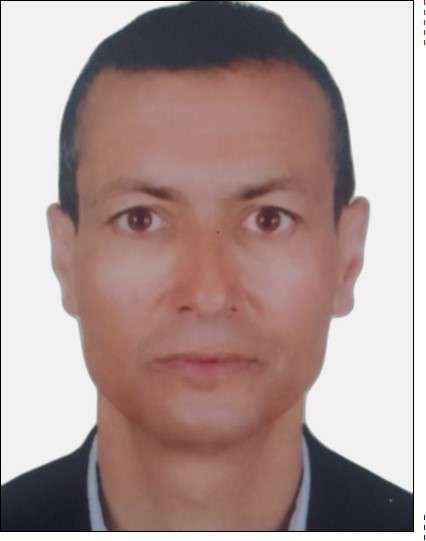
By Deepak Joshi Pokhrel
A few days ago, a remark made by Nepal’s Finance Minister Swarnim Wagle about nationalism at an event hosted by NDTV in India provided ample opportunity for political analysts, academicians, and his political opponents to express their views and opinions. Some have strongly condemned his remarks, questioning what prompted him to make such a statement without considering its wider implications. Others, however, have dismissed it as just another routine political statement.
As things stand, Finance Minister Swarnim Wagle and his statement have become subjects of discussion wherever one goes. Whether in a posh hotel in Kathmandu or at a small tea stall in a remote area, people are talking about the finance minister’s recent visit to India and his remarks at the NDTV-hosted event. Speaking at the programme, Wagle said there was a time when nationalism was associated with anti-India sentiment. However, that era has come to an end, paving the way for a new relationship based on mutual interests and shared benefits.
Our experience with democracy clearly suggests that visits by ministers and political leaders to our immediate neighbour have always attracted considerable media attention. Every such visit is viewed with scepticism and often becomes a subject of public debate. There are reasons for this perception, given that visiting ministers have either made controversial statements that attracted criticism back home or signed agreements that some sections of the population have viewed as detrimental to national interests.
Holding a PhD in Economics from the Australian National University, Swarnim Wagle is no stranger to Nepal’s political and economic landscape. He served as a senior economist at the World Bank in Washington, DC, where he contributed his extensive knowledge and expertise. He also worked as Chief Economic Advisor at the United Nations Development Programme’s Regional Bureau for Asia and the Pacific in New York. Furthermore, he served as Vice-Chairperson of Nepal’s National Planning Commission.
Politically, he was elected to the House of Representatives from Tanahun-1 in the April 2023 by-election. Swarnim Wagle is not an ordinary political cadre or a peripheral figure in the party. He is highly regarded within the party and maintains a strong relationship with his party, Rastriya Swatantra Party, chairperson Rabi Lamichhane. As the party’s vice-chairperson, his views and decisions on matters of national interest carry considerable weight within the organisation. However, his recent remarks on nationalism at a programme in New Delhi have drawn widespread criticism, with some even questioning his political and academic credentials.
India-bashing has remained an instrumental tool for political actors seeking to invoke a sense of nationalism among the people, often without a sound basis. Leaders are often found practising double standards. At times, they speak out against India to win public support in Nepal; at other times, they make every effort to secure New Delhi’s backing to ensure their political survival. Whether it was Girija Prasad Koirala, Prachanda, or KP Sharma Oli, political leaders have used anti-India sentiments as a tool to advance their own political interests.
To be more precise, communist leaders have been among the principal advocates of anti-Indian sentiment in Nepal. They have frequently propagated the narrative that New Delhi harbours malicious intentions to annex Nepal. During the Maoist insurgency, Prachanda often resorted to anti-India rhetoric to influence public opinion. Fuelled by this narrative, many people came to perceive India as Nepal’s biggest enemy—an impression that is difficult to justify on any reasonable grounds.
Over the years, Prachanda has portrayed himself as an anti-India political figure, whether in opposition or in government. He has repeatedly claimed that India seeks to annex Nepal under one pretext or another. Such rhetoric has often misled the public and reinforced anti-India sentiments.
It is now quite clear that Prachanda sought India’s assistance and refuge during the Maoist insurgency. Furthermore, it is an open secret that Prachanda and his comrades maintained close ties with Indian communist leaders, including Sitaram Yechury. Yet the same Prachanda has repeatedly adopted hostile rhetoric against India—apparently to convey the impression that he opposes the administration in New Delhi. This appears to be little more than a political publicity stunt aimed at misleading sections of the population that have long been influenced by anti-India propaganda.
Former Prime Minister KP Sharma Oli is another communist leader who has missed few opportunities to fuel and foster anti-India sentiments among his followers. While Nepal was struggling to recover from the devastating earthquake of 2015, New Delhi imposed an economic blockade, citing dissatisfaction with certain provisions of Nepal’s 2015 Constitution. Oli stood by the people, declaring that he would not bow to New Delhi’s diktat. This stance helped pave the way for his rise to the premiership in the months that followed. Now, almost a decade later, many people have realised that Oli’s anti-India position was largely intended for public consumption. Consequently, his anti-India rhetoric has failed to resonate with the wider population.
It would be difficult to argue that India has never attempted to interfere in Nepal’s internal affairs. Similarly, it would be equally difficult to conclude that India played no behind-the-scenes role in several political changes and regime transitions in Nepal. For this reason, many Nepalis have developed the perception that New Delhi is a major obstacle to Nepal’s efforts to achieve rapid economic growth.
However, in the changed geopolitical and regional context, even New Delhi has acknowledged that interfering in the internal affairs of its immediate neighbour was a mistake. A striking example is the remark made by former Indian Union Minister and senior BJP leader Subramanian Swamy. Following his visit to Nepal in July 2016, he tweeted that the 2015 blockade was a “foolish thing” undertaken by the BJP-led government on the advice of bureaucrats.
The anti-India rhetoric propagated mainly by political actors from the left has increasingly become a thing of the past. When political parties lack a convincing agenda to shape the domestic political narrative, one effective way to retain their political influence is to raise issues in the name of nationalism. Sadly, anti-India sentiment has long been one of their most frequently used instruments. What is particularly strange and surprising, however, is that some of the traditional advocates of anti-India rhetoric are now being seen speaking in favour of New Delhi.
This pen-pusher is not advocating that Nepal should compromise on its national integrity or sovereignty. My suggestion is simply that we should not misinterpret the finance minister’s remarks or make a mountain out of a molehill. Given his substantial academic credentials and political experience, Wagle was certainly aware of the implications of his statement for Nepal’s national integrity and sovereignty.

Login to add a comment