







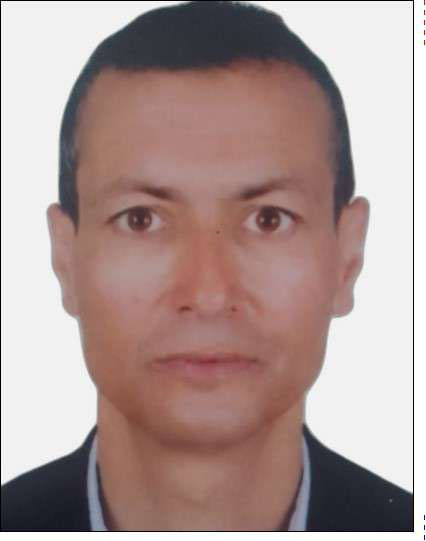
By Deepak Joshi Pokhrel
We often say “Binase kal biparit budhi” (literal translation “when destruction is near, wisdom deserts the mind”) when someone is making the foolish or destructive decision. This time-tested adage appears to hold true for the Nepali Congress, given its present situation characterised by internal bickering and a lust for power. The party’s current president, Gagan Thapa, and immediate past president, Sher Bahadur Deuba, have been organising separate ward’s conventions across the country. The party supporters and sympathisers are calling it the beginning of the end of the Grand Old Party – a party that represents democracy.
The Nepalese political landscape has long been characterised by a lust for power and a relentless struggle for power sharing. Whether Nepali Congress, CPN-UML, Maoist Center or fringe parties, the political parties have always been mired in squabbling and wrangling over power sharing, indicating that power and authority are what matter most to them.
Take the example of the recent confrontation over leadership between Deuba and other senior leaders, mainly Gagan Thapa.
The former prime minister remained party chair for a very long time. But what really annoyed the party rank and file was that Deuba seemed to be lacking willingness to hand over reins to the younger generation despite repeated calls by them to ensure his graceful exit. In simple terms, Deuba appeared unwilling to resign. What was even very strange was that he clearly stated that no force can oust him under any alibis.
After the disenchantment among senior leaders reached the apex, the factional group supporting Gagan Thapa held a special convention in January 2026. Reason: to elect party presidency. The January special convention elevated Gagan Thapa to the party presidency, much to the chagrin of Sher Bahadur Deuba, who was in Singapore for what has been described as medical treatment.
This is where the dispute between Deuba and Thapa took nasty shape, arguably putting them at each other’s throats.
Of course, the special convention elevated Gagan Thapa to the party presidency. But Deuba and his faction are opposed to Gagan’s leadership, calling his elevation contrary to the party’s norms and values. However, it is difficult to understand what led Deuba to utter such words, as he himself has remained the party’s chair while manipulating its norms and values.
As things stand now, former PM Deuba and the present chair have been organising ward conventions across the country separately. While Deuba faction’s national convention process kicked off on October 2, 2026, Gagan Thapa’s group started its convention process on September 19, 2026. Many political pundits hold the view that both are making groundwork for the upcoming 15th General Convention. While Gagan Thapa himself said that his leadership can be challenged by the dissenting leaders in the convention and whoever wins would lead the party, the existing situation suggests that Gagan Thapa will retain the leadership.
The bone of contention between Deuba and Thapa is not just limited to leadership. It is beyond fierce leadership competition. The media reports say that the Nepali Congress leaders are deeply divided over whether to maintain the traditional doctrine of democratic socialism articulated by founding leader Bisheshwar Prasad Koirala or to redefine its ideological orientation towards social democracy to reflect changing socio-economic realities and appeal to a younger electorate.
Deuba first became the chair of the Nepali Congress on March 7, 2016, after defeating his archrival, Ram Chandra Paudel, in the second round of voting during the 13th General Convention. He formally took over the charge as party president on March 16, 2026. Deuba was re-elected at the 14th General Convention in December 2022 – something which shocked everyone, mainly his rival faction.
From the very beginning, Deuba’s leadership has faced scrutiny. He was repeatedly criticized within the party for being relatively quiet and less communicative. His rude and arrogant behaviour tarnished the image. A stark example is his response to the queries of a youth who asked him what he has done for the betterment of the country as its prime minister during an interaction programme.
He was trolled by the people saying that he lacks etiquette and is driven by ego.
Within the party, Deuba was viewed as a ruthless, arrogant and stubborn politician. This is evident in the fact that he always ignored the collaborative governance, undermining the party’s norms and values. His relationship with adolescent leaders, including Prakash Sharan and Gagan Thapa, became increasingly pronounced, which eventually evolved into a direct organisational challenge to Deuba’s leadership.
In addition, Deuba has been accused of dominating the party. The reports in the media state that he did not leave any stone unturned to consolidate power, ensuring his political mileage. The factionalism in the NC is written into the very marrow of the Nepali Congress. In 1953, the party witnessed the feud between BP Koirala and his half-brother Matrika Prasad, which is perceived as the worst manifestation of bone of contention over power sharing.
Half a century later, Deuba dissociated himself from the party president over what he describes as anti-democratic and anti-constitutional. Following the incident, many party insiders said that Deuba had expressed a deep lust for power and he had the tendency to breach any norms and values for his personal advantage.
After the collapse of so-called Koirala’s regime in the Nepali Congress, the party supporters and insiders pinned high hope on Deuba, believing that he would take the party in a new direction.
Contrary to people’s belief, Deuba also appeared to treat the party as a private fiefdom. If the media reports are any guide, he was overtly and covertly undertaking measures to promote his spouse, Arzoo Deuba, as a potential successor to the party presidency. But he failed in doing so after senior leaders and rival factions opposed it outrightly.
This scribe will not do justice if this piece only highlights the weakness and flaws of Deuba. Likewise, it would be unjustifiable to project Deuba as an antagonist accountable for the present pathetic position of Nepal Congress. Deuba contributed immensely to taking the party to new helm.
In 2006, the country passed through a political transition. To say, there was an apprehension among the people about the future course of the Nepalese political landscape. Amidst this doubt and uncertainty, Deuba helped the party navigate successfully. This achievement can be seen as one of the biggest contributions to the party. As a prime minister, he has successfully conducted the elections, giving fresh oxygen to democracy. Most importantly, he played a key role in maintaining Congress as a major force in the country.
But what Deuba should do is to abandon his lust for power, paving the avenues for leadership transition. Deuba is ageing and ailing at the same time. This is the time to ensure his graceful exit, which is only possible if he plays the role of protagonist, bringing the lost lustre of the Nepali Congress.

Login to add a comment