







By Our Political Analyst
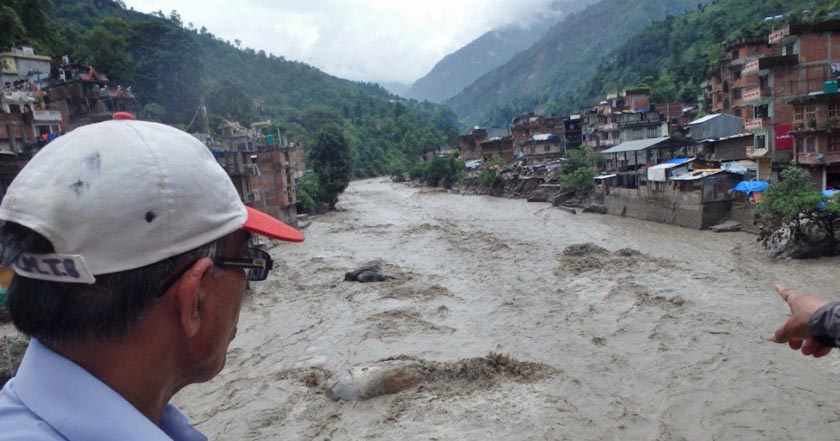
Prime Minister Balendra Shah last week took Nepal’s Himalayan tragedy to the United Nations General Assembly with a message that went well beyond the country’s borders. The Bhotekoshi Trishuli flood, which Shah described as a warning to the world, killed at least 1,400 people, left thousands missing and created recovery needs estimated at around 10 percent of Nepal’s GDP. For a country contributing less than 0.1 percent of global greenhouse gas emissions, such devastation brings the question of climate justice sharply into focus.
Shah sought to turn Nepal’s suffering into a broader argument about who should bear the cost of a warming planet. The flood destroyed roads, bridges, schools, farmland, hydropower projects and livelihoods. Rebuilding them will consume resources that Nepal could otherwise spend on hospitals, education, jobs and public services. Climate disasters, therefore, do not merely destroy property. They can wipe out years of development and force poorer countries to repeatedly rebuild essential infrastructure.
This is where international climate commitments matter. Shah invoked the principle of common but differentiated responsibilities, which recognises that countries neither contributed equally to climate change nor possess equal resources to deal with its consequences.
His call for accessible, grant based assistance is therefore reasonable. Burdening vulnerable countries with more loans to repair damage they contributed little to causing only deepens their financial strain. Nepal has already approached the UN Loss and Damage Fund, and its request is under consideration. The response will help show whether global climate commitments can deliver meaningful support when vulnerable countries actually face catastrophe.
But speeches at the UN achieve little unless diplomacy produces results. Nepal must follow Shah’s appeal with clear financing proposals and sustained negotiations. It needs support not only for reconstruction but also for early warning systems, glacier and glacial lake monitoring, stronger roads and bridges, watershed protection and disaster preparedness.
Shah’s proposed Himalayan Climate Resilience Mechanism involving Nepal, India and China could provide a useful framework. It envisages satellite data sharing, scientific cooperation, monitoring of dangerous glacial lakes and stronger cross border warning systems. Such cooperation makes practical sense. Floodwaters, debris and other Himalayan hazards do not recognise national boundaries. A disaster beginning high in the mountains can rapidly threaten communities far downstream.
The Hindu Kush Himalayan region supports rivers, economies and livelihoods extending far beyond Nepal. As rising temperatures alter glaciers, snow cover, rainfall and mountain hydrology, regional cooperation becomes increasingly necessary. Sharing scientific information and warnings before disaster strikes can save more lives than helping afterwards.
International support, however, cannot substitute for Nepal’s own responsibilities. The government must enforce safer construction standards, control reckless development in hazardous areas and improve land use planning. Infrastructure should not continue expanding into vulnerable terrain without proper geological and environmental assessment.
Accountability matters just as much. Domestic and international reconstruction funds must be spent transparently and used to reduce future risks. Rebuilding a destroyed road in the same vulnerable manner simply sets up another costly failure. Reconstruction should correct past weaknesses rather than recreate them.
Shah has placed Nepal’s climate vulnerability before the world’s largest diplomatic forum. Now Nepal must turn that attention into sustained diplomacy, credible projects, regional cooperation and concrete financing.
The Bhotekoshi Trishuli tragedy also presents a test for the international community. Climate justice has little meaning if countries responsible for only a tiny share of global emissions are left to shoulder enormous recovery costs largely on their own. Nepal needs help to rebuild, but it needs something more lasting: cooperation that reduces the human and economic cost of future disasters. The Himalayas have delivered their warning. The question is whether Nepal and the wider world will act before the next one arrives.

Login to add a comment