








By Our Reporter
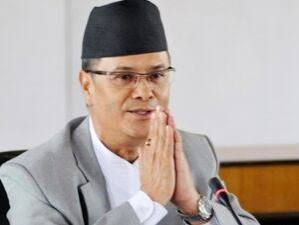
The manner in which former Chief Justice Cholendra Shumsher Rana was taken from his home in the middle of the night raises questions pertaining to the rule of law, the limits of police authority and the obligation of the state to explain why it restricts an individual’s freedom.
Police took Rana from his Maharajgunj residence at around 3 am on Sunday and brought him to the Kathmandu Valley Crime Investigation Office in Teku. Initial reports described the action as an arrest. Police later said he had not been arrested but moved to a “safe place” because of a security threat and that no criminal case was being pursued against him. Following widespread criticism, police quietly released Rana later in evening of the same day.
That explanation leaves an obvious question: if Rana needed protection, why could police not protect him at home? Authorities have not publicly explained the precise threat, who posed it or why moving a former chief justice to a crime investigation office before dawn was considered necessary. Nor has it been made clear whether Rana voluntarily agreed to go. Reports indicate he was not given an arrest warrant.
These details matter because the state cannot allow the distinction between protection and detention to become blurred. If Rana went voluntarily for his safety, police should clarify that. If he was compelled to leave his home and prevented from leaving police premises, authorities need to explain the legal basis for doing so.
Rana’s controversial record should not cloud that basic principle. His tenure as chief justice produced one of the deepest crises Nepal’s judiciary had faced in years. Supreme Court justices revolted against his leadership, lawyers protested for his resignation and serious allegations were made about judicial misconduct, corruption and political interference. He was also accused of seeking a share in the Cabinet, allegations that intensified after his brother in law was appointed a minister.
The confrontation became so serious that Supreme Court justices stopped hearing benches assigned under Rana’s leadership. A lottery system was eventually introduced for case allocation, reducing the chief justice’s power over bench formation.
Then came impeachment. On February 13, 2022, 98 lawmakers from the Nepali Congress, CPN (Maoist Centre) and CPN (Unified Socialist) registered an impeachment motion containing multiple accusations against Rana. Under the Constitution, registration of the motion automatically suspended him from performing his duties. The motion was never finally decided by Parliament.
That history explains why Rana remains such a controversial figure. It does not, however, provide legal justification for Sunday’s police action. Past allegations and political controversies cannot substitute for due process in a new case.
Indeed, this is where the present episode becomes more important. A democratic state proves its commitment to the rule of law not by protecting only popular or uncontroversial people, but by applying the same legal standards to everyone.
If police possessed credible intelligence that Rana faced an imminent attack, protecting him was their responsibility. But protection should normally focus first on neutralising the threat and securing the person at risk. Authorities should also investigate those allegedly making threats.
If something more lies behind the action, the government and police should say so and follow established legal procedures.
Rana’s past can be examined separately through lawful processes. Sunday’s events will be continued to deepen our suspicion on police and government, who, by their action, are willing to turn the nation into a police state, albeit for now.

Login to add a comment