








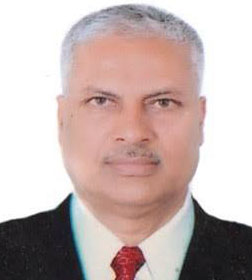
By Jagadish Dahal
The demise of Prof. Dr. Suresh Raj Sharma has left Nepal’s educational community deeply saddened. For me, however, his passing is deeply personal. It has brought back decades of memories—of conversations, disagreements, consultations, meals, ideas and, above all, the privilege of knowing a man who devoted much of his life to education and institution-building in Nepal.
I first came to know of Dr. Sharma around 2029/30 BS, when he established the Food Technology Science College at Hattisar in Dharan, Sunsari, and became its founding campus chief. Over the years, I came to know him closely and had the opportunity to hear firsthand about the ideas, challenges and decisions that shaped Nepal’s education system.
Dr. Sharma was deeply committed to quality education. He often told me that national development was impossible without quality education. His conviction was shaped by the experience of countries that had demonstrated the importance of strengthening education as the foundation for sustained development.
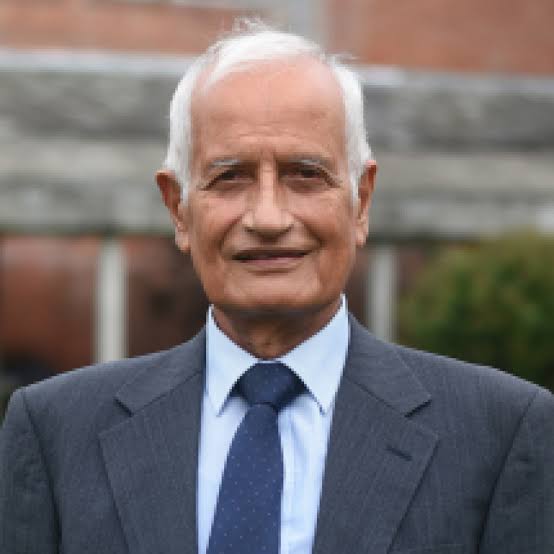
One of the stories he shared concerned the establishment of the Food Technology College in Dharan. At a time when there was little awareness in Nepal about food technology or the need for trained human resources in the field, he was already thinking about the country’s future. He believed Nepal needed its own food laboratories and trained professionals capable of addressing food contamination and other risks, rather than depending on outside expertise.
He managed to convince the then King and the Palace of the importance of producing trained manpower in food technology, eventually leading to the establishment of the college at Hattisar. King Birendra was reportedly impressed by the initiative. On Dr. Sharma’s advice, the National Education Committee was subsequently formed, and he was appointed its full-time Member-Secretary, a position he held for about a decade.
Another initiative he spoke about at length was Budhanilkantha School. At the time, travelling from Ratna Park to Budhanilkantha was difficult, and there was no proper motorable road connecting the area. With British assistance, Dr. Sharma helped develop the concept and persuaded the Palace and the King of the need for such an institution. The result was the establishment of Budhanilkantha School and a motorable road to the school.
The idea was ambitious. Talented students from across Nepal were selected competitively under a quota system to ensure representation from different backward ethnic communities and social groups. The objective was to provide an education comparable to that available in developed countries and prepare Nepali students to compete internationally.
Dr. Sharma also told me that he had informally served as an education adviser to King Birendra. It was not always easy, as the views of the King, Queen Aishwarya and officials responsible for education did not always coincide.
He once recounted the appointment of a principal at Mahendra Bhawan Girls’ School. King Birendra sought his advice, and Dr. Sharma recommended Ms. Nirmit Settling, who had studied at St. Joseph’s College in Darjeeling and was familiar with the British education system. Queen Aishwarya, however, wanted Shanti Basnet, wife of singer Bachchu Kailash, for the position. After discussions among the concerned authorities, a compromise was reached: Nirmit Settling became principal of Mahendra Bhawan Girls’ School, while Shanti Basnet was appointed principal of Vijay Memorial School in Dilli Bazaar. Dr. Sharma later told me that both women led their respective schools successfully.
After about a decade at the National Education Committee, Dr. Sharma turned increasingly towards technical and vocational education. With support from Switzerland, Denmark and other development partners, efforts were made to establish the Council for Technical Education and Vocational Training (CTEVT), and Dr. Sharma became its Executive Director.
He was convinced that Nepal could not develop without expanding technical and vocational education. He described how the work began from a small office in Minbhawan, Baneshwar, and gradually expanded into a network of technical institutions, eventually leading to the establishment of the central structure in Thimi, Bhaktapur. Under his leadership, technical schools were established in places including Jiri, Dharan and Gandaki.
Dr. Sharma consistently argued that science and technology education had to be among the foundations of Nepal’s development. What I admired most was that he did not merely speak about it; he worked to build institutions that could make such education accessible.
After the political changes of 2046 BS, I personally witnessed some of the difficulties he faced while dealing with government agencies and officials. He endured considerable hardship, frustration and, at times, humiliation in his efforts to advance educational reform. Yet he never gave up.
A High-Level National Education Reform Recommendation Commission was subsequently formed, with Education Minister as its chair and Trailokya Nath Upreti as vice-chairperson. Dr. Sharma was one of its members. When it became clear that the 16-member commission could not work efficiently, a six-member steering committee was formed, and I served as its coordinator. That period brought me into much closer contact with Dr. Sharma.
We often discussed educational issues at his CTEVT office, and he sometimes invited me to his home for consultation. His wife treated me warmly, as did his daughters, Kanchan and Srijana. Over time, I came to feel less like a visitor and more like a member of the family.
Around that time, Dr. Sharma had established Valley College at Madan Smarak School in Patan to provide science education after the SLC level. The college also became a forum for discussions on higher education, science and technology, and civic education. I was occasionally invited to those discussions, along with figures including Dr. Trailokya Nath Upreti, Dr. Sitaram Adhikari, Dr. Bhadraman Tuladhar and others.
Then came a conversation with Dr. Sharma that I have never forgotten.
One day at his CTEVT office, he told me: “Jagadish ji, I am approaching 60. I may be able to work for another ten years at most. Should I spend those years conducting research in chemistry and write a book that teachers and students can use for decades? Or should I establish an educational institution focused on producing quality human resources? What do you advise?”
He told me I was the first and last person he was consulting about the decision.
I advised him to establish an educational institution. “People like me can help you,” I told him. “I believe an institution would be more beneficial for the country and the people.”
Afterwards, I wondered whether I had given him the right advice. I went to Dr. Trailokya Nath Upreti and recounted the conversation. When he asked what kind of institution I had suggested, I explained that Tribhuvan University might not be able to meet the country’s growing demand for quality education. “Why not establish a university in the private sector, similar to privately run schools?” I said. “Dr. Suresh Raj Sharma wants to do exactly this. We can begin discussing the idea at Valley College.”
That conversation marked the beginning of an effort that eventually led to the establishment of Kathmandu University. Dr. Sharma took the lead, joined by Dr. Sitaram Adhikari and Dr. Bhadraman Tuladhar. I was involved in the early stages, particularly in donor coordination and fundraising. We set up an office at the house of Ran Bahadur Shah in Lazimpat.
Once the university was established and the work moved to Dhulikhel, however, my involvement ended. I have no bitterness about that. Institutions move forward through the efforts of many people.
Years later, during the tenure of Prof. Dr. Bhola Thapa as Vice-Chancellor, I again had an opportunity to engage with Kathmandu University. I remain grateful to him for that opportunity.
My last one-on-one meeting with Dr. Sharma was during the 13th-day ritual following the death of his wife. Holding my hand, he told me, “Jagadish ji, I should have gone first. She went before me.” There was little I could say. I replied, “We are ultimately compelled to accept the will of the Almighty.” I did not know then that it would be one of my last conversations with him.
Today, Prof. Dr. Suresh Raj Sharma is no longer with us, but the memories remain. His contribution to Nepal’s educational history extends far beyond classrooms and individual institutions. He helped advance the idea that education must serve national development, that science and technology must have a central place in that development, and that institutions must be built with a vision extending beyond one generation.
For me, however, his legacy is also found in the conversations—the questions he asked, the ideas he shared and the trust he placed in me at a decisive moment in his life. I consider myself fortunate to have known him, learned from him and played a small part in some of the initiatives he envisioned.
I will remember Prof. Dr. Suresh Raj Sharma not simply as an educationist and institution-builder, but as a person whose conversations stayed with me long after they ended.
This is my tribute to him, with deep respect, gratitude and heartfelt remembrance.

Login to add a comment