







By Our Business Reporter
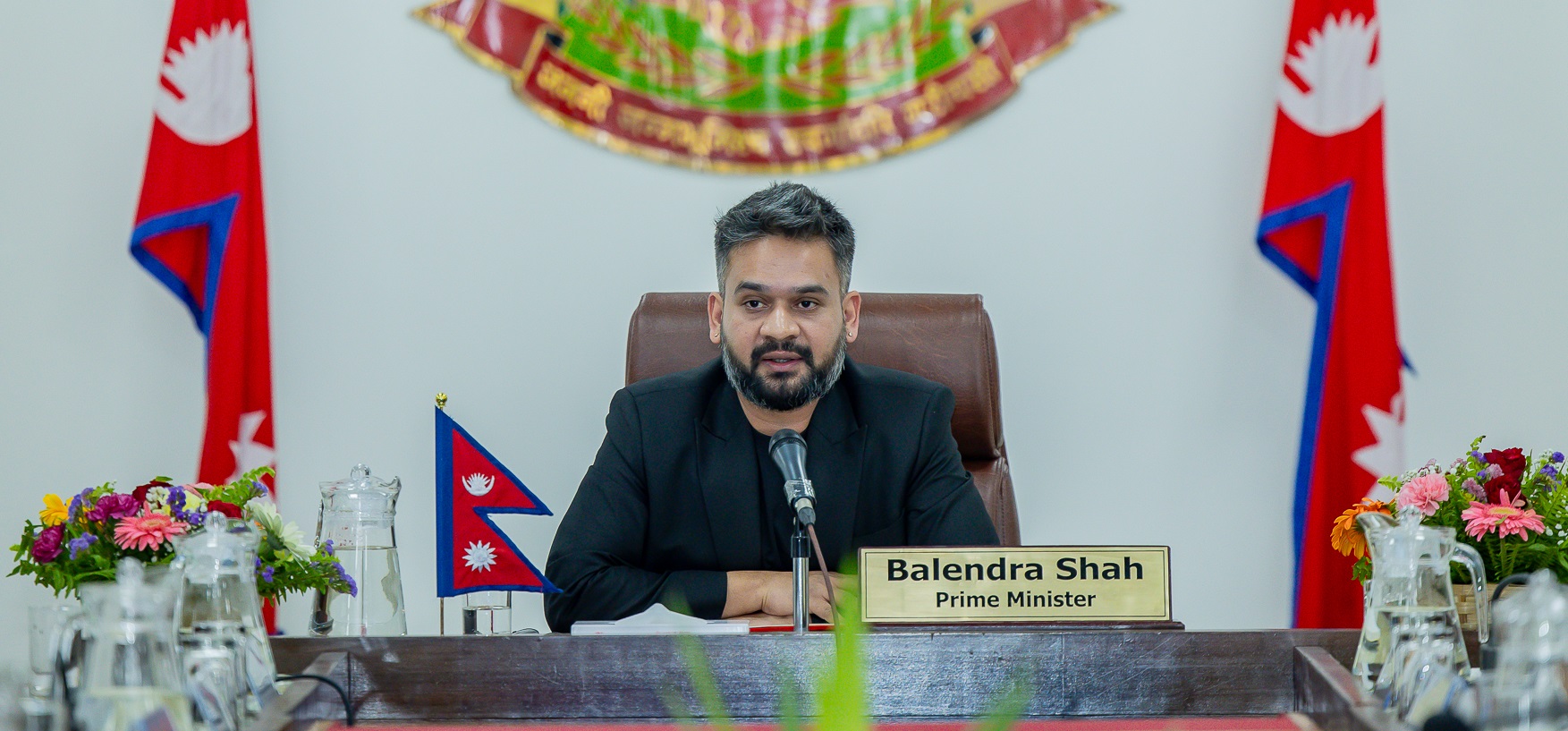
Prime Minister Balendra Shah’s decision to sit down with leading business figures is a welcome move. It came late, but it came at a time when Nepal badly needs a confidence boost for its economy. After months of political change, economic uncertainty, disaster losses and weak business sentiment, the government cannot afford to remain distant from the people who invest, employ workers, pay taxes and keep industries running.
The private sector contributes more than two thirds of economic activity. Its condition therefore says a great deal about the health of the wider economy. When businesses hesitate to invest, postpone expansion or struggle to operate, the effects reach workers, consumers and government revenue. A government seeking stronger growth must listen to the private sector and respond to its concerns.
Shah’s two-hour discussion on September 11 with Binod Chaudhary, Umesh Shrestha, Pawan Golyan and Chandra Dhakal was significant for that reason. The meeting reportedly had been scheduled for 30 minutes but was extended by the prime minister. That suggests Shah was willing to listen beyond prepared talking points. For a government that has so far kept some distance from business circles, the direct engagement sends a useful signal.
Although, it is a good beginning, why PM Shah didn’t invite those industrialists and businessmen who have contributed a lot in the nation? Why he didn’t chose to invite those community known to be pioneer industrialists and investors? Talking about Binod Chaudhary, or other else, they are earning money in Nepal and doing business in foreign countries.
Nepal’s business community has plenty of complaints. High borrowing costs, unpredictable policies, cumbersome regulations, weak infrastructure, declining demand, delays in government decisions and uncertainty over investment rules have all affected business confidence. The recent floods and other disruptions have added another layer of pressure. Industries already operating under difficult conditions now face additional risks to supply chains, transport and markets.
This is why the prime minister’s outreach should not be dismissed as a ceremonial meeting. It can be the beginning of a more regular conversation between the government and the private sector. Shah should use it to identify problems that can be solved quickly and those requiring longer term policy changes.
There are, nonetheless, valid questions about the meeting. The absence of newly appointed Industry, Commerce and Supplies Minister Deepak Kumar Sah is difficult to explain. If the discussion produces commitments, the concerned ministry will ultimately have to implement them. Ministers and secretaries should therefore be part of such consultations, particularly when the agenda involves taxation, industry, trade, investment, energy or regulation.
The choice of participants also deserves wider consideration. Chaudhary and Shrestha have strong links with the Nepali Congress, while the other participants represent major business interests. Their experience is valuable, but no four people can speak for Nepal’s entire private sector. Small and medium enterprises, manufacturers, exporters, startups, provincial businesses and nonpolitical business associations also need a seat at the table.
That matters because consultation should not become access reserved for the well connected. The government must ensure that policy is shaped by evidence and broad representation, not personal proximity to the prime minister.
Still, these concerns should not obscure the larger message. Shah has recognised that government cannot revive the economy while keeping business at arm’s length. The next step is to turn conversation into action.
The prime minister should establish a regular mechanism for dialogue, publish clear follow up points and assign each issue to the responsible ministry. Business leaders, for their part, should bring concrete problems and workable proposals, not requests for special treatment.
Nepal is going through a difficult period. What industry needs most now is confidence that the government is listening, policies will be predictable and genuine investment will be supported. Shah’s meeting was a good first step. The test will be whether the government follows it with decisions that businesses can actually feel.

Login to add a comment