







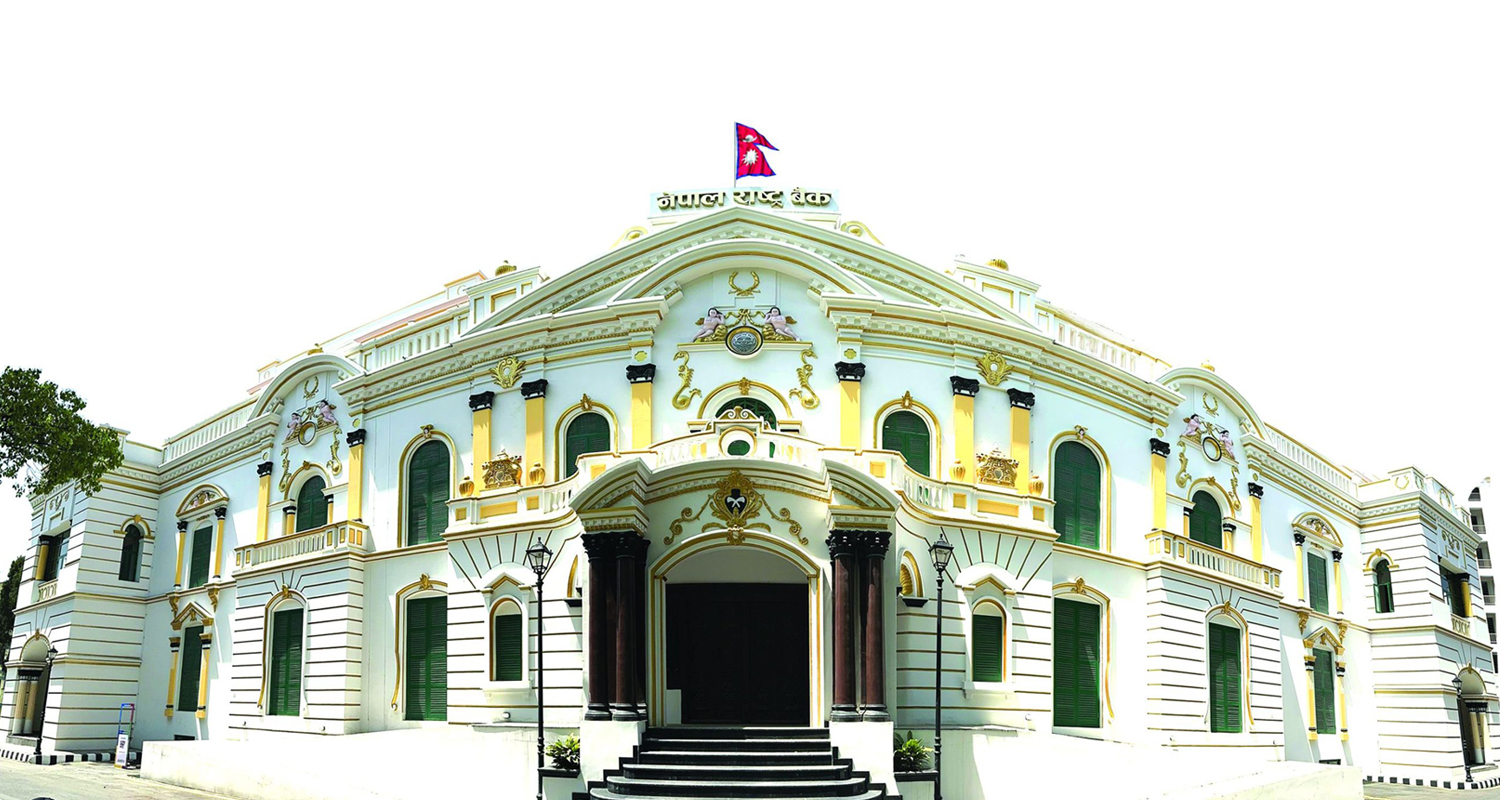
Kathmandu, September 15: A bill amending the law governing Nepal Rastra Bank has been passed by a parliamentary committee in a manner that has raised serious questions over the autonomy of the central bank.
The law has been passed in a way that could weaken the autonomy of Nepal Rastra Bank, the country’s supreme authority responsible for overall monetary management, controlling inflation and maintaining financial stability.
The Finance Committee of the House of Representatives passed the bill with a controversial provision reducing the governor’s term from five years to three years, while allowing the government to extend the term by another two years based on performance if it so wishes.
The passage of the bill to amend the Nepal Rastra Bank Act, 2058, with such a provision has created considerable concern in economic and political circles.
The 30th meeting of the Finance Committee passed its report despite written dissent and sharp differences among some lawmakers.
The government has been accused of attempting to create a system in which the governor would be restricted to a three-year term, with the remaining two years dependent on the government’s discretion.
Former finance ministers and former governors have accused the government of attempting to turn the central bank into a puppet of the government and political parties by retaining provisions allowing the government to directly issue instructions on monetary and banking matters.
Former finance minister and former governor Dr. Yuba Raj Khatiwada described the parliamentary committee’s decision as one that could invite serious consequences. He said the governor’s five-year term had been established on the basis of strong legal and policy considerations, rather than whim or impulse, and warned that tampering with it would be a serious mistake.
“A central bank is an autonomous institution and it has to formulate long-term monetary policy. The five-year term was not fixed at anyone’s whim or desire. It has its own rationale and is an internationally accepted practice,” Dr. Khatiwada said. He argued that making the first three years of the governor’s term fixed while making the remaining two years dependent on the government’s decision would lead to institutional erosion.
Questioning the government’s intentions, he said, “Even if there was a rush to make a new appointment, the government that came to power with a five-year mandate could have made the appointment for five years. By fixing the term at three years and making the remaining two years dependent on the government’s discretion, political pressure and instability over the central bank will only increase.”
Dr. Khatiwada said the committee was attempting to undermine established international norms on the strength of its majority.
Questioning the finance minister, he said, “How can you keep destroying basic logic and internationally accepted norms simply because you have a majority? If this logic is applied, will the terms of officials of constitutional bodies also be reduced from six years to three years tomorrow? Will judges’ terms be treated the same way? Where else will you apply this?”
Dr. Khatiwada stressed that the selection process itself should be transparent and rigorous for institutional reform. “When selecting a person, we should select someone capable and in the proper manner, and then allow that person to serve the full term. If the person fails to fulfil the responsibility, provisions already exist in the law to bring them within the legal framework and take action,” he said.
Recalling that policy differences had also occurred between the Ministry of Finance and Nepal Rastra Bank in the past, he warned that such unstable provisions could further widen the distance between the two institutions.
“If there is still room to correct this, please do so. Otherwise, after two years, there will come a day when we will have to correct it again, saying that this was not right,” Dr. Khatiwada said. “The bill still has to go to the House of Representatives and the National Assembly. Parliament must reconsider this serious issue.”
Similarly, former governor Dr. Chiranjibi Nepal accused the amended law of completely undermining the autonomy of the central bank. He alleged that the provision had been introduced with the intention of keeping the governor under the control of political parties and turning the central bank into a puppet.
Dr. Nepal said that, in particular, the provision under Section 106(c), which allows the government to issue directives, had been retained, while the reduction of the governor’s term would create an environment in which the governor would constantly remain under pressure.
“During the amendment of the Nepal Rastra Bank Act in fiscal year 2016/17, political parties had jointly added a provision under Section 106(c) allowing the government to issue directives to Nepal Rastra Bank in banking, financial and monetary matters,” he recalled. “There was no such provision before that. The same provision has now been retained. This is a weapon intended to force the governor to comply with what the government wants and to remove the governor if he or she refuses.”
He noted that the government had previously made an unsuccessful attempt to remove a governor by invoking this very provision and said the current amendment had further strengthened the basis for such action.
Dr. Nepal warned that reducing the governor’s term would push the central bank’s leadership toward a job-holder mentality. “In developed countries, the international practice is to have long terms for central bank governors—six to eight years or even longer—so that they can work free from political ups and downs,” he said.
He said that in Nepal, however, the arrangement would create a situation in which the governor would have to please political parties and the government to secure an additional two-year term. According to him, the amended provision would turn the governor into a puppet.
Dr. Nepal warned that financial stability could face serious risks. “The government and the central bank have fundamentally different roles. The government tends to focus on distributing money in the market and introducing spending-oriented budgets in order to win elections. But the responsibility of the central bank is to control inflation and maintain financial stability,” he added.
He claimed that governors, deputy governors and board members would focus more on maintaining good relations with the government in order to extend their tenure than on financial stability. He said that once the condition of the central bank deteriorated under the new arrangement, maintaining the country’s financial stability in the future would become difficult.
He also recalled that donor agencies such as the International Monetary Fund (IMF) and the World Bank had repeatedly recommended scrapping the provision allowing the government to issue direct instructions to Nepal Rastra Bank.
“The main concern of donor agencies is that the provision allowing the government to issue direct instructions should be removed. But the government has listened to them with one ear and ignored them with the other. It is clear that the government wants to keep the financial sector under its complete control,” Dr. Nepal said.

Login to add a comment