







By Our News Analyst
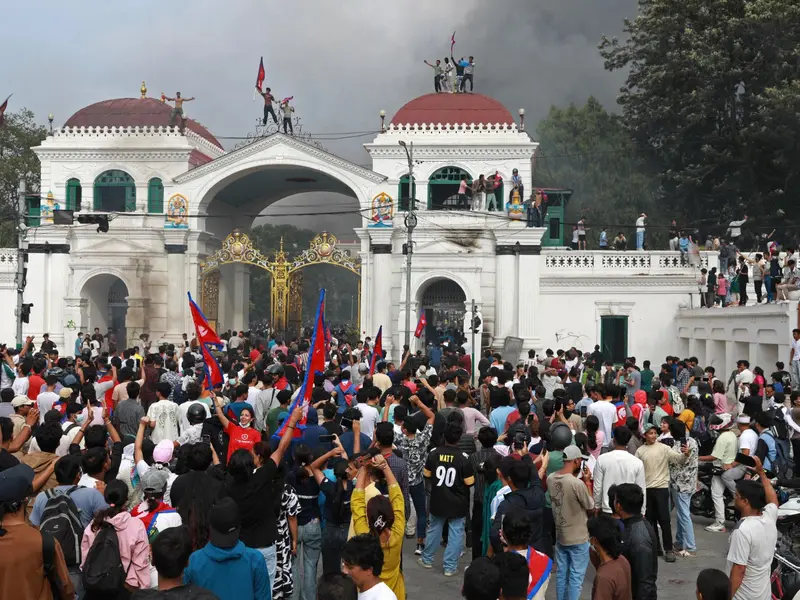
The first anniversary of Nepal’s Gen Z movement should not end with speeches, memorials and photographs of martyrs. It should also force the government to answer a difficult question: who will punish those responsible for the violence and destruction of September 9, 2025?
Families of those killed during the movement have every reason to worry that the anniversary could become a ritual. The government’s decision to organise programmes in memory of the movement is meaningful only if it is followed by action. The sacrifices of young people were not made simply to remove one political group and replace it with another. They were driven by anger against corruption, political privilege, impunity and the failure of the state to respond to citizens.
That is why justice cannot be selective. The students and young protesters killed by police firing at New Baneshwar on Bhadra 23, or September 8, deserve to be remembered as victims of state violence. Their deaths became a defining moment of the movement. The state has a duty to establish who gave the orders, who used excessive force and who should be held legally responsible.
But the events of Bhadra 24, or September 9, must also be investigated properly. Those who took advantage of the political chaos to loot businesses, burn public property, destroy state institutions and release prisoners cannot automatically be presented as martyrs. Their deaths should not be placed in the same category as those who were peacefully protesting and were killed by police action. This distinction is not about diminishing the Gen Z movement. It is about protecting its legitimacy.
The Sushila Karki-led interim government understood the need for investigation when it formed the Gauri Bahadur Karki commission to examine the events surrounding the movement. Yet the commission ultimately focused on Bhadra 23 and recommended that the elected government establish another mechanism to investigate Bhadra 24. The failure to complete that process leaves a major gap in the search for justice.
The current government therefore has a responsibility that goes beyond commemorating the movement. It must establish who organised, encouraged or participated in criminal acts on September 10 and prosecute them according to law. The same principle should apply to anyone responsible for unlawful killings on September 9. Justice cannot depend on political affiliation, public pressure or the status of the accused.
There is also a practical reason for acting quickly. Prisoners escaped during the violence, weapons were reportedly taken from police facilities, and some of those responsible for destruction have yet to face the law. Such failures do not end with the movement. They weaken police morale, discourage businesses from reopening and leave ordinary citizens wondering if the state is capable of protecting them.
Allowing perpetrators to walk free would send a damaging message: political disorder can provide protection from prosecution. Once that belief takes hold, future movements may produce the same cycle of violence, destruction and impunity.
Nepal has seen this pattern before. Governments often promise justice when they are out of power and become cautious when they gain it. That is precisely how the grievances of one generation become the anger of the next.
The Gen Z movement was, in large part, a revolt against that cycle. The government that came to power with its mandate must therefore prove that it has understood the message.
Honouring the genuine martyrs means pursuing justice for them. It also means refusing to turn criminal acts into political heroism. The government should investigate both September 9 and September 10, publish the findings, prosecute those responsible and recover missing weapons and escaped prisoners where possible.
An anniversary becomes meaningful when it produces accountability, not when it merely produces ceremonies. If those responsible for serious crimes are allowed to walk free, the state will not only fail the victims of 2025. It will deepen the culture of impunity that helped create the Gen Z movement in the first place.

Login to add a comment