








By Sharachchandra Bhandary recently in Shenzhen, China
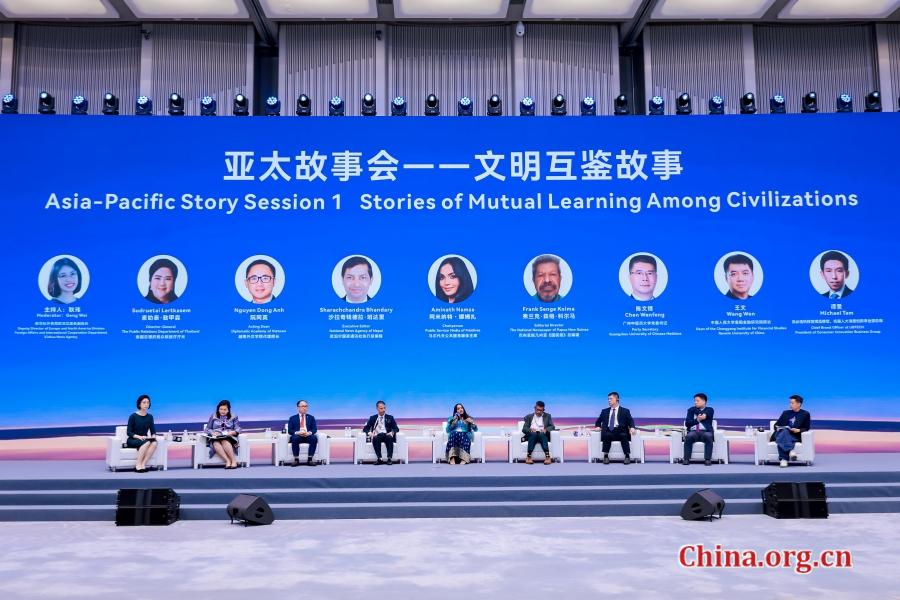
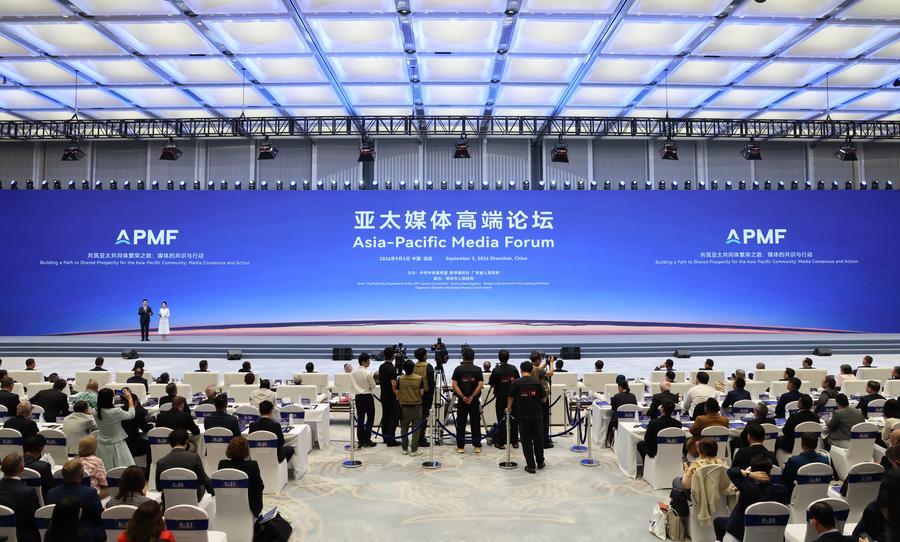
More than 400 representatives from media organizations, think tanks, government agencies, universities, diplomatic missions, United Nations agencies and international organizations from more than 40 countries and regions gathered in Shenzhen on September 5 for the Asia-Pacific Media Forum, calling for stronger media cooperation, greater mutual understanding and closer regional collaboration.
Held under the theme “Building a Path to Shared Prosperity for the Asia-Pacific Community: Media Consensus and Action,” the forum focused on the role of media in promoting regional cooperation, technological innovation, sustainable development and people-to-people exchanges. It was one of the major events of 2026 APEC China Year, ahead of the APEC Economic Leaders’ Meeting scheduled for November 18–19 in Shenzhen.
The main forum was preceded by a two-day programme across Guangdong. Four sub-forums were held on September 3 and 4 in Guangzhou, Dongguan, Zhuhai and Shenzhen, bringing together media professionals, academics, business representatives and other experts to discuss regional development, openness, innovation, connectivity and media cooperation. Participants also visited several cities and development projects in the Guangdong-Hong Kong-Macao Greater Bay Area, gaining first-hand exposure to China’s technological, industrial and urban development.
At the opening of the main forum, Li Shulei, a member of the Political Bureau of the Communist Party of China Central Committee and head of the Publicity Department of the CPC Central Committee, said the development and cooperation of the Asia-Pacific could not be achieved without the active participation of media organizations.
He called on media to tell the story of regional openness and connectivity, report on cooperation and development across the region, and strengthen practical collaboration through joint reporting, technological innovation and professional training. He also highlighted the role of media exchanges in promoting cultural understanding and closer relations among the peoples of the region.
Huang Kunming, a member of the Political Bureau of the CPC Central Committee and secretary of the CPC Guangdong Provincial Committee, also addressed the opening, highlighting Guangdong’s development and its role as a centre of innovation and openness. The gathering, he said, provided an opportunity to deepen exchanges and cooperation between Guangdong, the Asia-Pacific and the wider world.
Lyu Yansong, editor-in-chief of Xinhua News Agency, called on media organizations to do more than simply record changes taking place in the region. He emphasized the role of journalism in promoting win-win cooperation, strengthening people-to-people understanding and telling stories of mutual support and cooperation across the Asia-Pacific.
International speakers echoed the importance of responsible journalism and dialogue. Melissa Fleming, UN Under-Secretary-General for Global Communications, said responsible media coverage can help rebuild trust and contribute to solutions to common challenges. Konstantinos Oikonomou, senior vice-president of CNN, described the diversity of the Asia-Pacific as a strength and stressed that differences make dialogue and engagement more important.
A major outcome of the forum was the establishment of the Organizing Committee of the Asia-Pacific Media Partnership Program, jointly formed by 16 media organizations from China and other countries. Participating media organizations also exchanged cooperation documents aimed at expanding practical collaboration.
The forum launched the “Gather in Shenzhen, Create a Better Asia-Pacific” Media Cooperation Initiative, with a focus on technology sharing, joint content production and talent development. Plans were also announced for an Asia-Pacific Digital and Smart Media Intelligence Center in Shenzhen and a training platform for young media professionals.
The Shenzhen Consensus of the Asia-Pacific Media Forum called for greater openness, innovation and cooperation in support of regional prosperity. It encouraged media organizations to pay greater attention to regional connectivity, economic cooperation, technological development and the stability of industrial and supply chains, while sharing development experiences among countries.
Digital transformation and artificial intelligence were also prominent themes. Participants recognized the opportunities offered by AI and other emerging technologies in news gathering, production and distribution, while stressing that technological development should go hand in hand with professional standards and responsible journalism.
The forum also featured an exhibition of scientific and technological innovations, with more than 30 companies from the Greater Bay Area showcasing developments in intelligent media technology, embodied artificial intelligence, smart cities and smart living.
The multi-city programme gave participating journalists an opportunity to see China’s development beyond the conference halls. Visits covered advanced manufacturing, smart factories, digital infrastructure, green technology, transportation and urban development across Guangzhou, Foshan, Dongguan, Shenzhen, Zhuhai and Zhongshan.
The Guangzhou sub-forum, for example, brought together about 150 media representatives, experts, scholars and business leaders to discuss the Greater Bay Area’s contribution to APEC cooperation, regional connectivity, cross-cultural communication and the impact of artificial intelligence on the media industry.
The Shenzhen forum took place as China prepares to host the 33rd APEC Economic Leaders’ Meeting on November 18–19, bringing the region’s leaders together in the same city later this year. APEC’s official calendar confirms the two-day leaders’ meeting in Shenzhen.
The media forum therefore provided an opportunity to examine how journalism can contribute to the broader APEC agenda. Beyond reporting political and economic developments, participants discussed how media can explain regional cooperation, encourage dialogue, share development experiences and help people better understand societies across the Asia-Pacific.
The gathering also reflected the changing nature of journalism. Artificial intelligence and digital platforms are rapidly reshaping how information is produced and consumed, while misinformation and declining public trust are creating new challenges. Cooperation among media organizations was presented as one way to share expertise, strengthen professional capacity and maintain public confidence in journalism.
With four sub-forums across Guangdong followed by the main gathering in Shenzhen, the Asia-Pacific Media Forum brought together political leaders, senior media executives, journalists, academics and international organizations around a common discussion about the future of the region and the role of media in it.
As Shenzhen prepares to host the APEC Economic Leaders’ Meeting in November, the forum has added a media dimension to the wider regional conversation, emphasizing openness, cooperation, innovation, dialogue and shared prosperity as important elements of the Asia-Pacific’s future.

Login to add a comment