







By Our Analyst
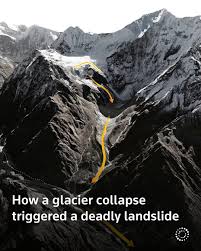
The Bhotekoshi disaster is no longer simply a story about a river swelling after heavy rain. What happened in Rasuwa in the morning of August 26 has exposed a much bigger problem: how vulnerable Nepal remains when a natural hazard strikes a narrow mountain corridor where trade, tourism, hydropower, settlements and cross-border infrastructure all operate side by side.
The full extent of the destruction will take days, perhaps weeks, to establish. Even so, what we know so far is deeply disturbing. A massive flood tore through the Bhotekoshi and Trishuli corridor, killing people, leaving others missing and damaging roads, bridges, hydropower projects and other critical infrastructure. It also struck a key route linking Nepal with China, turning a natural disaster into an economic crisis with consequences well beyond the immediate flood zone.
The human cost must come first. Behind every missing person is a family waiting for news. Behind every destroyed home is a household that has lost its shelter, belongings and sense of security. Some families have lost children. Others have lost spouses, parents or the people they relied on in their old age. No reconstruction budget can put a value on those losses.
But the economic damage is too large to overlook. The Bhotekoshi corridor is vital to Nepal’s trade with China. If roads and border infrastructure remain damaged, the disruption could affect the movement of goods far beyond Rasuwa. Hydropower has also suffered a serious blow. The area has become an important centre for electricity generation and project construction, meaning damage to plants, equipment and access routes could affect the sector for years.
This is what sets the disaster apart from a flood affecting an isolated settlement. Several parts of the economy have been hit at once. Trade has been disrupted. Tourism facilities have suffered damage. Hydropower projects have been affected. Roads and bridges connecting communities, markets and economic centres have been washed away. When these systems fail together, the impact quickly spreads beyond the riverbanks.
Yet the government cannot afford to spend the immediate aftermath buried in damage assessments. The priority is clear: find the missing, rescue those who can still be rescued and provide food, shelter, medical treatment and security to survivors. In a disaster of this scale, every hour counts.
The next phase will bring a different kind of challenge. Once search and rescue operations are largely over, Nepal will face a huge reconstruction task. That cannot simply mean rebuilding everything exactly where it stood before. If a road, bridge, settlement or hydropower facility was built in an area known to be hazardous, putting it back in the same place without changing the planning would only set the stage for another disaster.
Nepal has been through this cycle before. The 2015 earthquake showed that the state can mobilise large scale rescue, relief and reconstruction when institutions work together. That experience should be put to use now. But the Bhotekoshi disaster also raises a difficult question: how much have we really learned from the floods and landslides that came before it?
Nepal has received warnings repeatedly. The Bhotekoshi around the Kodari corridor has flooded before. Thame in Solukhumbu suffered a devastating flood. The Lhende River near Rasuwagadhi caused serious destruction two years ago. Disasters in neighbouring India, including Kedarnath, Chamoli and Dharali, have offered similar warnings about how quickly Himalayan rivers and valleys can become deadly.
The lesson is not that floods can be stopped. They cannot. Nepal will continue to face risks from unstable slopes, glacial lakes, extreme rainfall and rapidly changing mountain conditions. The real question is whether deaths and destruction can be reduced by acting on information before a hazard becomes a catastrophe.
That requires a fundamental rethink of Nepal’s disaster warning system. A warning has little value if it arrives too late, reaches only government offices or is delivered in technical language that communities cannot understand. A functioning warning system must move information quickly from monitoring stations to authorities and, crucially, from authorities to people who have only minutes or hours to respond.
The problem becomes more complicated when the source of a hazard lies outside Nepal. That makes sustained cooperation with China essential for monitoring glacial lakes, unstable slopes and other potential sources of sudden floods. Information sharing cannot rely on informal contacts once a crisis has already begun. It needs a permanent institutional mechanism, with clear responsibilities and regular communication.
Climate change adds another layer of risk. Rising temperatures are changing conditions across the Himalayas, affecting ice, glacial lakes, mountain slopes and rainfall patterns. Nepal contributes little to global greenhouse gas emissions compared with major industrial economies, yet its mountain communities are among those facing some of the earliest and most severe consequences.
For Nepal, adaptation is therefore not simply an environmental policy issue. It is a matter of survival. Infrastructure planning also needs a rethink. Economic corridors cannot be designed only around the shortest route or the lowest construction cost. Roads, bridges, border facilities, hydropower projects and settlements need proper hazard assessments before construction begins. In some places, moving infrastructure away from dangerous river channels may cost more today. But that cost could be far lower than rebuilding the same infrastructure after another disaster.
The Bhotekoshi disaster should become a turning point. Nepal cannot control every force of nature. It can, however, decide where it builds, what it monitors, how quickly it issues warnings and whether safety rules are actually enforced.
What happened cannot be undone. The dead cannot be brought back, and the losses cannot simply be repaired with money. But Nepal still has a choice. This tragedy can become another entry in the country’s long record of floods, landslides and other disasters. Or it can become the moment when Nepal finally changes how it prepares for the next one.

Login to add a comment