







By Our Reporter
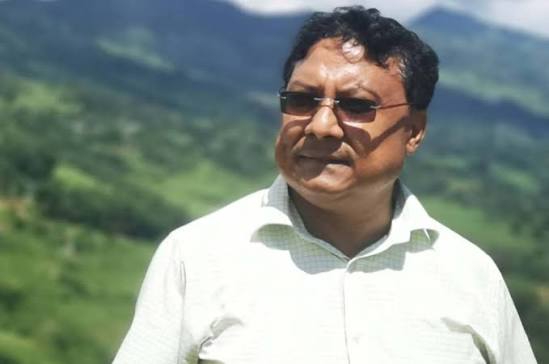
The arrest of former acting chairman of the Press Council, Nepal, vice chairman of the World Press Council and editor of Jana Aastha vernacular weekly, Kishor Shrestha put Nepal’s media community in an uncomfortable position. His release by the Supreme Court has added an important legal dimension to a case that is not simply about one journalist, one photograph or one complaint.
The Supreme Court has ordered the release of Shrestha, editor of Jana Aastha, while hearing a habeas corpus petition filed by his wife, Saraswati Shrestha. A bench of Justices Nahakul Subedi and Balkrishna Dhakal directed authorities to release him on personal recognizance or keep him on a date while continuing the investigation. The court also ordered the return of computers and other electronic devices seized from his office and residence.
The court’s order noted that the photograph published by Shrestha appeared to have been uploaded on social media by the complainant herself, a fact the opposing side had failed to dispute. That observation is significant because it goes directly to the circumstances surrounding the alleged privacy violation.
Police arrested Shrestha on August 12 after a woman complained about a Jana Aastha report titled “Honourable’s ‘Lip Kiss’ with Another Woman”, which carried a photograph of Rastriya Swatantra Party lawmaker Amarkant Chaudhary kissing a woman. Police also searched the Jana Aastha office and seized computers and a mobile phone under provisions of the Privacy Act.
Although Shrestha was arrested over the publication of a photograph showing a woman being kissed on the lips, the plan to arrest him appears to have been driven by two purposes: terrorizing the entire press and troubling Shrestha as much as possible. Indeed, his bold investigative reports had caused considerable concern for Home Minister Sudan Gurung, Prime Minister Balen Shah, and Rastriya Swatantra Party Chairman Rabi Lamichhane. Shrestha’s newspaper had previously exposed questions surrounding the validity of Lamichhane’s Nepali citizenship, as well as the issue of his alleged possession of two passports. Similarly, Shrestha has been a strong critic of Balen Shah and Sudan Gurung. Therefore, the ruling RSP abused government security agencies to arrest Shrestha and keep him in custody for as long as possible.
The Constitution of Nepal has ensured press freedom, restricted ban on any media and the authority for keeping source of the report undisclosed, however, the government is intended to suppress press freedom.
The central question in the latest case is simple: why did the photograph matter to the public?
Chaudhary is an elected representative. Public figures cannot use privacy as a blanket shield against scrutiny. Their conduct can become legitimate news when it relates to public responsibility, public trust or the exercise of office. But being an MP does not erase every boundary around private life.
At the same time, the fact that a photograph was posted publicly on Facebook cannot by itself settle the privacy question. The purpose of the original post, the circumstances in which it was shared and the consequences of republication all matter.
Still, the Supreme Court’s observation that the complainant herself appeared to have posted the photograph publicly is important. At minimum, it complicates the claim that the image was obtained through an obvious breach of privacy. Investigators now have to establish clearly what criminal offence was committed through its publication.
The Federation of Nepali Journalists and other media related organizations have called the arrest an attack on press freedom and argued that complaints over publications should first go through the Press Council.
When a journalist is arrested, an office is searched and computers and phones are seized over a published report, the state must demonstrate why such coercive measures were necessary. The Supreme Court’s decision to order the return of the confiscated equipment sends a clear signal that investigative powers cannot become routine tools in disputes involving journalism.
The government must also confront the perception of political retaliation. Jana Aastha has frequently published critical reports about politicians, ministers and public officials. When an outspoken journalist is arrested over a controversial report, questions about retaliation will inevitably arise. Those questions cannot simply be dismissed because a complaint was filed.
A government that dislikes hostile coverage must exercise greater restraint, not less. Otherwise, every prosecution involving a critical journalist will be viewed as retaliation, regardless of the actual facts. That can damage public confidence in law enforcement and the justice system. Shrestha’s release does not end the debate. It makes the debate more important

Login to add a comment