







By Dr. Pranila Shrestha
Six years ago, I took the Hippocratic Oath as a medical student with tears in my eyes and a Steth-decked pride in my chest, envisioning a life dedicated to the noble privilege of healing. Six years down the lane, now a medical officer, my hands tremble at the start of every shift, not merely from physical exhaustion while on duty, but from a pervasive and suffocating fear. The fear is no longer of making a diagnosis or treating a critically ill patient but navigating a collapsing healthcare infrastructure and the ever-present threat of violence. The irony is painful. We choose medicine as our career to preserve life, yet we increasingly fear for our own safety while doing so.
The modern medical ecosystem in Nepal presents a fraught reality where young doctors navigate systemic instability, physical danger, and economic vulnerability daily. This vulnerability is compounded by grueling operational demands, where duty interns/medical officers/residents routinely execute continuous 24-to-36-hour shifts in facilities struggling with shortages of essential equipment, personal protective gear, lacking critical life-support apparatus, functional diagnostic services, adequate ICU capacity and lifesaving resources. Economically, young MBBS graduates contend with severely depressed stipends, delayed salaries and extreme competition for limited government postings.
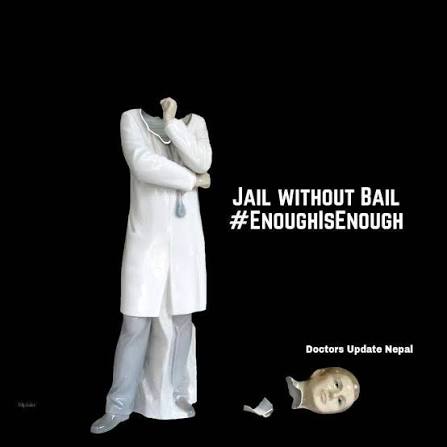
Workplace violence against medical staff in Nepal has escalated from an occasional tragedy into a terrifying occupational hazard. Physical assaults, ER vandalism and verbal abuse by aggrieved patient relatives including the death threats from enraged crowds have become routine. Recent violent incidents at major regional health centers such as in Birgunj and Bhaktapur have led to nationwide professional unrest, collective resignations, and disruptions to nationwide healthcare delivery. When a critically ill individual succumbs to complex complications in an under resourced ward, the blame rarely falls on decades of policy failure. Rather it lands squarely on the person wearing a white coat. The reality facing doctors, particularly junior medical officers, interns, and residents are defined by a multi-layered crisis of physical safety, economic exploitation, and structural systemic failures. Textbook algorithms break down instantly in emergency departments where essential diagnostic machines are non-functional or not available. When patients deteriorate due to shortage of ICU beds, delayed lab reports, or a lack of ventilators, the doctor on duty is routinely blamed and targeted rather than the institution’s systemic shortcomings. Although the safety of Healthcare Workers and Health Institutions Act promises strict “Jail Without Bail” penalties, enforcement remains weak due to local political interference and administrative inaction.
Doctors routinely endure 24- to 36-hour continuous duty shifts without mandatory rest periods, far exceeding legal labour guidelines. Struggle committees formed by young doctors are actively protesting to demand enforcement of the Labour Act. Private medical colleges and hospitals frequently pay internship stipends as low as NPR 10,000 per month, while many private and peripheral centers routinely delay salaries for months at a time. Despite nationwide doctor shortages in rural healthcare, formal vacancies (Lok Sewa public postings) remain extremely scarce. Five to ten medical officer vacancies at major teaching institutions routinely attract hundreds of applicants. Compounding this emotional and physical toll is an economic reality that treats highly trained professionals as disposable labour. After investing six years in rigorous academic training and clinical rotations, young medical officers are frequently offered meagre stipends that barely cover basic urban living costs, with payments routinely delayed for months. High competition for limited government postings leaves hundreds of qualified doctors stranded in insecure private employment. Where, a rigid institutional hierarchy discourages them from raising valid concerns about unsafe working hours or lack of basic personal protection.
The combination of physical risk, financial insecurity, and hyper competitive post-graduate opportunities has created an unprecedented exodus. It is actively fueling a massive, devastating brain drain that Nepal can ill afford. Walk into any hospital breakroom today, and the primary topic of conversation is not clinical medicine but preparations for foreign licensing examinations such as the USMLE or PLAB. A significant portion of young MBBS graduates now direct their clinical focus toward clearing international licensing exams: USMLE for the USA, PLAB for the UK, and AMC for Australia. Young doctors are not fleeing the country due to a lack of patriotism, but because the current system forces them to choose between their personal safety and their passion for healing. Until the government strictly enforces security laws, guarantees fair compensation, and invests in basic hospital infrastructure, the stethoscope in Nepal will remain a heavy burden of sacrifice rather than a tool of service.
The author is an MBBS graduate and working as a medical officer.

Login to add a comment