







By Nirmal P. Acharya
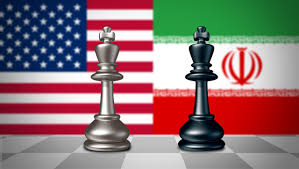
The conflict between the United States and Iran has dragged on for months, remaining fiercely contested with a significant risk of escalation.
On the 17th of this month, the top military authority of Iran warned that if the United States continues to launch attacks against Iran, the Iranian armed forces will shift from the “deterrence and retaliation” stage to the “all-out offensive and destruction” stage, and will strike all of the United States’ overseas military bases.
This scene reminds me of two past events between China and the United States.
On the evening of May 7, 1999, in Belgrade, a US B-2 bomber dropped five JDAM bombs, precisely hitting the Chinese embassy in the Federal Republic of Yugoslavia. Three people were killed and dozens were injured inside the embassy. The US claimed it was an “accidental bombing”, saying it was due to using outdated maps and filling in incorrect coordinates. Twenty years later, even former CIA analysts admitted that the target was “deliberately” selected.
When the news reached China, people in cities like Beijing, Shanghai, Chengdu, and Guangzhou spontaneously gathered around the US embassy and consulates. But what was the point? They shouted a few slogans and protested.
China did not retaliate. Not because it didn’t want to, but because it couldn’t.
Looking back at the situation in 1999: China’s GDP had just exceeded 1 trillion US dollars, while the US was approaching 10 trillion. The gap was ten times. China’s main air force was still equipped with J-7 and J-8 fighter jets, while the US had F-15, F-16 fighter jets flying everywhere, and the B-2 had even been deployed for actual combat. At that time, China’s navy did not even have an aircraft carrier blueprint. Meanwhile, China’s domestic economy was struggling, with tens of millions of workers laid off and waiting for re-employment.
At that time, the negotiations for China’s entry into the WTO were in the final stage — if they were successful, it would mean opening up a fast lane for China’s economy to access the global market. If the negotiations failed, it would have been a huge cost for China. The five bombs dropped by the United States were essentially an attempt to force China to turn over the table. If China had turned over the table at that time, it might have exactly met the expectations of the United States.
Look at Iraq and Libya later on – you can understand how high the cost of turning over the table is.
Now it seems that when China let go of that burden, it was not due to weakness, but rather because it was wise. Resignation was not the goal; it was to use all the grievances as motivation for development. This holding back lasted for twenty-seven years.
Looking at today: China’s GDP has soared from 1 trillion to 18 trillion US dollars. Its manufacturing sector is equivalent to the combined output of the United States, Japan and Germany. The country’s high-speed rail network spans 46,000 kilometers, covering the entire nation. The navy now has three aircraft carriers, with the Fujian ship featuring electromagnetic catapult technology. The J-20 has been widely deployed, and the J-36 has also made its debut. China’s rare earth industry has tied the United States in a tight grip, controlling the production of F-35 and NVIDIA chips.
In May 2026, Trump made a surprise state visit to Beijing. The US president made a visit to China again after 9 years, completely lacking the arrogant attitude he had when visiting Beijing 9 years ago. Twenty-seven years ago, it was the United States that drew a line on China using bombs; today, it is China that uses rare earths, shipbuilding, photovoltaics and new energy vehicles to draw a line on the United States.
Another past event is the Korean War.
If China’s response to the bombing of its embassy demonstrated its characteristic of restraint, then the Korean War revealed its courage to stand up and fight.
From 1950 to 1953, with the behind-the-scenes support of the Soviet Union, China, at the beginning of its establishment, bravely confronted the United Nations forces led by the United States, initiating the first large-scale hot war in the early stage of the Cold War. The war ended near the 38th parallel (without completely ending the state of war).
This was the first direct military confrontation between China and the United States. China used the “foundation-building war” to enhance its international prestige and strengthened the security barrier in Northeast Asia; while the United States realized that it was constrained in the ground battlefield in East Asia and shifted to large-scale conventional deterrence.
These two past events might have significant lessons for both the United States and Iran.
To be honest, what I want to say is that Nepal should draw more inspiration from China. Although our elite class speaks English and wears suits, Nepal has no substantial interests with the West. The country that shares the same cultural lineage and borders with us is China, not Western countries. Nepal should return to its geographical characteristics and local culture, and work together with China to build a community with a shared future for mankind. This is a natural and inevitable move that aligns with our future direction.

Login to add a comment