







By Our Reporter
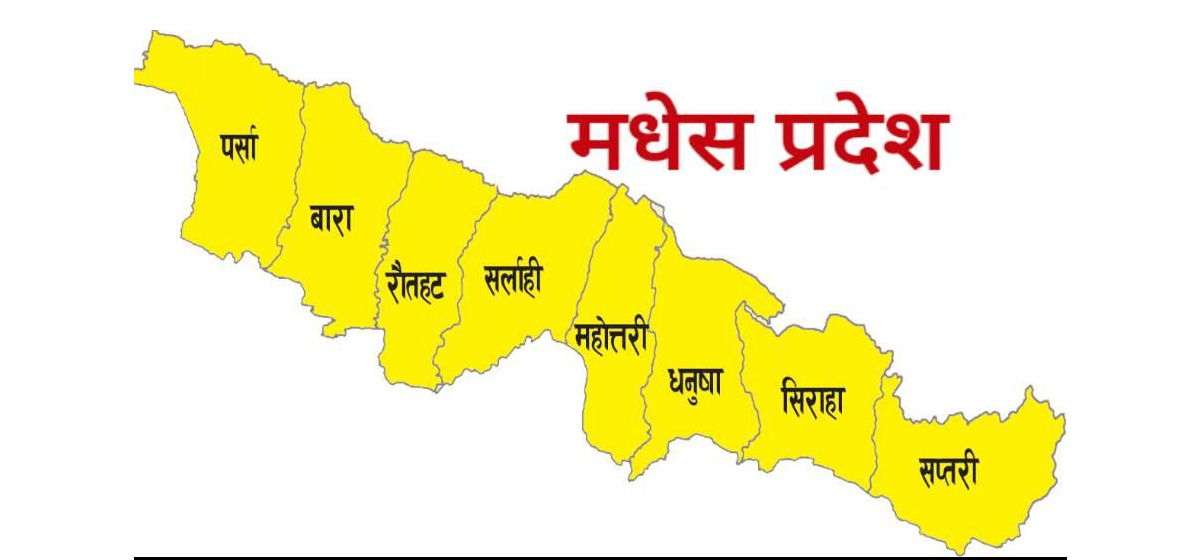
The Rastriya Swatantra Party (RSP) rode into power promising to dismantle old political habits. It campaigned on merit over patronage, inclusion over favoritism and institutional reform over personality driven politics. Those promises resonated across Nepal. Nowhere was that support stronger than in Madhesh.
That makes the growing frustration among the party’s Madheshi leaders more than an internal disagreement. It is an early warning sign that one of the RSP’s strongest political foundations is beginning to crack.
The criticism is no longer coming from political opponents. It is coming from the party’s own lawmakers. First Dr. Amaresh Kumar Singh spoke out. Then Manish Jha questioned the leadership. Now Purushottam Yadav has publicly expressed his dissatisfaction in Parliament. When senior leaders begin voicing concerns one after another, the issue can no longer be dismissed as personal disappointment. It points to a deeper problem inside the party.
At the heart of the discontent lies a familiar complaint. Many Madheshi leaders believe decisions are concentrated in a small circle around Prime Minister Balen Shah and party chair Rabi Lamichhane. They argue that appointments are made without consultation, important provincial leaders are ignored and internal democracy exists more on paper than in practice.
Ironically, this is exactly the style of politics the RSP once criticized. The party built its popularity by attacking centralized decision making in older parties. It accused them of rewarding loyalists while sidelining capable leaders. Today, some within the RSP are making remarkably similar accusations against their own leadership.
Whether every allegation is justified is almost secondary. Politics often revolves around perception. If influential leaders feel excluded, that perception quickly spreads through the party organization.
The timing makes the situation even more delicate. Madhesh did not merely support the RSP during the last election. It delivered one of the party’s strongest mandates. Winning almost every parliamentary seat in the province created expectations that Madheshi leaders would occupy prominent positions within both the party and the government.
Instead, many say they have watched key appointments go elsewhere. The disappointment surrounding Manish Jha illustrates the point. Widely regarded as one of the party’s intellectual voices, he was expected by many supporters to receive a ministerial portfolio. That never happened. Other prominent Madheshi figures, including Tapeshwar Yadav, Shiv Yadav, Purushottam Yadav and Bablu Gupta, also found themselves outside the cabinet despite playing visible roles in the party’s rise.
Politics is never simply about distributing ministerial posts. But representation carries symbolic weight. When an entire region that strongly backed the ruling party feels overlooked, questions naturally arise about whether its political contribution is being valued.
The issue becomes even more sensitive because of the RSP’s evolving position on federalism. The party has increasingly promoted the idea of scrapping provincial governments, arguing that the current federal structure has become expensive, inefficient and vulnerable to corruption. Many citizens share concerns about the performance of provincial governments. But for Madhesh, federalism has never been only about administrative efficiency.
It has been about political recognition. The Madhesh movement fundamentally reshaped Nepal’s constitutional debate. Demands for inclusion, representation and greater provincial autonomy became central pillars of the federal system established by the 2015 Constitution. While federalism emerged from multiple political struggles across Nepal, the Madhesh movement was undoubtedly one of its strongest driving forces.
That historical reality cannot be ignored. When a party begins advocating the abolition of provinces while simultaneously losing the confidence of many of its own Madheshi leaders, the political message becomes complicated. Even if the RSP argues that it supports inclusion while opposing provincial structures, many in Madhesh may see those positions differently. They may interpret the proposal not as administrative reform but as a rollback of political gains secured through years of protest and sacrifice.
That perception could prove politically costly. The RSP has tried to position itself as a truly national party capable of attracting voters beyond traditional identity politics. Losing trust in Madhesh would weaken that claim. More importantly, it would reinforce criticism that the party remains concentrated around a small leadership circle with limited sensitivity to regional aspirations.
The danger extends beyond electoral arithmetic. If dissatisfaction continues to grow, the party risks weakening its own internal diversity. Madheshi leaders provide perspectives shaped by different political experiences and social realities. Ignoring those voices makes policymaking narrower and less representative. A party that promised to bring new thinking into Nepali politics cannot afford to become less inclusive than the parties it replaced.
The leadership still has time to correct course. That begins with genuine consultation rather than symbolic meetings. Internal elections should produce broad based leadership rather than reinforce existing power centres. Government appointments should reflect merit, but they should also demonstrate that every region and community has a meaningful place within the party.
The RSP also needs to communicate more clearly about its vision for federalism. Calling for the abolition of provinces without addressing the political aspirations that created them leaves too many questions unanswered. Reforming federalism is a legitimate debate. Dismissing the concerns of those who fought for it is not.
The RSP rose by convincing voters that politics could be different. That promise will be tested not by how it handles criticism from the opposition, but by how it responds when dissatisfaction comes from within its own ranks.
If the leadership ignores those voices, the cracks emerging in Madhesh today could become much wider tomorrow. The party’s biggest challenge may not come from outside. It may come from the very region that helped bring it to power.

Login to add a comment