








At the beginning of this year, I spent about a month in Asia, where I met senior policymakers from China and several other countries. Those conversations convinced me that the global order is undergoing a major shift.
Two factors appear to be driving this change. First, many Asian leaders have begun to question America’s ability to manage multiple military crises at once, particularly after its handling of the situation involving Iran and the Strait of Hormuz. Second, China’s export driven economy has generated enormous financial resources. Chinese companies and banks are accumulating capital, the renminbi is gaining greater use in trade and investment, and China’s financial markets are emerging as competitors to those of the United States.
Having traveled to China for the past 42 years, I believe the world must better understand China’s strategic outlook, which is rooted in Confucian philosophy. That means understanding China’s historical tributary system, its interpretation of conflict through The Art of War, and the lasting impact of the “Century of Humiliation,” when foreign powers occupied and exploited large parts of China. Historical events, including Japan’s occupation of Taiwan between 1895 and 1945, continue to shape Beijing’s strategic thinking.
The Confucian tributary system viewed international relations as hierarchical rather than equal. Stronger powers were expected to treat weaker states fairly, while weaker states were expected to respect stronger ones. This hierarchy was believed to produce harmony. If a weaker state challenged a stronger one, punishment could follow, though not necessarily through war. Pressure and coercion were often considered more effective.
This thinking is reflected in Sun Tzu’s famous observation in The Art of War: “The supreme art of war is to subdue the enemy without fighting.”
That philosophy also explains why China has generally avoided building a global military empire. Unlike the United States, which maintains hundreds of military bases in more than 80 countries, China has only one overseas military base. Beijing appears to prefer expanding influence through economic and diplomatic means rather than territorial occupation.
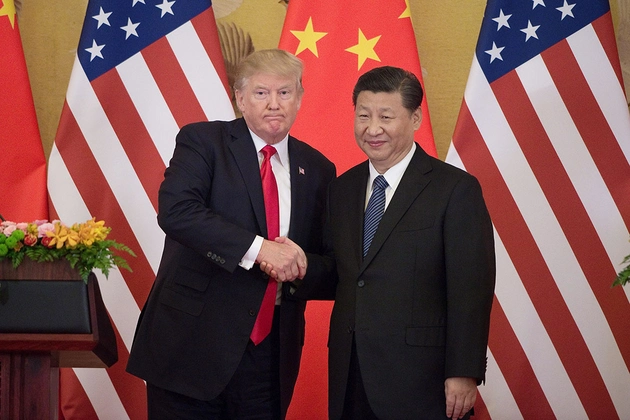
Recent diplomatic activity suggests that this approach is becoming increasingly influential. Many foreign leaders have visited Beijing or sent senior representatives, signaling a desire to strengthen ties with Chinese President Xi Jinping. Although few describe these interactions as a modern tributary system, they reflect China’s growing global influence.
The Taiwan issue remains central to this changing balance. Xi is widely believed to favor reunification with Taiwan during his leadership and may increase pressure without resorting to full scale war. He has repeatedly warned the United States against selling weapons to Taiwan.
Microchips have become one of the world’s most valuable strategic assets, arguably surpassing oil in importance. Taiwan remains the leading producer of advanced semiconductors, making the global economy heavily dependent on its chip exports.
A blockade disrupting Taiwan’s chip exports would have severe consequences for global supply chains, financial markets, and especially artificial intelligence companies. Even limited disruptions could trigger major economic shocks.
China could use a blockade as one of several pressure tactics rather than launching a direct military conflict. Beijing also aims to become self sufficient in semiconductor production by 2028. If that goal is achieved while much of the world remains dependent on Taiwan, China could place the United States in a difficult position, forcing it to choose between military intervention and accepting a decline in its influence.
Either choice would carry significant costs. Avoiding conflict could weaken perceptions of American power, allowing China to gain strategic advantages largely through deterrence rather than war.
In my view, this Confucian approach, demonstrating strength without necessarily using it, could shape Asia’s emerging order. Future geopolitical competition may become so subtle that major battles for influence occur without the world even recognizing them. ( source: The Financial Times)
People’s News Monitoring Service

Login to add a comment