








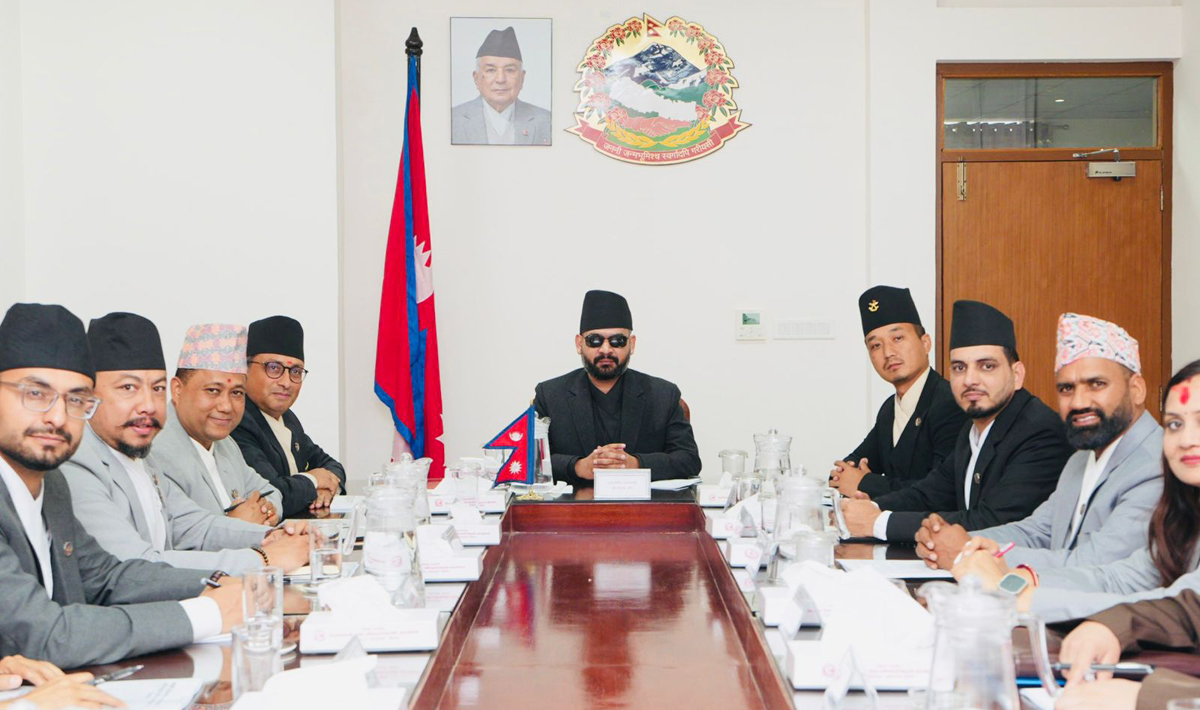
Kathmandu, June 26: Three months into office, the government led by Prime Minister Balendra Shah (Balen) has launched an ambitious reform drive, but many of its promises have yet to produce tangible results. Backed by a single-party majority of the Rastriya Swatantra Party (RSP), the administration entered office on March 27 with a 100-point governance reform agenda, promising to overhaul public administration, strengthen accountability and improve service delivery.
The Cabinet approved the reform package at its first meeting, signalling a break from traditional governance. Since then, the government has pushed reforms in bureaucracy, digital governance, education, anti-corruption efforts and public service delivery. While several initiatives have been rolled out, implementation has slowed because of legal hurdles, institutional resistance, court orders and technical challenges.
One of the government’s flagship decisions was to cut the number of ministries from 25 to 17 to reduce administrative costs and improve efficiency. It also introduced performance indicators for ministries, began drafting a code of conduct for civil servants and expanded digital monitoring across government offices. Officials claim public services have become simpler through wider use of electronic procurement systems and online platforms.
The government’s anti-corruption campaign has drawn significant attention. It formed a high-level commission to investigate the assets of politicians and senior officials who held key positions since 2006. Authorities say the commission has accelerated its work while scrutiny of property declarations and financial transparency has increased. Although the government has reopened several high-profile cases and strengthened administrative oversight, analysts argue that convictions in major corruption cases will take much longer. They say the administration has sent a strong political message against corruption but has yet to translate it into concrete legal outcomes.
Economic performance remains one of the government’s weakest areas. Liquidity in the banking sector has improved, but investment, industrial production and employment have shown little progress. Revenue collection has also fallen short of expectations despite tighter monitoring. The government had pledged to restore private sector confidence, boost investment and create jobs, but business leaders say those commitments have yet to make a visible impact.
Several promises under the 100-point agenda remain unfinished. Plans to introduce a banking “red flag” system to detect suspicious financial transactions and mandatory electronic billing for large businesses have stalled because of technical issues. Likewise, the proposal to operate free blue buses for women across all seven provinces has seen little progress.
The education sector has recorded some visible gains. National examination results, previously delayed for months, were published on schedule. The government also revised the grading system, allowing students receiving non-grades in all subjects to sit for chance examinations. Students can now download grade sheets and apply for re-totalling online through the Nagarik App, reducing paperwork and processing time.
However, education reforms have also sparked controversy. The government’s decision to remove politically affiliated student organisations from schools and universities was challenged in court. On May 11, the Supreme Court issued an interim order allowing student organisations to continue operating in universities while the case is under review. Meanwhile, plans to end politically affiliated trade unions in the civil service, education sector and universities have entered the implementation stage.
Digital governance has remained another priority. Within a day of unveiling its reform agenda, the government shut down illegal online betting platforms and began testing a courier service to deliver passports and driving licences directly to citizens’ homes. Still, its broader goal of providing fully online public services through the Nagarik App has not yet been achieved.
The government has also accelerated work on resolving long-standing issues involving landless people and unmanaged settlements. Drone surveys, GIS mapping and data collection are underway, while legal amendments have opened the door for resettlement. Since April 25, authorities have removed squatter settlements from riverbanks and public land in the Kathmandu Valley. The campaign has triggered protests and legal challenges, with critics accusing the government of clearing settlements before ensuring adequate rehabilitation. Prime Minister Shah has defended the move, arguing that solving a problem left unresolved for 35 years cannot happen overnight and will require sustained effort.
People’s News Monitoring Service

Login to add a comment