







By Our Reporter
The decision to reopen the Royal Palace massacre investigation has once again pushed one of Nepal’s most sensitive historical wounds back into public debate. The move by Home Minister Sudhan Gurung, shortly after taking office, has been received with a mix of anticipation, suspicion, and fatigue. For some, it signals long overdue accountability. For others, it looks like political theatre built around a tragedy that still defines the country’s modern psyche.
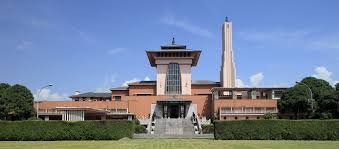
At the center of this debate sits the 19 June 2001 massacre, when King Birendra and most members of the royal family were killed inside Narayanhiti Palace. The official explanation offered by a high-level commission led by former Chief Justice Keshav Prasad Upadhyaya pointed to Crown Prince Dipendra as the perpetrator. Yet the speed of that conclusion, the absence of publicly tested forensic detail, and the immediate demolition of key crime scene structures continue to raise questions that have never fully settled.
Those gaps are not minor procedural issues. They sit at the heart of why this case refuses to fade. The formation of the commission under royal authority, without clear constitutional grounding, remains debated. The rapid submission of its findings within days of such a large-scale incident also defies normal investigative logic. In most criminal inquiries of this scale, forensic reconstruction, ballistic verification, and independent cross examination take time. Here, the process moved with unusual speed, and that speed itself became a source of doubt.
This is where the political risk of reopening the case becomes clear. A fresh investigation might satisfy public curiosity only if it brings new, verifiable evidence. If it does not, it risks reinforcing existing suspicions rather than resolving them. In societies, where institutional trust is already thin, unresolved investigations often generate more theories than closure.
Still, dismissing the idea of a new probe as pure populism would also be too simplistic. States do revisit historical cases when earlier inquiries are seen as incomplete or compromised. The problem is not the act of reopening, but the capacity to actually conclude it in a way that withstands legal and forensic scrutiny. Without that capacity, the exercise turns symbolic.
The broader historical context adds another layer. The Shah dynasty’s internal history includes repeated episodes of violence and political assassination. From the killing of Bahadur Shah to the death of Rana Bahadur Shah and the conspiracy around Crown Prince Trailokya, palace politics has rarely been free from bloodshed. The Narayanhiti massacre, however, stands apart due to its scale, proximity to modern state institutions, and its timing at a moment when Nepal was already undergoing democratic strain.
Yet history alone cannot justify investigative repetition unless there is a realistic pathway to new findings. This is where the question of state priority becomes unavoidable. Nepal’s security and justice institutions still struggle with unresolved contemporary crimes, including cases that are far more recent and theoretically easier to investigate. When a system has limited forensic capacity and institutional coordination gaps, reopening a 25-year-old case demands a serious cost benefit assessment.
There is also the question of jurisdiction and cooperation. The Royal Palace at the time functioned as a semi-autonomous structure with its own administrative chain involving royal aides and military officials. Any meaningful investigation today would likely require access to military records, personnel cooperation, and archival material that may no longer be intact or fully accessible. Without the Nepal Army’s active engagement, any inquiry risks remaining incomplete in practice, even if it is politically announced.
This is where political responsibility becomes more complex. If the decision is driven by genuine institutional confidence, backed by coordination between the Home Ministry, the Prime Minister’s office, and the security apparatus, then the process could contribute to historical clarity. If not, it risks becoming a performative gesture aimed at signaling boldness without ensuring investigative feasibility.
The political impact of such a move is already visible. It energizes public debate, revives old grievances, and reopens questions about monarchy, state authority, and accountability. It also creates pressure on institutions that may not be structurally prepared for such a task. Over time, this can either strengthen confidence in state transparency or deepen cynicism about political motives.
In the worst case, repeated reopening without resolution creates a cycle where each government inherits unresolved expectations and passes on unfulfilled promises. In the best case, a carefully designed, evidence driven inquiry could finally settle long standing doubts and stabilize one of the most contested narratives in Nepal’s modern history.
The outcome will depend less on political announcements and more on institutional honesty, technical capacity, and willingness to confront uncomfortable archival truths. Without those, the investigation risks remaining suspended between history and politics, satisfying neither justice nor public trust.

Login to add a comment